

Minister Hadjimanolis, since you took office in early 2023, the Cyprus Shipping Registry has demonstrated remarkable resilience, recording a 21% increase. Looking past the headline figures, what do you consider to be the most vital operational upgrades your Ministry has delivered to achieve this, particularly regarding the digitalisation of your services?
As one of the largest merchant fleets globally, our registry serves as a global ambassador for the Republic of Cyprus. The Cyprus Registry of Ships ranks among the largest registries both worldwide and within the European Union, maintaining a strong reputation for safety, quality, and regulatory compliance. Since September 2023, the Cyprus ship registry has grown by more than 23%.
This growth is no coincidence. As shipping continues to evolve, the operational upgrades introduced by the Shipping Deputy Ministry form part of a broader strategy to keep pace with technological advancements and further enhance the attractiveness and competitiveness of the Cyprus registry.
Digital transformation in the shipping industry is no longer optional; it is essential. As the sector becomes increasingly dependent on data, connectivity, and advanced technologies, Cyprus remains committed to staying at the forefront of this evolution.
The launch of the CYSh1P digital portal marks a significant milestone in this journey. It reflects our commitment to streamlining procedures, improving efficiency, reducing administrative burdens, and enhancing transparency for shipowners, ship managers, and the wider maritime community. This initiative forms part of our broader vision to build a smarter, more agile, and more responsive maritime administration.
Cyprus recently secured re-election to the IMO Council and was notably the only EU country represented at ministerial level at the SMIC25 in Jeddah. How are these high-level diplomatic engagements translating into tangible, commercial advantages for the Cyprus shipping cluster?
Cyprus’ re-election to the Council of the IMO is a very important diplomatic success and a strong recognition of the country’s active role in international shipping. It is also the result of consistent diplomatic efforts over the last few years, including my official visits and high-level meetings with my counterparts from the neighboring countries in the Arab Gulf region. Through these contacts, Cyprus has built strong and trusted relationships based on cooperation and mutual understanding.
These efforts appear to be producing positive results. We witnessed this not only through the successful IMO Council elections, but also through the closer relations that Cyprus has developed with countries such as Oman, Qatar, Saudi Arabia, and Bahrain over the last three years. We have managed to create direct channels of communication and cooperation, both at governmental and private-sector level.
Overall, these diplomatic engagements appear to be gradually translating into more practical and commercial outcomes. They are helping to strengthen Cyprus’ visibility and credibility as a maritime hub and are creating additional opportunities for the Cyprus shipping cluster.
Despite the severe geopolitical tensions in the Eastern Mediterranean impacting traditional itineraries, your Ministry has completed the first phase of the National Cruise Strategy. What specific actions can stakeholders expect from the upcoming Action Plan to keep Cyprus competitive as a premium cruise hub?
Indeed, the geopolitical tensions in the Eastern Mediterranean and all the recent developments in the wider region have created significant challenges for the cruise industry in general. However, despite these difficulties, the cruise sector in Cyprus has shown strong resilience and positive momentum. I am particularly pleased that the Cruise Committee has completed the Action Plan under the National Cruise Strategy, following the coordination with all relevant stakeholders. The Action Plan will soon be submitted to the interministerial committee so that the necessary decisions can be taken and the required budget approved, allowing the Committee to move forward with the implementation of both short-term and long-term actions.
Our focus is on practical measures that will further strengthen Cyprus’ position as a premium cruise destination, in close cooperation with all relevant stakeholders. The fact that 2025 closed with a 30% increase in cruise ship arrivals compared to 2024, together with the continuation of Marella Cruises’ home porting operations for 2026, confirms that Cyprus continues to be regarded as a reliable and attractive destination in the region. In addition, the selection of Limassol to host the 71st General Assembly of MedCruise in 2027 represents another important recognition of Cyprus’ growing role in the Mediterranean cruise sector.
While uncertainty in the region remains, we are optimistic about the future. The positive momentum we are seeing today, combined with the implementation of the National Cruise Strategy, gives us confidence that Cyprus can continue to grow as a resilient, sustainable, and high-quality cruise hub in the Eastern Mediterranean.
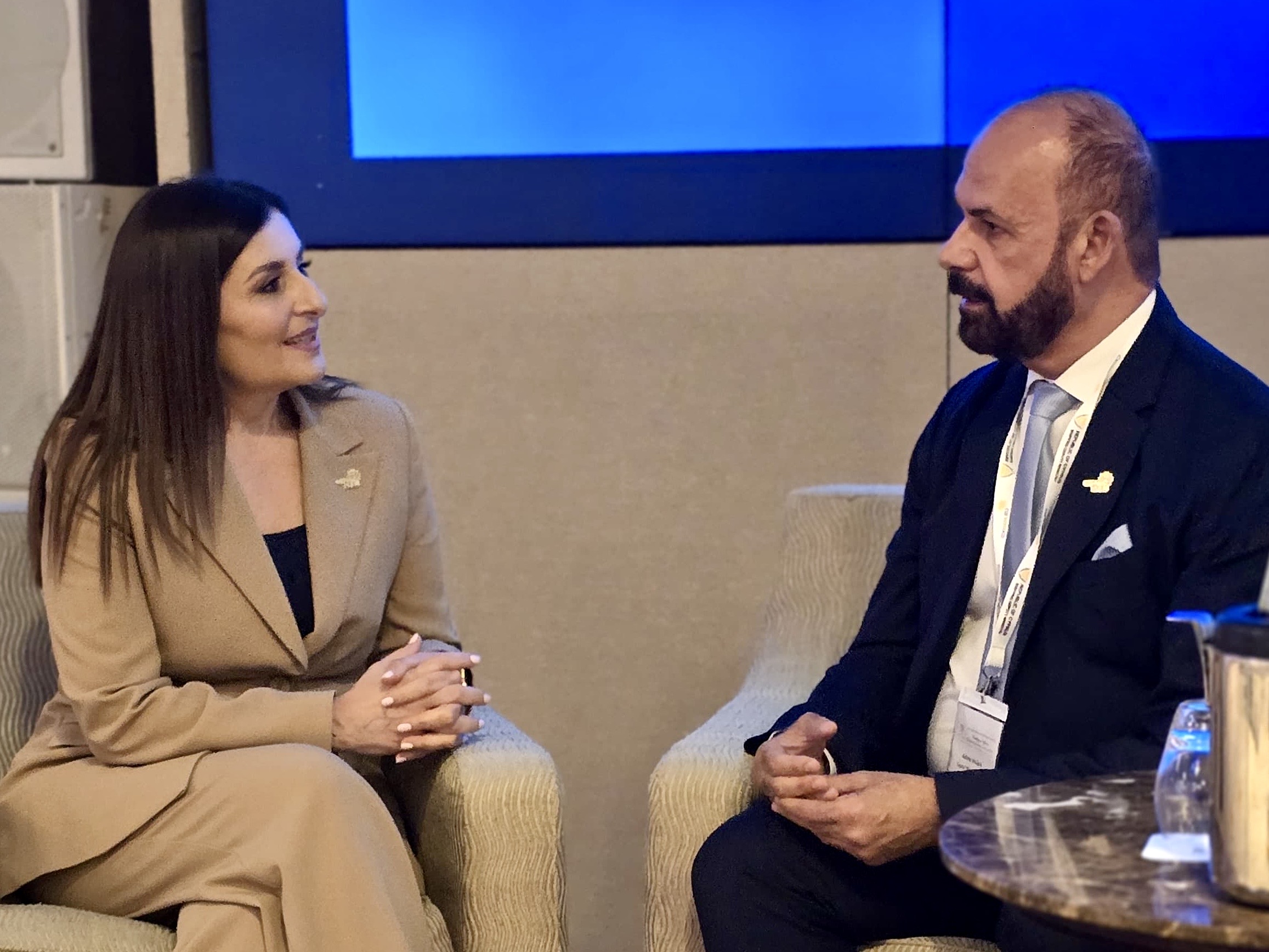
A flagship initiative of the current Presidency is the informal Council of EU ministers meeting here in Nicosia this April to adopt a declaration on maritime education. Why was education chosen as a cornerstone of your Presidency agenda, and what practical changes across Europe do you hope this declaration will drive?
Education was chosen from our side as a cornerstone of the Cyprus Presidency because we strongly believe that the future of European shipping passes first and foremost through its people. Europe’s maritime sector is entering a period of profound transformation. Digitalisation, decarbonisation, technological innovation and increasing cybersecurity demands are reshaping the maritime landscape, while at the same time we face persistent challenges such as skills shortages, ageing workforces and difficulties in attracting new talent.
Against this backdrop, we believe there is a need for a strong political signal at European level. This is precisely why the Member States, on the 29 of April 2026, signed the Lefkosia Declaration during the Informal Council of EU Ministers responsible for Maritime Affairs, held in Nicosia, Cyprus. It reflects our shared understanding that investing in maritime education, training and human capital is not simply a social priority, it is a strategic necessity for Europe’s competitiveness, resilience and global maritime leadership.
The Lefkosia Declaration seeks to promote a more future-oriented approach to maritime education. We hope it will encourage stronger investment in education and training systems, with particular emphasis on re-skilling and up-skilling to equip seafarers with the competencies required for new technologies, digital systems and evolving operational environments.
Equally important is strengthening cooperation between educational institutions, policymakers and industry, ensuring that training reflects real market needs and future demands. We also want to increase the attractiveness of maritime careers for younger generations and broaden participation across the sector.
Ultimately, the practical objective is clear: to create a more resilient, skilled and inclusive maritime workforce. Europe cannot future-proof its maritime sector without future-proofing its people. The Lefkosia Declaration establishes an important foundation for achieving precisely that.
In May Limassol hosted the European Maritime Day (EMD). With the eyes of Europe’s maritime community firmly on Cyprus, what is the core message the Deputy Ministry wants to project regarding the sustainable blue economy and the future of Europe’s maritime policy?
Limassol hosted the celebrations of the European Maritime Day. The core message conveyed was clear: a sustainable blue economy is not a theoretical aspiration, it is an operational priority that must underpin every aspect of Europe’s maritime future. Cyprus, as one of the EU’s leading shipping centres, is committed to aligning competitiveness with sustainability, demonstrating that economic growth and environmental responsibility must go hand in hand.
At the heart of this message is the transition to greener shipping. Cyprus supports a pragmatic and globally coordinated approach to decarbonisation, consistent with international frameworks while advancing EU climate objectives. We advocate for the adoption of alternative fuels, investment in clean technologies, and the development of port infrastructure that enables the energy transition. At the same time, we emphasise the importance of maintaining the global competitiveness of European shipping, ensuring that regulatory measures are effective without creating distortions or shifting emissions elsewhere.
Equally important is the human dimension of the blue economy. The future of Europe’s maritime sector depends on a skilled, resilient, and diverse workforce. Cyprus is committed to enhancing maritime education, supporting seafarers, and promoting digital skills that will allow the industry to adapt to rapid technological change. Innovation, digitalisation, and smart shipping are key enablers of both sustainability and efficiency, and we see them as central pillars of Europe’s maritime policy going forward.
Finally, Cyprus aims to position itself as a constructive and reliable partner within the European Union. We support a balanced maritime policy that recognises the diversity of Europe’s maritime clusters while fostering collaboration across regions. By hosting this important event, Cyprus reaffirmed its role as a strong advocate for a sustainable, competitive, and future-proof European maritime sector.
Moreover, the presence of the EU Commissioner, ministers of foreign countries and other executives of Europe during the EMD 2026 in Limassol, reaffirmed the importance of Cyprus as a maritime power, with a strong voice internationally.
You have been a highly vocal advocate for women in maritime. On May 12th, you hosted the Presidency Conference on Equal Opportunities and Inclusion in Brussels. In your view, how do we move the European industry from simply ‘opening the door’ to actively placing women in executive, decision-making roles?
The maritime sector has made progress in recognising the importance of diversity and inclusion, but still there is an important distinction between access and participation on the one hand, and leadership on the other. Opening the door is essential, but true inclusion means ensuring that women are also represented where decisions are made, policies are shaped and the future direction of the sector is determined.
This is not only a matter of equality, it is a matter of sustainability and competitiveness. During our Presidency discussions, we consistently emphasised that increasing women’s participation in maritime is not simply a social objective—it is a strategic necessity. A sector facing skills shortages and talent challenges cannot afford to overlook half of its potential workforce.
Moving toward executive representation requires deliberate action. We need stronger mentoring and sponsorship programmes, more visible role models, leadership pathways and organisational cultures that actively support career progression. We must also examine structural barriers and unconscious biases that continue to limit opportunities.
The conference in Brussels was designed precisely with this objective in mind: moving the discussion beyond broad principles and toward practical change. By bringing together policymakers, institutions, industry leaders and international organisations, we sought to identify concrete measures capable of delivering measurable outcomes.
The objective is not simply to help women enter maritime professions, it is to ensure they can progress, lead and shape the future of our industry. Success will be achieved when women in leadership positions are viewed not as exceptions, but as a normal and visible reality across maritime Europe.

The industry is currently operating in what many call a geopolitical ‘permacrisis’. At the European level, how is the Presidency balancing the push for an ‘autonomous Union’ with the immediate physical and financial security of global supply chains?
The term “permacrisis” accurately captures the environment in which maritime transport currently operates. Geopolitical tensions, regional conflicts, disruptions to trade routes and broader economic uncertainties have demonstrated how interconnected and fragile global systems can become. In this environment, maritime transport is not only an economic driver; it is also a critical pillar of security, resilience and global connectivity.
Recent developments have reminded us of the importance of safeguarding the uninterrupted flow of maritime trade and preserving freedom of navigation under increasingly complex circumstances. This has been a central consideration throughout our Presidency.
At the same time, EU’s pursuit of strategic autonomy should not be interpreted as an inward-looking exercise. EU’s strength has always rested on openness and international cooperation. Strategic autonomy means strengthening our capacity to anticipate, prepare and respond effectively to disruptions while reducing excessive vulnerabilities in critical sectors.
Under the Cyprus Presidency, we have sought to maintain this balance through work linked to EU’s broader maritime and industrial strategy, stronger coordination among Member States and enhanced engagement at international level, including within the International Maritime Organization.
Resilience and competitiveness are not competing objectives. They reinforce one another. Strengthening Europe’s strategic capabilities while preserving open and secure supply chains is essential for safeguarding both our economy and our security.
The challenges that shipping faces today, cannot be addressed in isolation. They require preparedness, international cooperation and a collective European response that ensures stability while preserving Europe’s role as a global maritime actor.
Shipowners are caught between the urgent need for operational survival today and the massive capital expenditure required for the 2050 Net-Zero targets, especially with the rollout of the EU ETS. How is the Deputy Ministry supporting owners through this ‘CAPEX paralysis’ so they are not unfairly penalised while trying to keep trade moving safely?
At the Shipping Deputy Ministry, we understand shipowners concerns very well. Shipowners are facing immediate operational pressures, while at the same time being asked to prepare for very significant investments towards the 2050 net-zero objective.
Our approach, is not to treat this transition as a penalty exercise. We see shipowners as partners in keeping trade moving safely, reliably and sustainably.
First and foremost, we support a realistic and technology-neutral transition. As I have mentioned many times in the past, Cyprus supports environmental ambition, implemented in a way that safeguards the competitiveness of the Cyprus Registry, the Cyprus Maritime Cluster and European shipping more broadly.
Furthermore, we are working to ensure that shipowners have clarity and practical support. This includes modernizing our legislative framework, digitalizing our services, maintaining close dialogue with the industry, and helping companies navigate the EU ETS and FuelEU Maritime requirements efficiently.
Last but not least, we strongly believe that the revenues and mechanisms created through the EU ETS and FuelEU Maritime must be channeled back into shipping. The EU Innovation Fund, financed by ETS revenues, can support maritime decarbonization projects, including alternative fuels, energy-efficiency technologies, electrification and port infrastructure. FuelEU also provides mechanisms intended to support the uptake of renewable and low-carbon fuels and to reward early movers.
The message is clear: compliance must not become a barrier to survival. The transition must be fair, practical and supported by adequate financing. Cyprus will continue to advocate, both within EU and internationally, for rules that reduce emissions while preserving safe operations, connectivity and the competitiveness of quality shipping.




Related News.

Navigating the Multi-Orbit Era: In Conversation with Intellian’s Jon Harrison at SMM 2026
At SMM 2026 in Hamburg, the rapid evolution of maritime satellite communications took centre stage. Across the exhibition halls, discussions among…
Cyprus ports need joint energy and investment strategy, shipping agents chief says
Cyprus needs a coordinated strategy for shipping, energy and environmental protection to support port investment and modernisation, Cyprus shipping…

MASO Public Affairs introduces MASO Regulatory Intelligence
A new subscription service helping businesses understand what is changing and what it means for them MASO Public Affairs introduces MASO Regulatory…
Anglo-Eastern helps turn CMBTECH’s ammonia ambition into an operational reality
From early feasibility study and risk-based design to newbuilding supervision, crew readiness and technical management, Anglo-Eastern drew on its…
Escalation of attacks threatens to derail recovery in Middle East oil exports
World oil demand is forecast to fall by 2.5 mb/d y-o-y in 4Q26 and 2.6 mb/d on average in 2026. As the Iran war manifests itself through restricted…
New study finds shipping pays twice its share to EU ETS earmarked revenues should triple to help build market for sustainable fuels and technologies
Shipping is responsible for around 10% of EU ETS emissions but pays almost 20% of the ETS bill. Unlike other sectors, it has never received free…

MSARC strengthens maritime mass rescue readiness through training and national live exercise off Dakar, Senegal
Joint MSARC–FHAS programme combines three days of SAR training with a national multi-agency live exercise The Maritime Search and Rescue Council ,…
Sogese report deliveries are still being delayed as container freight rates fluctuate
FOR IMPORTERS Spot rates into the Mediterranean are back at January levels, Far East to Europe reliability sits at pandemic lows, and nearly…
Glencore begins trading on Australian Securities Exchange
Glencore has begun trading on the Australian Securities Exchange under the ASX code GLC. Gary Nagle, Glencore’s CEO, said it was an exciting day for…
BIMCO Shipping Number of the Week
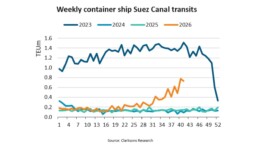
Suez Canal container ship transits exceed 50% of pre-disruption levels "During the first two weeks of October, weekly container ship capacity…
Subscribe to our newsletter!
if you dont want to swim alone in the ocean of news, sign up for the newsletter, and you will receive daily all the important news of world shipping!
