Iraqi supertanker’s Hormuz passage signals easing of oil squeeze
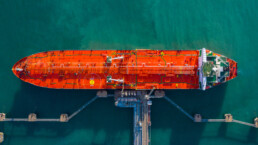

An Iraqi supertanker’s quiet passage through the Strait of Hormuz has offered the first tangible sign of relief for global oil markets, hinting at easing supply constraints that have driven US gasoline prices to their highest levels in four years, according to a report from The Street.
For nearly three months, the Strait of Hormuz has been the world’s most expensive chokepoint, with shipping halted since late February amid the US–Iran conflict.
The very large crude carrier Eagle Verona loaded about two million barrels of Iraqi crude at Basra Oil Terminal and successfully crossed into the Arabian Sea over the May 23 weekend, vesseltracking data showed.
Bloomberg reported that the tanker’s quiet exit past the US naval blockade line marked a significant moment for traders, who have been searching for signs that supply routes are reopening.
Markets, the report noted, are “very good at panicking quickly and very bad at calming down slowly.”
The sudden halt in flows sent US pump prices soaring, with the national average now at $4.56 a gallon, up $1.38 from a year ago and the highest since 2022, according to AAA.
A pattern of crossings emerges
The Eagle Verona is not alone.
Two Chinese supertankers carrying a combined four million barrels of Iraqi crude cleared the strait on May 20, according to Kurdistan24.
Another vessel, the Yuan Hua Hu, slipped past the blockade in midMay with two million barrels bound for Zhoushan Port in eastern China, Bloomberg reported.
While these crossings do not end the crisis, they represent the beginnings of a workaround.
Traders are increasingly viewing them as evidence that physical supply lanes are being rebuilt, even before Washington and Tehran finalize any agreement.
Talks continue amid cautious optimism
Negotiations between the US and Iran remain ongoing, with discussions centered on reopening the Strait of Hormuz and clearing mines to restore safe passage.
The tanker movements suggest that some crude is finding its way to market despite the blockade, offering a glimmer of hope for consumers facing record fuel costs.
The report emphasised that “none of these crossings end the crisis. What they do is rebuild a thin lane of physical supply that the market had written off in late February.”
This trickle of oil is the first concrete evidence that the system around Hormuz is adapting, even without a formal peace deal.
Why one ship matters for drivers
For American drivers, the implications are immediate.
The analysis argued that the quiet exit of a single supertanker may matter more than another round of cablenews coverage of the war.
Each successful crossing adds barrels back into the global supply chain, easing the pressure that has kept gasoline prices elevated.
The US national average of $4.56 per gallon heading into Memorial Day weekend underscores the urgency.
With US consumers already facing inflationary pressures, any sign of relief in oil flows is closely watched.
The broader context of panic and recovery
Markets tend to react violently to crises, pricing in worstcase scenarios almost instantly.
The closure of Hormuz was treated as a neartotal loss of onefifth of global oil and LNG flows.
But unwinding that panic takes time, requiring steady evidence that supply is returning.
The crossings by the Eagle Verona and other tankers are precisely that kind of evidence.
They do not resolve geopolitical tensions, but they show that oil can move despite them. For traders, this is the beginning of a recalibration.
Outlook for oil and gasoline prices
Analysts caution that the path to normalization will be slow.
Even if more tankers follow, the backlog of stranded vessels and the need to clear mines will take weeks, if not months.
Still, the symbolic importance of the Eagle Verona’s voyage is clear, it signals that the market may be past the peak of panic.
“That trickle is the first concrete evidence the system around Hormuz is finding workarounds, even before Washington and Tehran sign anything,” according to the analysis.
For drivers, that means the possibility of gradual relief at the pump, though prices are unlikely to fall quickly.
Source: Invezz



Related News.

Navigating the Multi-Orbit Era: In Conversation with Intellian’s Jon Harrison at SMM 2026
At SMM 2026 in Hamburg, the rapid evolution of maritime satellite communications took centre stage. Across the exhibition halls, discussions among…

Cyprus ports need joint energy and investment strategy, shipping agents chief says
Cyprus needs a coordinated strategy for shipping, energy and environmental protection to support port investment and modernisation, Cyprus shipping…

MASO Public Affairs introduces MASO Regulatory Intelligence
A new subscription service helping businesses understand what is changing and what it means for them MASO Public Affairs introduces MASO Regulatory…

Anglo-Eastern helps turn CMBTECH’s ammonia ambition into an operational reality
From early feasibility study and risk-based design to newbuilding supervision, crew readiness and technical management, Anglo-Eastern drew on its…

Escalation of attacks threatens to derail recovery in Middle East oil exports
World oil demand is forecast to fall by 2.5 mb/d y-o-y in 4Q26 and 2.6 mb/d on average in 2026. As the Iran war manifests itself through restricted…

New study finds shipping pays twice its share to EU ETS earmarked revenues should triple to help build market for sustainable fuels and technologies
Shipping is responsible for around 10% of EU ETS emissions but pays almost 20% of the ETS bill. Unlike other sectors, it has never received free…

MSARC strengthens maritime mass rescue readiness through training and national live exercise off Dakar, Senegal
Joint MSARC–FHAS programme combines three days of SAR training with a national multi-agency live exercise The Maritime Search and Rescue Council ,…

Sogese report deliveries are still being delayed as container freight rates fluctuate
FOR IMPORTERS Spot rates into the Mediterranean are back at January levels, Far East to Europe reliability sits at pandemic lows, and nearly…

Glencore begins trading on Australian Securities Exchange
Glencore has begun trading on the Australian Securities Exchange under the ASX code GLC. Gary Nagle, Glencore’s CEO, said it was an exciting day for…

BIMCO Shipping Number of the Week
Suez Canal container ship transits exceed 50% of pre-disruption levels "During the first two weeks of October, weekly container ship capacity…
Subscribe to our newsletter!
if you dont want to swim alone in the ocean of news, sign up for the newsletter, and you will receive daily all the important news of world shipping!
