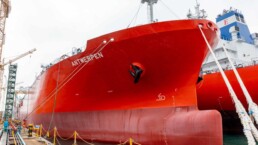

IMO approval clears path for ammonia-fuelled ships with new safety guidelines
The guidelines offer a clearer pathway to manage the specific risks of ammonia, particularly its toxicity and handling requirements.
New safety guidelines for the use of ammonia as fuel on gas carriers have been approved at the International Maritime Organization’s Maritime Safety Committee, marking a significant step towards the commercial deployment of ammonia-fuelled vessels.
The guidelines, developed through collaboration between Lloyd’s Register (LR), the Belgian Federal Public Service Mobility and Transport (FPS Mobility) and gas shipping operator EXMAR, provide a practical framework to manage the safety risks associated with ammonia.
By drawing directly on operational experience and regulatory input, the guidance sets out how ammonia can be handled safely on-board and supporting early projects as they move towards execution.
Building on EXMAR’s and Lloyd’s Register’s experience in mid-size gas carrier shipbuilding, the Directorate-General Shipping of the FPS Mobility has taken the lead in the IMO to draft these guidelines. This guarantees that the regulatory framework reflects the real-world practice, enabling innovation while maintaining effective safeguards within a controlled environment.
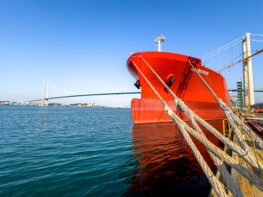
The approval is expected to reduce uncertainty for shipowners and designers assessing ammonia as a future fuel, particularly as the first vessels designed to operate on ammonia approach entry into service.
Liam Blackmore, Global Head of Technology Adoption and Integration, Lloyd’s Register, said: “The approval of these guidelines provides a clear signal that ammonia is moving from concept to a fuel with an emerging international safety framework. It demonstrates how close collaboration between industry, flag administrations and technical organisations can accelerate the safe adoption of new fuels at scale. Being part of this collaboration reinforces our role as a trusted advisor helping to turn ambition into practical, scalable solutions for the maritime energy transition.”

“As a public authority, we want to facilitate the energy transition by ensuring that an appropriate regulatory framework is in place in good time. Thanks to close cooperation with the industry, this framework is also tailored to the realities on the ground,” noted Nathalie Deleuze, FPS Mobility’s Maritime Expert in Alternative fuels.
Celine Audenaerdt, Head of Environmental and Technical Affairs, The Royal Belgian Shipowners’ Association (KBRV) added: “Through intensive collaboration and the combination of strong in-house competence and hands-on experience, the partners have succeeded in developing robust and practical safety guidelines.”
“Drawing on more than four decades of operational experience and the challenges encountered along the way, we jointly developed these guidelines through a strong partnership. We would like to thank the teams at FPS Mobility and Lloyd’s Register for their excellent cooperation and valuable contribution throughout the process,” concluded Kristof Coppé, Director Fleet Operations & Technical Business Development at EXMAR.



Related News.

Navigating the Multi-Orbit Era: In Conversation with Intellian’s Jon Harrison at SMM 2026
At SMM 2026 in Hamburg, the rapid evolution of maritime satellite communications took centre stage. Across the exhibition halls, discussions among…
Cyprus ports need joint energy and investment strategy, shipping agents chief says
Cyprus needs a coordinated strategy for shipping, energy and environmental protection to support port investment and modernisation, Cyprus shipping…

MASO Public Affairs introduces MASO Regulatory Intelligence
A new subscription service helping businesses understand what is changing and what it means for them MASO Public Affairs introduces MASO Regulatory…
Anglo-Eastern helps turn CMBTECH’s ammonia ambition into an operational reality
From early feasibility study and risk-based design to newbuilding supervision, crew readiness and technical management, Anglo-Eastern drew on its…

Escalation of attacks threatens to derail recovery in Middle East oil exports
World oil demand is forecast to fall by 2.5 mb/d y-o-y in 4Q26 and 2.6 mb/d on average in 2026. As the Iran war manifests itself through restricted…
New study finds shipping pays twice its share to EU ETS earmarked revenues should triple to help build market for sustainable fuels and technologies
Shipping is responsible for around 10% of EU ETS emissions but pays almost 20% of the ETS bill. Unlike other sectors, it has never received free…

MSARC strengthens maritime mass rescue readiness through training and national live exercise off Dakar, Senegal
Joint MSARC–FHAS programme combines three days of SAR training with a national multi-agency live exercise The Maritime Search and Rescue Council ,…

Sogese report deliveries are still being delayed as container freight rates fluctuate
FOR IMPORTERS Spot rates into the Mediterranean are back at January levels, Far East to Europe reliability sits at pandemic lows, and nearly…

Glencore begins trading on Australian Securities Exchange
Glencore has begun trading on the Australian Securities Exchange under the ASX code GLC. Gary Nagle, Glencore’s CEO, said it was an exciting day for…
BIMCO Shipping Number of the Week
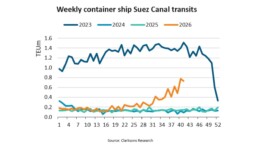
Suez Canal container ship transits exceed 50% of pre-disruption levels "During the first two weeks of October, weekly container ship capacity…
Subscribe to our newsletter!
if you dont want to swim alone in the ocean of news, sign up for the newsletter, and you will receive daily all the important news of world shipping!
