Middle East crisis weighs on global labour markets


Report finds rising risks to jobs, incomes and working conditions worldwide, with uneven effects across regions and growing pressure on migrant workers and remittance-dependent economies.
The conflict is expected to affect labour markets for some time, with the scale and duration of its effects depending on how the situation evolves. While the full consequences will take time to materialize, the ILO warns that the shock is already transmitting through multiple channels, with pressures expected to build gradually in a global economy still marked by weak growth and decent work deficits.
Under an illustrative scenario in which oil prices climb about 50 per cent above their early 2026 average, global working hours are projected to fall by 0.5 per cent in 2026 and 1.1 per cent in 2027. This is equivalent to 14 million and 38 million full-time equivalent jobs, respectively, while real labour incomes are expected to decline by 1.1 per cent and 3 per cent (US$ 1.1 trillion and US$ 3 trillion), respectively. Global unemployment would rise more gradually, increasing by 0.1 percentage points in 2026 and 0.5 percentage points in 2027.
The effects are expected to be highly uneven across regions, sectors and workers, with the Arab States and Asia and the Pacific identified as the most exposed due to their integration with Gulf energy flows, trade routes, supply chains and labour migration.
“Beyond its human toll, the Middle East crisis is not a short-lived disruption. It is a slow-moving and potentially long-lasting shock that will gradually reshape labour markets,” said Sangheon Lee, Chief Economist at the ILO and author of the report, Employment and Social Trends May 2026 Update: Growing labour market risks of the Middle East crisis.
“The world of work is one of the main channels through which global shocks become human shocks. What begins as an external shock eventually reaches workers and enterprises and can leave deeper scars by weakening the conditions that make work decent, secure and protected.”
Arab States and Asia and the Pacific, the most exposed regions
The Arab States are the most directly exposed, through conflict-related disruption, damage to economic activity, displacement, energy and trade shocks, and pressure on migrant workers and refugees. Total working hours could fall by 1.3 per cent under rapid de-escalation. This could reach 3.7 per cent under a prolonged crisis and 10.2 per cent under a severe escalation. Such a decline is more than twice the scale recorded during the COVID-19 pandemic in 2020. Around 40 per cent of employment in the region is concentrated in high-exposure sectors such as construction, manufacturing, transport, trade and hospitality. Migrant workers are expected to bear a disproportionate share of labour market adjustment.
In Asia and the Pacific, reliance on imported energy and Gulf-linked labour migration is creating visible spillover effects in a number of key economies. For the region as a whole, working hours are projected to decline by 0.7 per cent in 2026 and 1.5 per cent in 2027, while real labour income could fall by 1.5 per cent and 4.3 per cent, respectively. Around 22 per cent of workers in the region are in high-exposure sectors, including agriculture, transport, manufacturing and construction, while tourism-dependent economies are under increasing strain.
Migration and remittances: A lifeline under pressure
The spillover is putting pressure on migration and remittances, the report notes.
Since the crisis began, labour deployments to Gulf Cooperation Council countries have declined sharply in several labour-sending economies, while repatriations are rising. This reflects flight disruptions, security concerns, and weaker labour demand in construction, hospitality and transport.
Remittance flows – a key source of household income for many families and communities across South and Southeast Asia – are beginning to weaken, with early signs of contraction in some countries.
“If the crisis disrupts both deployments and remittance flows, the effects could spread to consumption, poverty and local employment in countries of origin,” the report says.
ILO calls for timely and well-targeted action
Policy responses have been rolled out across countries, but remain uneven, fragmented and often constrained by limited fiscal space. Measures have largely focused on short-term stabilization, including energy subsidies, cash transfers, business support and administrative steps for migrant workers. Policy gaps are most acute in fragile and conflict-affected contexts.
The report says a sharper focus on jobs and incomes is needed to prevent a temporary energy shock from becoming a longer-lasting setback for decent work. This includes ensuring that policy measures reach the most affected workers and enterprises, particularly informal workers, migrant workers, refugees and small businesses, while balancing macroeconomic stability with employment protection.
The ILO calls for employment-centred crisis responses, grounded in social dialogue and aligned with international labour standards, to protect jobs, incomes and working conditions as the crisis evolves.
The ILO will continue to monitor the labour market effects of the crisis as new data become available and transmission channels evolve.
Source: ILO



Related News.
Hong Kong Global Maritime Trade Summit to return for third edition
The International Chamber of Shipping, in collaboration with the Transport and Logistics Bureau of the Government of Hong Kong and the Hong Kong…

Appetite for US crude oil exports climbs despite high freight
South Korea tops US crude destinations at 568,600 b/d VLCC rates to Asia double, closing arbitrage window European refining margins…
Shipping stocks Rally as Hormuz Traffic plunges 75%
Ship traffic through the Strait of Hormuz — a critical chokepoint handling about 20% of global crude oil and liquefied natural gas shipments — has…
Diana Shipping announces Time Charter Contract for m/v G P Zafirakis with Classic Maritime
Diana Shipping, a global shipping company specializing in the ownership and bareboat charter-in of dry bulk vessels, announced that, through a…
New IMO ESP Code framework for Remote Inspection Techniques
The International Maritime Organisation, through Resolution MSC.584(111) , has adopted amendments to the International Code on the Enhanced…

ABS opens Offshore & Marine Support Center in Bergen
ABS has expanded its capabilities in the Norwegian maritime market with the opening of a cutting-edge support center in Bergen, bringing advanced…
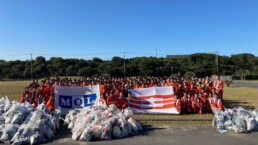
MOL holds giant step memorial ceremony and beach cleanup at Kashima Coast
Memorial and Reflection 20 Years After the Accident: Learning from the Past to Foster an Even Stronger Safety Culture Mitsui O.S.K. Lines, announced…
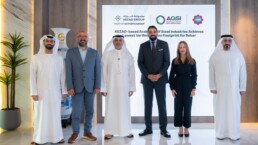
KEZAD-based Arabian Gulf Steel Industries achieves lowest verified Carbon Footprint for Rebar
CARES UK verified Environmental Product Declaration confirms 139 kg CO₂e per tonne for rebar produced at AGSI’s KEZAD Abu Dhabi facility Arabian…
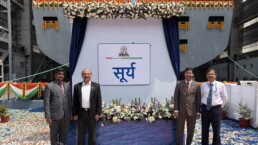
Indian Register of Shipping announces launch of first fleet support ship INS Surya
Indian Register of Shipping continues to strengthen its role in supporting the Indian Navy and India’s naval shipbuilding capabilities through the…

VLCCs Climbing the Record Charts
LR2 The TC1 75kt MEG/Japan index decreased by only a single point this week to WS928. The corresponding Baltic round-trip TCE fell by $2,000 to…
Subscribe to our newsletter!
if you dont want to swim alone in the ocean of news, sign up for the newsletter, and you will receive daily all the important news of world shipping!
