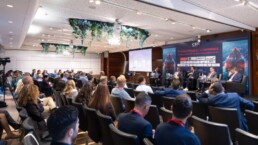

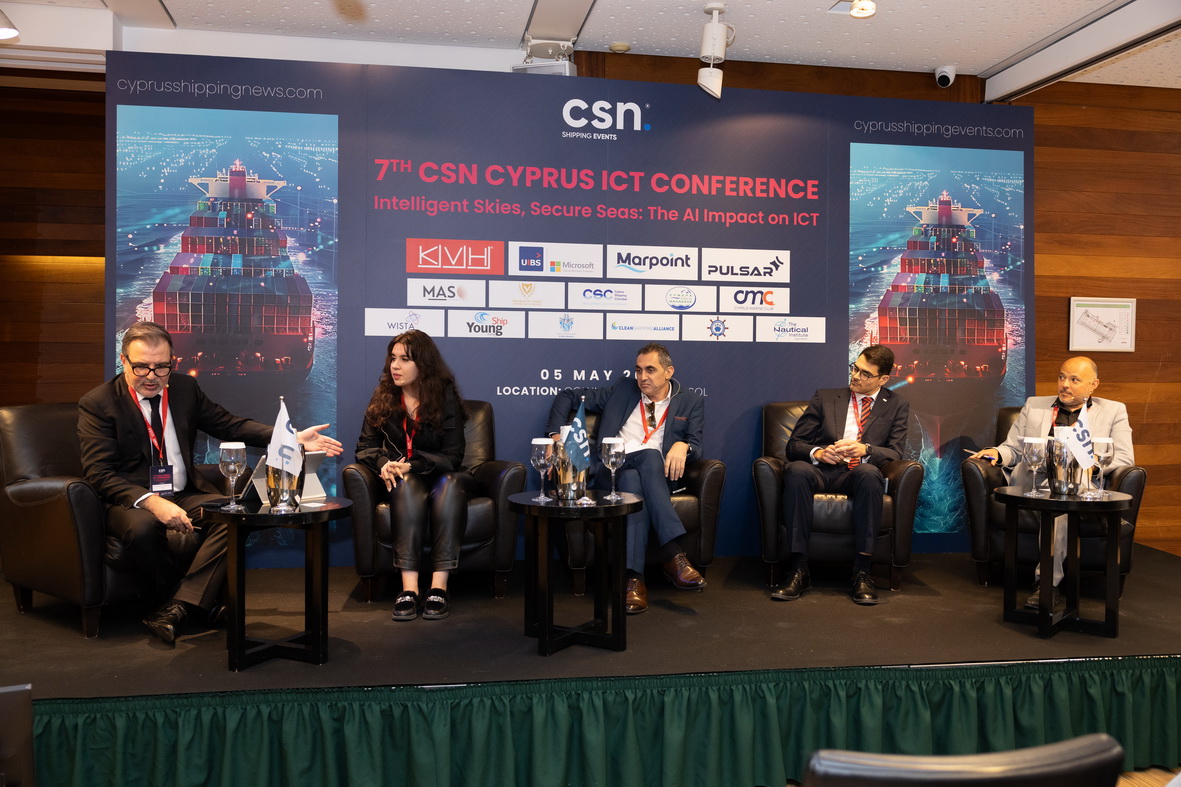
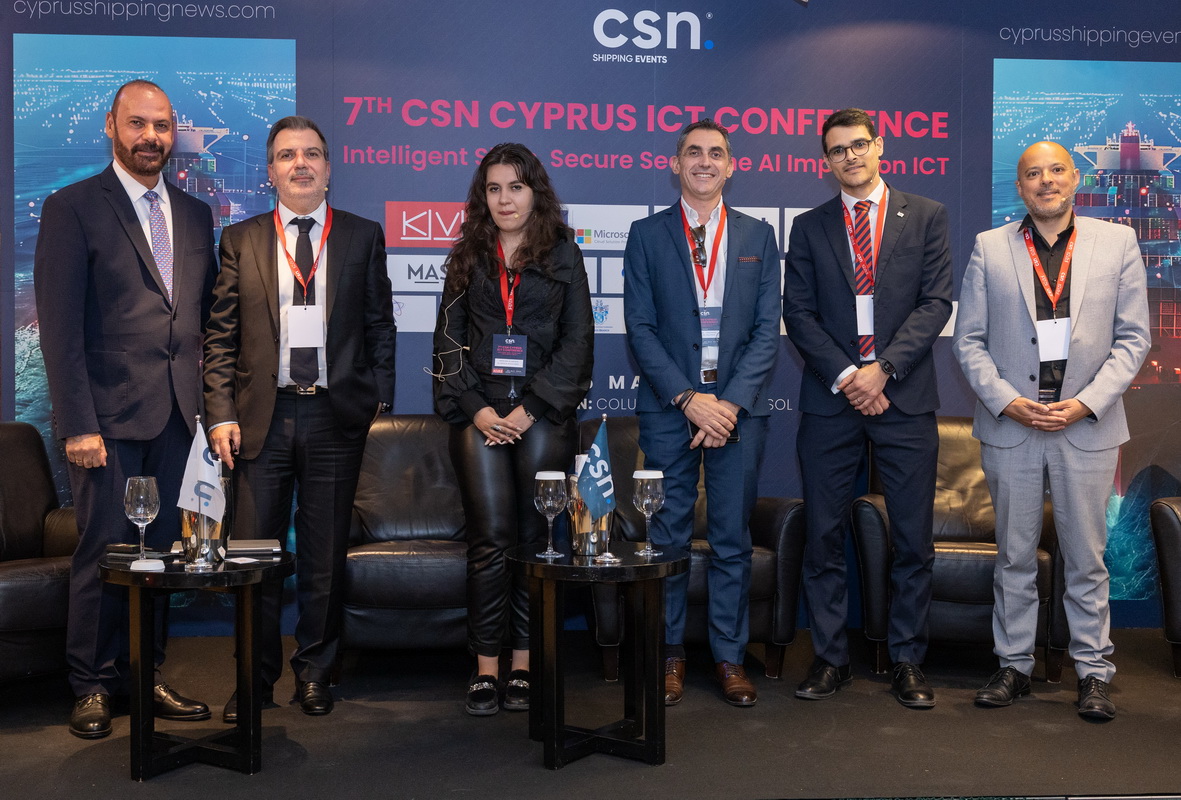
The 7th CSN Cyprus Shipping ICT Conference, held on 5th May 2026 at the Columbia Plaza in Limassol, successfully brought together maritime C-Suite executives, CIOs, CISOs, and fleet managers to confront the most pressing technological challenges in the industry. Under the theme “Intelligent Skies, Secure Seas: The AI Impact on ICT,” the event moved past traditional presentations, offering highly interactive, scenario-driven panels that tested the industry’s readiness for the digital future.
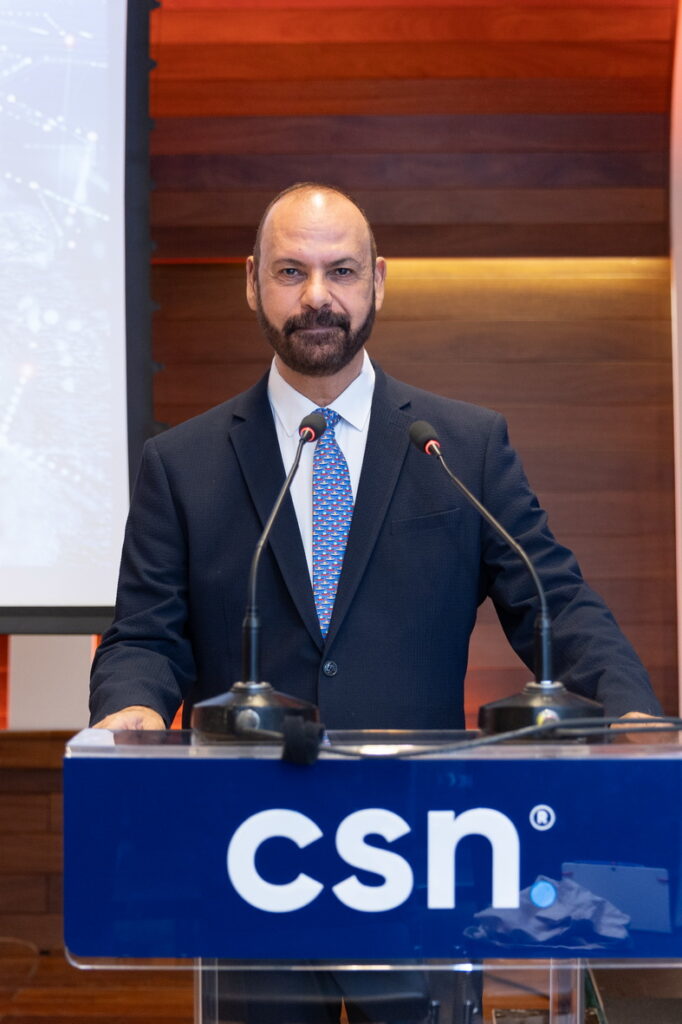
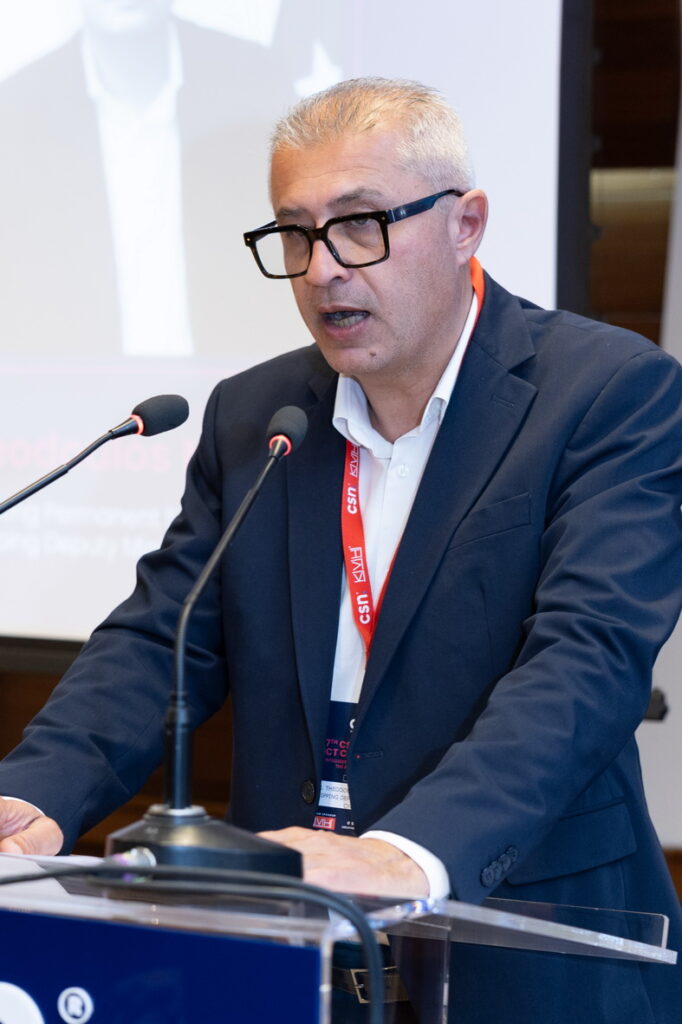
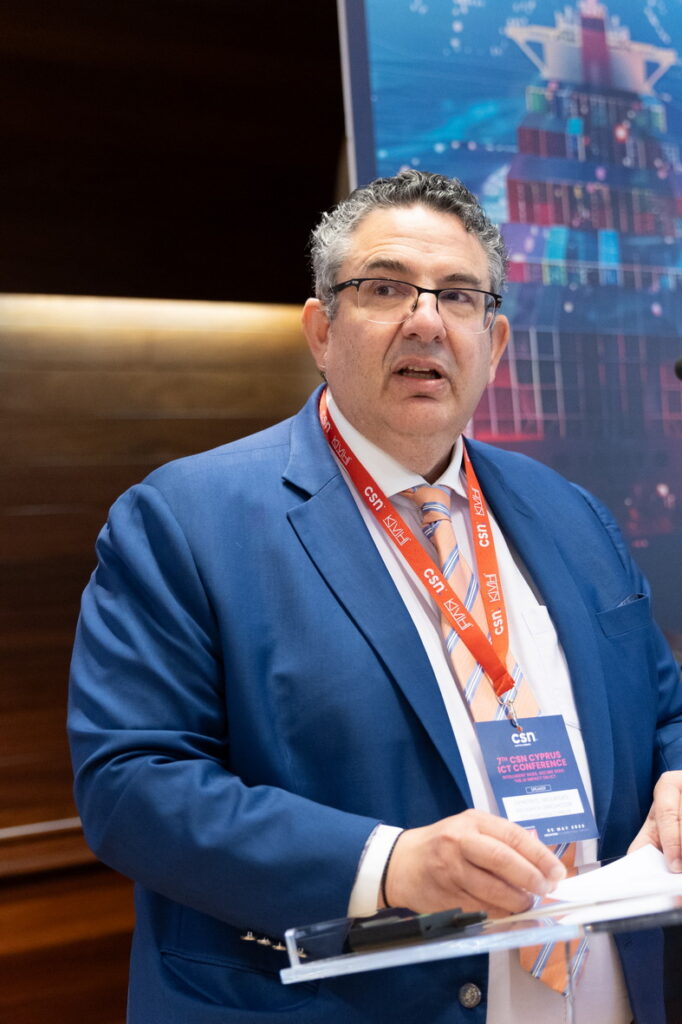
Held under the auspices of the Shipping Deputy Ministry of Cyprus and supported by key industry bodies, the conference opened with a welcome address by Dr. Theodoulos Mesimeris, Acting Permanent Secretary of the Shipping Deputy Ministry, followed by a keynote from Demetris Skourides, Chairman of the Research Innovation Foundation Cyprus.
Here are the key outcomes and takeaways from the day’s interactive sessions:
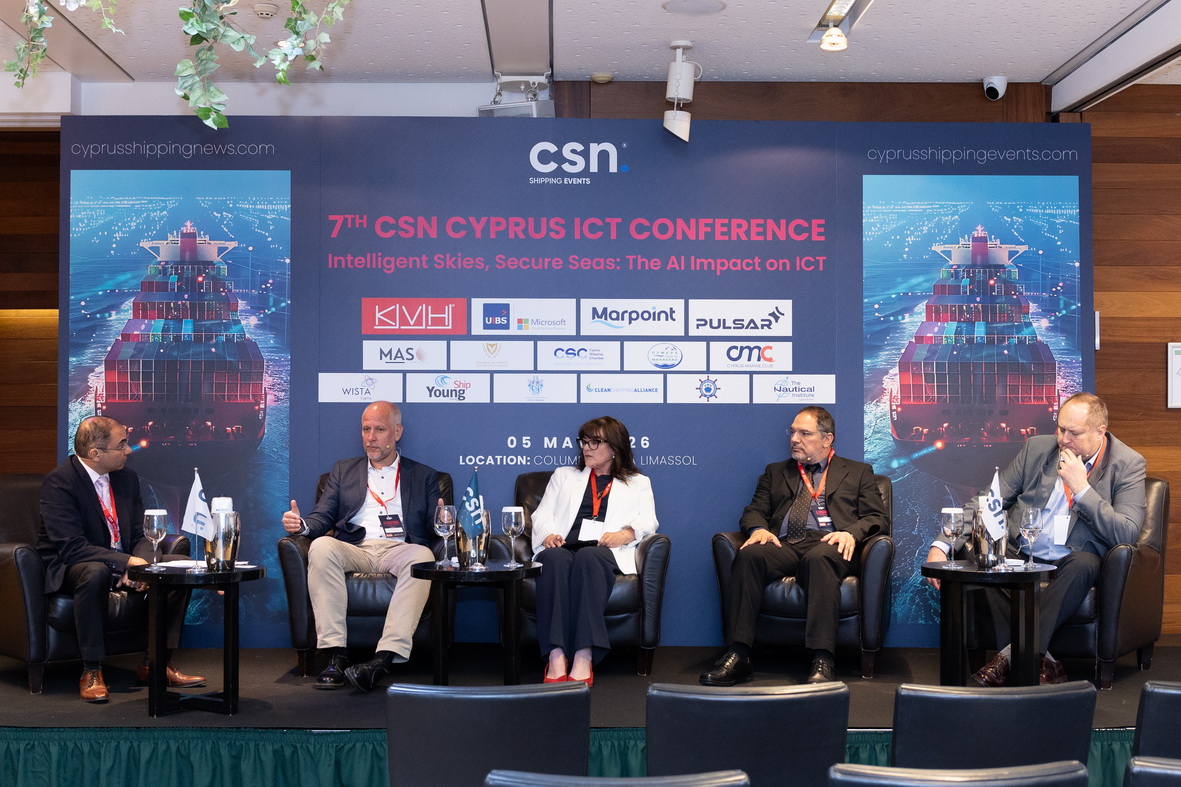
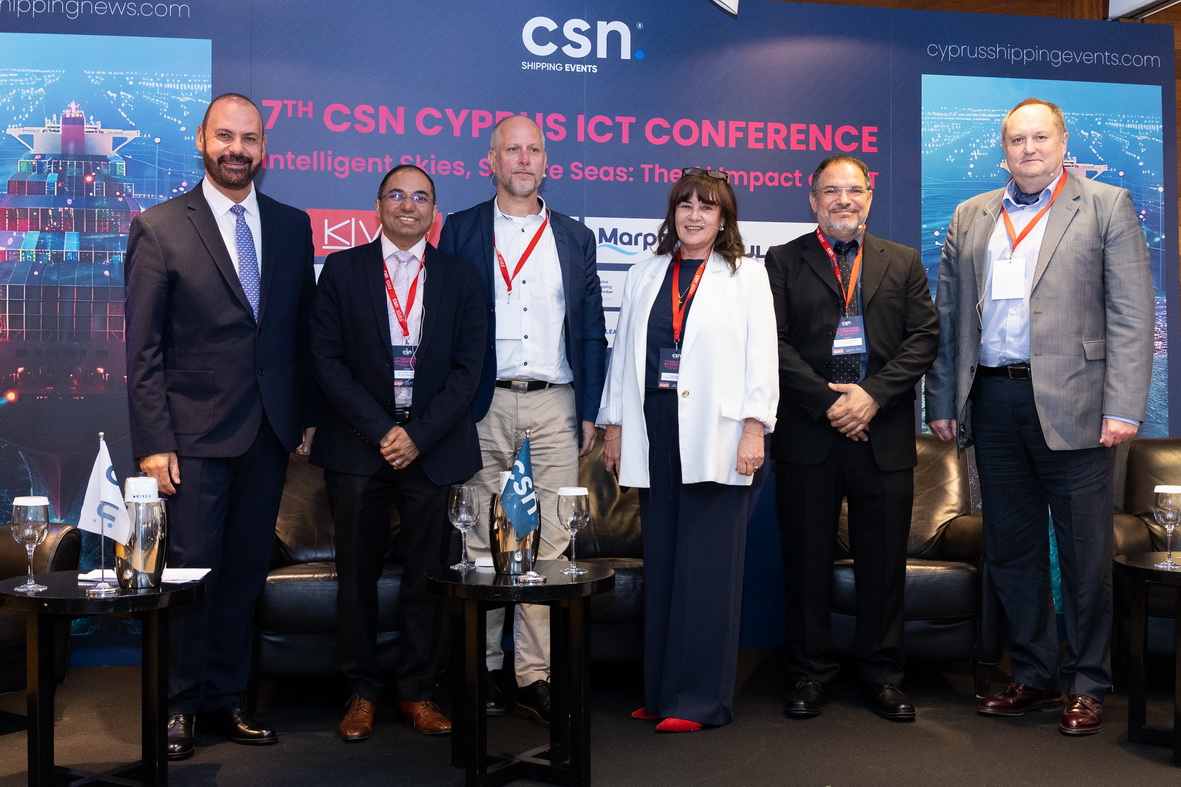
Session 1: The Skies – MythBusting SatComs in the Era of LEO and 5G
The opening session tackled the “bandwidth battles” head-on. As vessels transform into “always-on” operational nodes, the panel, moderated by Capt. Rohit Tandon, stripped away marketing hype to focus on technical reality.
Through the “MythBusters” format, panellists David Tropp Hag (KVH Industries), Yvonne Tsanos (Azimuth Radio Technologies), Angelos Demetiou (RaytecDOT), and Sergey Popravko (Mastermind Shipmanagement) debated what truly delivers tangible ROI at sea. The consensus highlighted that while Low Earth Orbit (LEO) constellations and maritime 5G are revolutionising fleet connectivity, true operational resilience relies on robust redundancy and separating reliable tech from industry noise.
Session 2: The Shield – The War Room and Redefining Cybersecurity
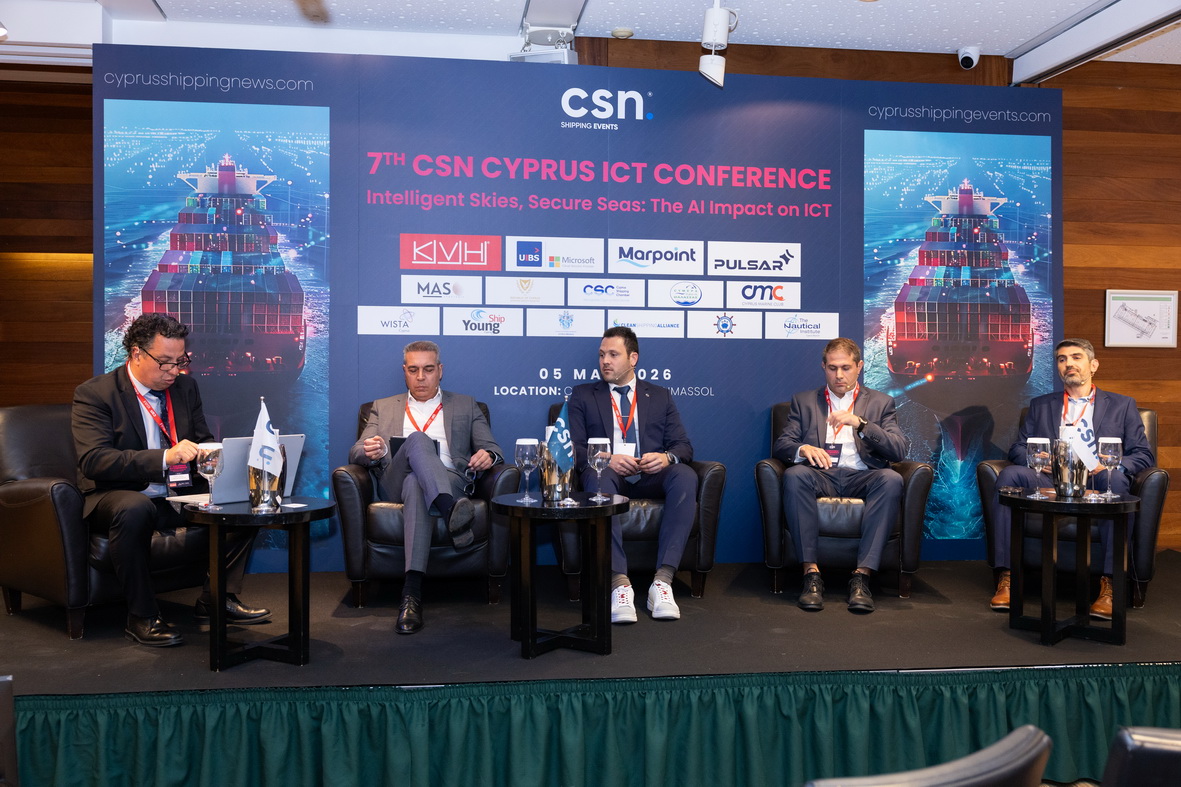
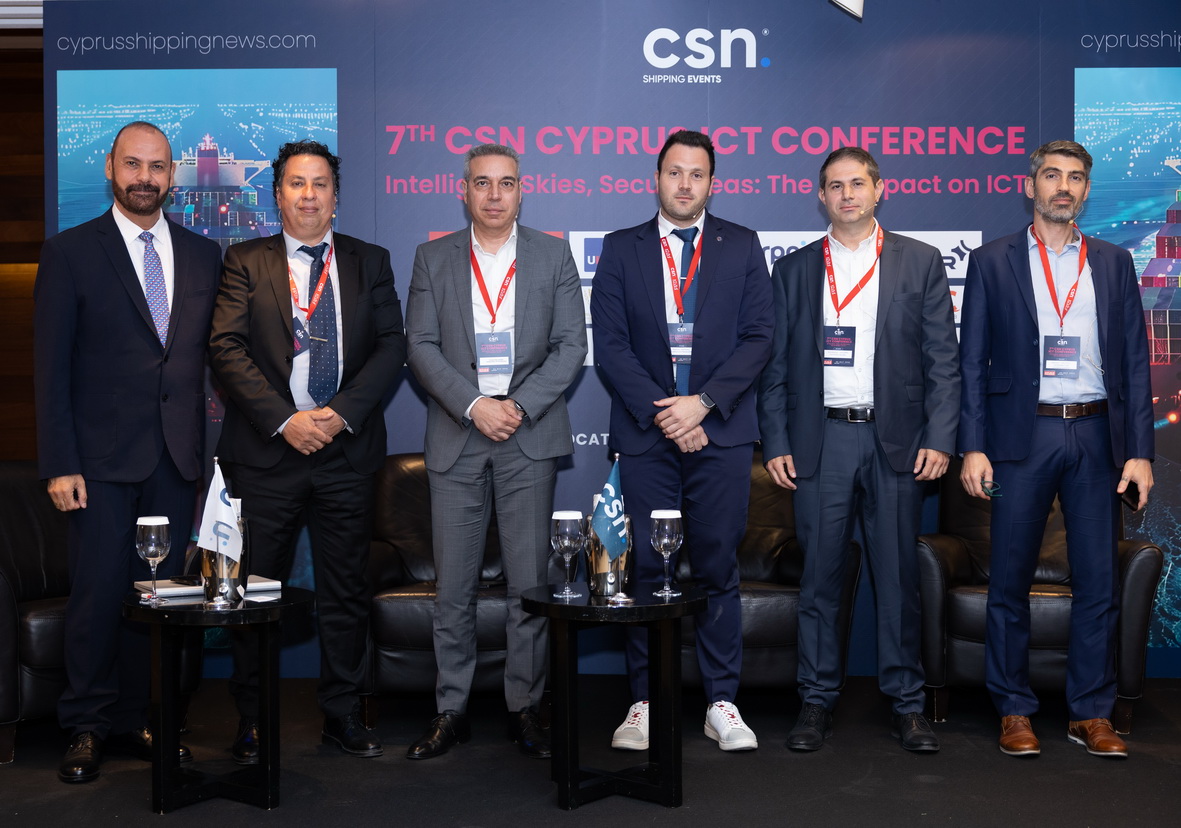
Moving away from basic compliance, Session 2 placed the audience directly in the hot seat with “The War Room”—a live, audience-driven cyber-attack simulation on a vessel at sea. Moderated by Manos Manoli (Marlow Navigation), the session stress-tested incident response and commercial decision-making under severe pressure.
The subsequent panel, featuring George Michaelides (Digital Security Authority), Alexander Shulman (Tototheo Global), Marios Ioannou (Columbia Shipmanagement), and Marios Christofi (InterMaritime Shipmanagement), addressed highly practical industry concerns. Key discussion points included:
-
The realities and onshore challenges of complying with new cybersecurity regulations.
-
The critical necessity of live threat intelligence for vessels and the resources available to achieve it.
-
The feasibility of small and medium-sized shipping companies adopting emerging security technologies like EDR, XTR, and SOCs.
-
A fundamental shift in perspective regarding NIS2: viewing the entity-level obligation not merely as a box-ticking exercise, but as a genuine driver for corporate cyber resilience.
Session 3: The Brain – The AI Courtroom
The final session confronted the collision of machine intelligence and human expertise through a highly charged mock trial. Moderated by Polykarpos Yiannoudes, General Manager of UiBS, the panel was designed to openly debate the ethics, commercial liability, and authority of AI-assisted decision-making.
The “courtroom” featured Maria Athanasiou prosecuting the legal risks and standard of care , Gregoris Gregoriou defending the technology and ROI trade-offs , Chrysostomos Efthymiou testifying on the practical realities and automation bias on the bridge, and Theodoros Loukaidis addressing policy and governance gaps.
The panel stress-tested two core exhibits:
Exhibit A: “The Algorithm Saw It First” explored accountability when an AI system recommends a route deviation that results in a near-miss. The debate exposed the ambiguity of liability—questioning whether blame falls on the human operator, the vendor, or the integrator when decision-support becomes de facto authority.
Exhibit B: “The Strait Decision” introduced geopolitical warfare context. Using a scenario where a Chinese-built AI model advises a vessel to hold position in a Hormuz-type chokepoint—contradicting Western maritime doctrine—the panel questioned whether AI neutrality truly exists when model provenance and geopolitical assumptions differ.
The trial concluded by asking attendees to consider the future of autonomy, emphasising that until AI neutrality and accountability are provable, the explicit override authority of human masters must be protected.
Closing and Charity Initiatives
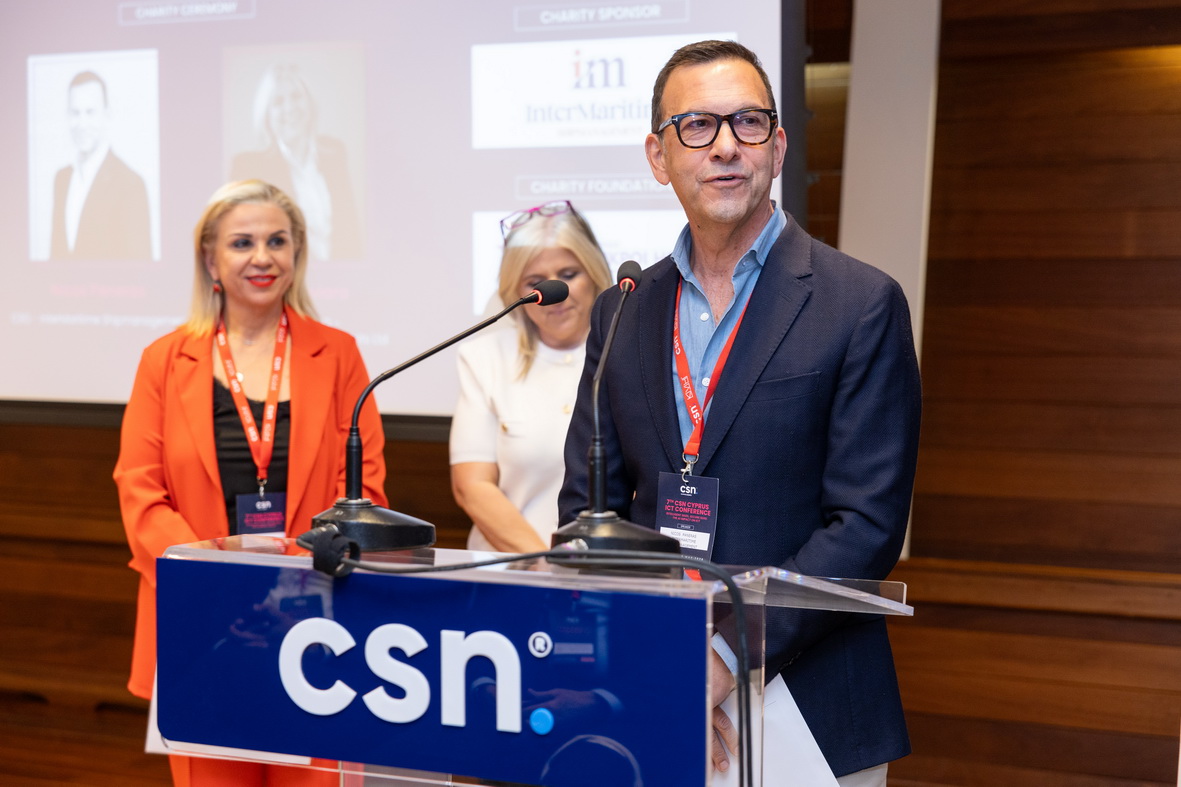
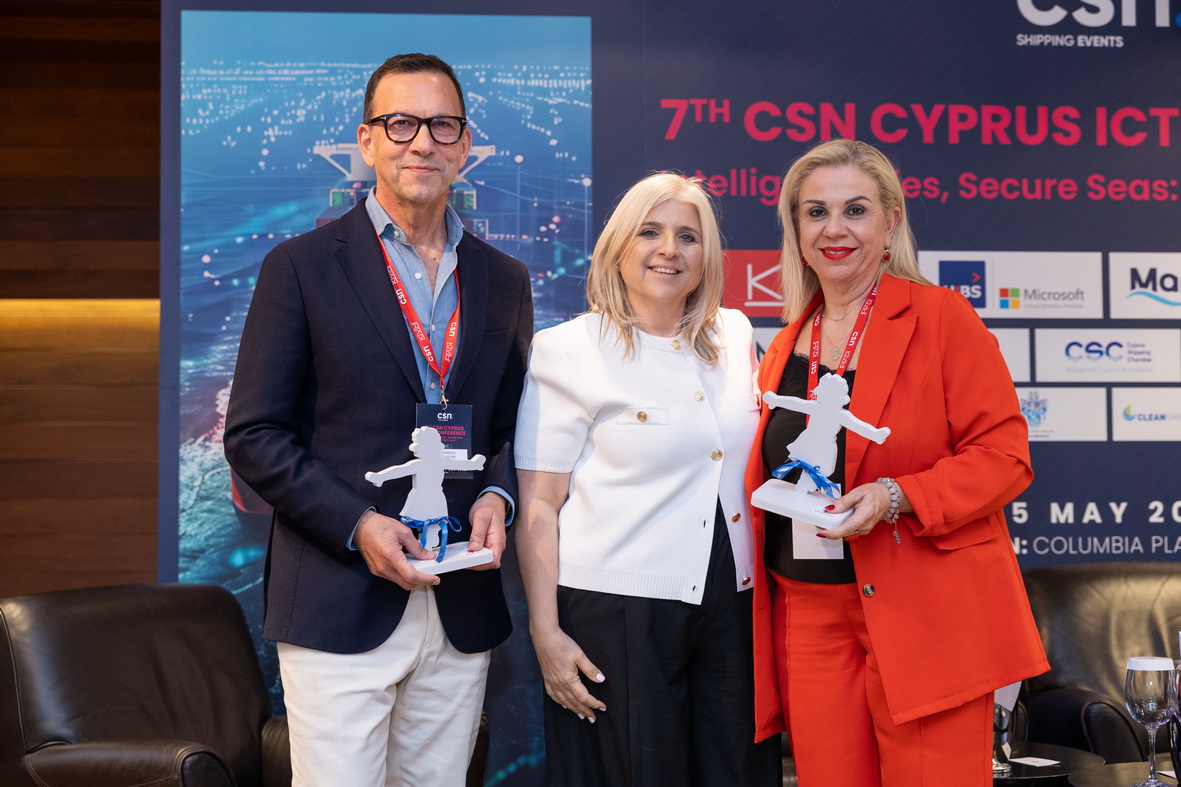
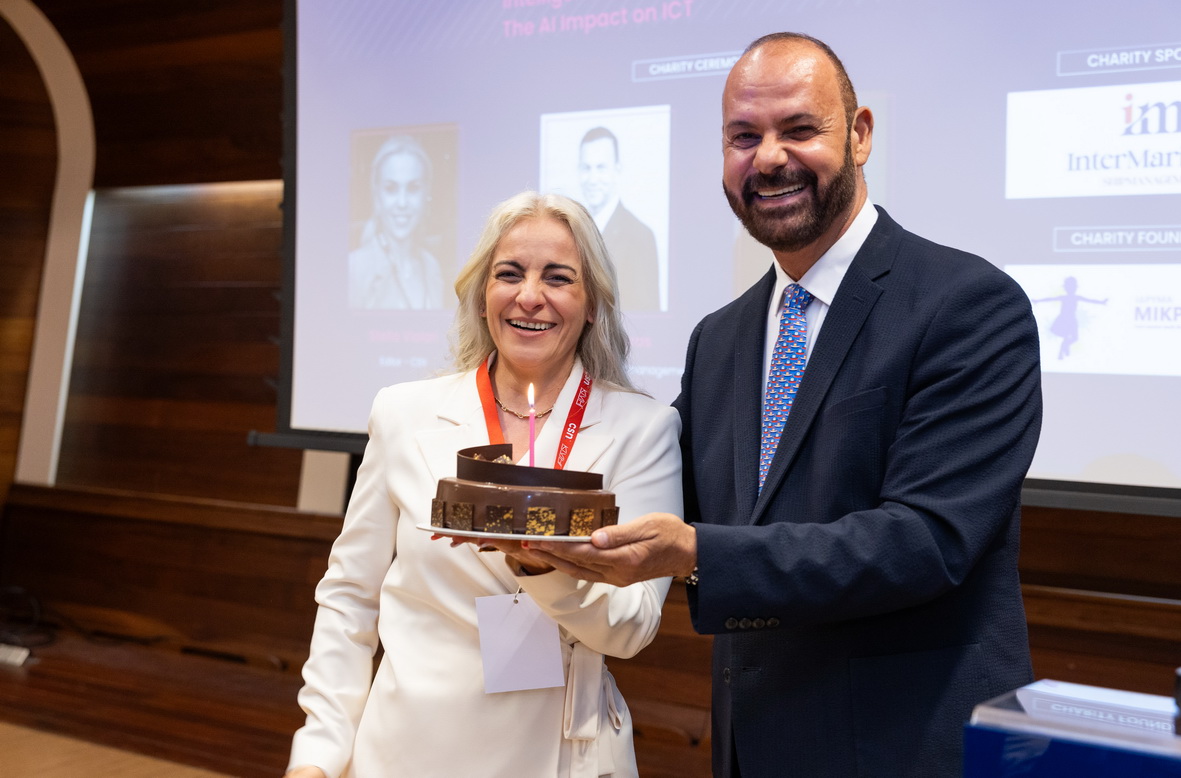
The conference concluded with a charity ceremony led by Stella Violari, Nicos Paneras, and Elena Haviara, raising vital awareness and contributions for the Mikroi Iroes foundation. Following the closing remarks, attendees enjoyed a networking lunch sponsored by Pulsar, reflecting on a day that successfully bridged the gap between the human element and the digital future.



Related News.

Highly successful conclusion of the 2nd CSN Northern European Crewing Conference in Hamburg: Crewing 5.0 in Focus
We are delighted to report the highly successful conclusion of the 2nd CSN Northern European Crewing Conference, which took place on the 22nd of…
Dualog launches secure messaging for ship and shore
Dualog has launched Dualog Chat, a secure messaging service built for shipping. The first service in Workspace by Dualog, Chat gives crews and shore…
India and the Widening Tanker Freight Squeeze
This week’s Tanker Market Monitor tracks India’s return to Iraqi supply as Gulf oil movements recover amid persistent shipping risk. Yanbu is…
Star Bulk announces strategic partnership with Hermes World Maritime
Star Bulk Carriers Corp. (the "Company" or "Star Bulk") (Nasdaq & Euronext Athens: SBLK), today announced that it has entered into a strategic…
Thai Cave Rescue Diver Chris Jewell to Bring Lessons in Risk and Safety to IMCA Global Summit
The International Marine Contractors Association (IMCA) will launch its new strategy to 2030 as hundreds of offshore leaders and technical…
Port call optimisation pilot projects reveal significant emissions savings potential
Commercial ships spend between 4% and 6% of their operating year waiting outside ports. That idle time is one of the clearest inefficiencies in…
Port Houston celebrates Historic Project 11 Milestone
Houston Ship Channel expansion strengthens safety, efficiency, and regional prosperity Port Houston joined federal, state, and local elected…

Global VLCC Spot Earnings rise to $805,000/Day
Clarksons Research, the data and analytics arm of the Clarksons Group, continue to track and monitor shipping activity and markets impacted by the…
IMO adopts frameworks to assess marine geoengineering research activities
New guidance will help governments evaluate marine geoengineering research proposals to ensure they are safe for the environment. The…
BIMCO adopts addendum to support investments in retrofit projects
The shipping industry is working to improve fuel efficiency and ship performance to address decarbonisation requirements, new regulations and rising…
Subscribe to our newsletter!
if you dont want to swim alone in the ocean of news, sign up for the newsletter, and you will receive daily all the important news of world shipping!
