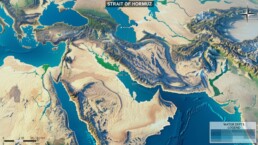

The blockading of ships in the Strait of Hormuz as a result of the conflict between the United States and Iran has demonstrated how ships and seafarers have become “leverage in geopolitical disputes,” according to the head of the UN’s International Maritime Organization (IMO).
Since conflict began with the US-Israeli bombing of Iran in late February, up to 20,000 seafarers have been stranded on some 2,000 vessels in the Persian Gulf, which is bordered by Iran to the north, unable to pass safely through the narrow waterway.
Arsenio Dominguez, Secretary-General of the IMO spoke to UN News ahead of a key meeting about maritime security due to take place in the Security Council on Monday.
UN News: What is maritime security?
Arsenio Dominguez: Maritime security covers the protection of ships, ports, seafarers, and maritime infrastructure from any type of security threat, such as piracy, terrorism and cyberattacks.
For States with a coastline, it encompasses, in addition, a wide range of illicit activities that may involve the sea, ships, ports or coasts, including arms and drug trafficking, the illegal trade in wildlife, crude oil theft, human trafficking and smuggling and the illegal dumping of toxic waste.
UN News: Why is maritime security so important?
Arsenio Dominguez: Maritime security is essential because it protects global trade, ensures the safety of seafarers, and keeps supply chains functioning. Without maritime security, maritime development stalls – and without maritime development, sustainable development becomes impossible.
UN News: What has the current crisis in the Strait of Hormuz told us about the threat to shipping and seafarers in conflict situations?
Arsenio Dominguez: It shows that ships and crews are highly exposed in conflict zones, often becoming leverage in geopolitical disputes.
Commercial shipping has been unjustifiably targeted, detained, or attacked, highlighting how fragile freedom of navigation can be.
UN News: What mechanisms can realistically protect seafarers caught in geopolitical conflicts?
Arsenio Dominguez: Information sharing is crucial. Dis-information and misinformation can make it extremely challenging for risk-based voyage planning.
Ship operators and companies must ensure risk assessments are taken before any voyage through or in a conflict area.
Diplomacy and de-escalation of conflict is essential, while the case for naval escorts is limited. Naval escorts are never a sustainable solution.
UN News: How have the threats to maritime security evolved over the past few years?
Arsenio Dominguez: Looking back at maritime security historically, the hijacking of the Italian cruise ship Achille Lauro, in October 1985, was a significant terrorist act.
The events of September 11 (2001) in the United States of America raised the question of the vulnerability of ships and, in particular, the possibility of shipping being used as a vector of terrorist activity.
Incidents of piracy and armed robbery against ships were first highlighted at IMO in the late 1980s, with a surge of reported incidents in Asia
With the rise of Somalia-based piracy in the early 2010s, focus turned to piracy and armed robbery at sea in the Gulf of Aden and the wider Western Indian Ocean, as well as on the Gulf of Guinea in West Africa.
The need for cooperation, capacity building and information sharing is more important than ever.
UN News: What are the new emerging challenges and how vulnerable is the shipping industry?
Arsenio Dominguez: There are a number of new challenges including cyberattacks on navigation, cargo systems, and port operations, the sabotage of undersea cables, pipelines, and port infrastructure, drone attacks on vessels and vulnerabilities related to autonomous vessels.
Increasing sophistication by criminals operating in the supply chain continues to present unique challenges to the global maritime trading environment.
UN News: To what extent is it becoming more challenging to protect ships and seafarers?
Arsenio Dominguez: More recently, international shipping and seafarers have become caught up in geopolitical conflicts which are not their responsibility.
Ships of different flags and seafarers of many different nationalities have been caught up.
Ships have been subject to uncrewed aerial and surface projectiles. These are civilian merchant vessels without the capabilities to defend themselves from these attacks.
Civilian seafarers are not combatants and should never be a target.
UN News: What are the other potential maritime chokepoints, globally, that could be vulnerable in a time of conflict?
Arsenio Dominguez: Key global waterways for international shipping include:
- Suez Canal
- Bab elMandeb Strait
- Strait of Hormuz
- Straits of Malacca and Singapore
- The Strait of Istanbul, the Strait of Çanakkale and the Marmara Sea
- Panama Canal
Any disruption in these areas would have major global consequences for trade and for food security for populations worldwide.
UN News: What role is the UN playing?
Arsenio Dominguez: IMO works with international partners to support States to build their capacity to prepare for, counter and respond to security threats.
This work focuses on the meaningful implementation of relevant IMO security instruments, effective information sharing, regional cooperation/coordination and legal/legislative reform (such as national legislation to prosecute criminal acts).
More generally, IMO works to promote freedom of navigation through international law (UNCLOS), facilitate diplomatic responses to maritime crises, advocate for seafarer safety and humanitarian protections and to support maritime capacity building for vulnerable States.
Source: United Nations



Related News.

Navigating the Multi-Orbit Era: In Conversation with Intellian’s Jon Harrison at SMM 2026
At SMM 2026 in Hamburg, the rapid evolution of maritime satellite communications took centre stage. Across the exhibition halls, discussions among…

Cyprus ports need joint energy and investment strategy, shipping agents chief says
Cyprus needs a coordinated strategy for shipping, energy and environmental protection to support port investment and modernisation, Cyprus shipping…

MASO Public Affairs introduces MASO Regulatory Intelligence
A new subscription service helping businesses understand what is changing and what it means for them MASO Public Affairs introduces MASO Regulatory…

Anglo-Eastern helps turn CMBTECH’s ammonia ambition into an operational reality
From early feasibility study and risk-based design to newbuilding supervision, crew readiness and technical management, Anglo-Eastern drew on its…

Escalation of attacks threatens to derail recovery in Middle East oil exports
World oil demand is forecast to fall by 2.5 mb/d y-o-y in 4Q26 and 2.6 mb/d on average in 2026. As the Iran war manifests itself through restricted…

New study finds shipping pays twice its share to EU ETS earmarked revenues should triple to help build market for sustainable fuels and technologies
Shipping is responsible for around 10% of EU ETS emissions but pays almost 20% of the ETS bill. Unlike other sectors, it has never received free…

MSARC strengthens maritime mass rescue readiness through training and national live exercise off Dakar, Senegal
Joint MSARC–FHAS programme combines three days of SAR training with a national multi-agency live exercise The Maritime Search and Rescue Council ,…

Sogese report deliveries are still being delayed as container freight rates fluctuate
FOR IMPORTERS Spot rates into the Mediterranean are back at January levels, Far East to Europe reliability sits at pandemic lows, and nearly…

Glencore begins trading on Australian Securities Exchange
Glencore has begun trading on the Australian Securities Exchange under the ASX code GLC. Gary Nagle, Glencore’s CEO, said it was an exciting day for…

BIMCO Shipping Number of the Week
Suez Canal container ship transits exceed 50% of pre-disruption levels "During the first two weeks of October, weekly container ship capacity…
Subscribe to our newsletter!
if you dont want to swim alone in the ocean of news, sign up for the newsletter, and you will receive daily all the important news of world shipping!
