Accelleron’s ACCX300-L low speed turbocharger now market-ready
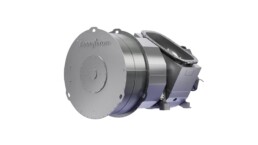

- Cartridge concept decouples service from drydock scheduled
- Simplified platform with two frame sizes enables flexible configurations across the power range
- Digital capability enables data-driven maintena
Acceleron announced the commercial launch of the ACCX300-L, its next-generation low-speed turbocharger for two-stroke marine engines, designed to help shipowners adapt to evolving operating profiles, fuels, and emissions requirements. Combining a new service‑friendly cartridge concept, a simplified platform architecture, and integrated digital capability, the ACCX300‑L decouples turbocharger maintenance from drydock schedules while delivering long‑term efficiency, flexibility, and uptime across the vessel lifecycle.
Developed for an unpredictable operating environment
The ACCX300-L has been developed in response to an increasingly unpredictable operating environment, where operating profiles, emissions regulation, fuel pathways, and trade routes continue to evolve. Rather than focusing on incremental performance gains, Accelleron has taken a more holistic approach, re-imagining turbocharging as a long-life platform that combines next-generation technology with a transformed service model, simplified design and integrated data capabilities. This enables operators to adapt to changing conditions without compromising efficiency, reliability, or service continuity.
A transformed service model for lifecycle flexibility
One of the key elements of the ACCX300-L is a redesigned, service-friendly cartridge concept that changes how turbochargers are maintained over the vessel lifecycle. By enabling the entire rotating subassembly to be exchanged during a port stay, major service events are no longer tied to drydock schedules. This decoupling allows maintenance to align with actual operating conditions rather than fixed overhaul intervals, reducing reliance on off-hire periods, and giving operators greater control over planning, cost and uptime.
Over a typical 25-year vessel lifespan, this approach reduces scheduled service events from four to three, while enabling full use of component lifetimes. The result is more predictable maintenance planning, lower lifecycle cost and reduced operational disruption.
Simplified platform architecture reduces complexity
This service-led design is supported by a simplified platform architecture, including a reduction in frame sizes from five to two. This standardization streamlines spare parts logistics and reduces inventory requirements across mixed fleets. It also enables flexible configurations across the power range, including single and twin arrangements using combinations of the two frame sizes, allowing the same platform to be applied across different vessel and engine requirements, while supporting upgrade pathways over the vessel lifecycle.
Optimized efficiency across operating profiles
The twin configuration, supported by an automatic turbocharger cut-in/cut-out function, improves efficiency during slow steaming. When engine load drops below a defined threshold, one turbocharger is disengaged, allowing the remaining unit to operate closer to its optimal efficiency range. This prevents the rise in specific fuel consumption at lower loads – translating to significant cost and emissions reductions across annual operating hours, while maximizing lifetime per unit.
Integrated digital capability for data‑driven maintenance
Connectivity is built into the ACCX300-L system, enabling a shift from periodic, manual reporting to continuous, data-driven decision-making. Using signals already available via onboard systems, including RPM, temperature and speed, Accelleron’s Turbo Insights capability provides visibility of turbocharger health and performance. This supports more accurate diagnostics, better-informed maintenance decisions and optimal use of component lifetimes. When combined with service agreements such as Turbo MarineCare, it also allows more predictable maintenance planning and cost control.
Christoph Rofka, President of Accelleron’s Medium and Low Speed Division, said: “More than just an evolutionary improvement, the ACCX300-L is a re-imagined turbocharging concept built around the operational realities shipowners and operators face today. By combining next-generation turbocharger technology with transformed serviceability, data connectivity and a simplified platform design, we are giving customers greater control over how their assets are configured, maintained and optimized over time. This enables a more flexible and efficient approach to operations. As market conditions fluctuate, this ability to adapt becomes as important as performance itself.”
Against this backdrop of evolving regulatory, operational, and commercial pressures, operators require solutions that can perform reliably across multiple operating profiles while maintaining cost discipline and uptime. The ACCX300-L is designed to meet those requirements, supporting both immediate operational needs and long-term flexibility.
Since being first announced in 2023, the ACCX300-L has successfully passed all qualification tests and is now commercially available to order.



Related News.

Navigating the Multi-Orbit Era: In Conversation with Intellian’s Jon Harrison at SMM 2026
At SMM 2026 in Hamburg, the rapid evolution of maritime satellite communications took centre stage. Across the exhibition halls, discussions among…

Cyprus ports need joint energy and investment strategy, shipping agents chief says
Cyprus needs a coordinated strategy for shipping, energy and environmental protection to support port investment and modernisation, Cyprus shipping…

MASO Public Affairs introduces MASO Regulatory Intelligence
A new subscription service helping businesses understand what is changing and what it means for them MASO Public Affairs introduces MASO Regulatory…

Anglo-Eastern helps turn CMBTECH’s ammonia ambition into an operational reality
From early feasibility study and risk-based design to newbuilding supervision, crew readiness and technical management, Anglo-Eastern drew on its…

Escalation of attacks threatens to derail recovery in Middle East oil exports
World oil demand is forecast to fall by 2.5 mb/d y-o-y in 4Q26 and 2.6 mb/d on average in 2026. As the Iran war manifests itself through restricted…

New study finds shipping pays twice its share to EU ETS earmarked revenues should triple to help build market for sustainable fuels and technologies
Shipping is responsible for around 10% of EU ETS emissions but pays almost 20% of the ETS bill. Unlike other sectors, it has never received free…

MSARC strengthens maritime mass rescue readiness through training and national live exercise off Dakar, Senegal
Joint MSARC–FHAS programme combines three days of SAR training with a national multi-agency live exercise The Maritime Search and Rescue Council ,…

Sogese report deliveries are still being delayed as container freight rates fluctuate
FOR IMPORTERS Spot rates into the Mediterranean are back at January levels, Far East to Europe reliability sits at pandemic lows, and nearly…

Glencore begins trading on Australian Securities Exchange
Glencore has begun trading on the Australian Securities Exchange under the ASX code GLC. Gary Nagle, Glencore’s CEO, said it was an exciting day for…

BIMCO Shipping Number of the Week
Suez Canal container ship transits exceed 50% of pre-disruption levels "During the first two weeks of October, weekly container ship capacity…
Subscribe to our newsletter!
if you dont want to swim alone in the ocean of news, sign up for the newsletter, and you will receive daily all the important news of world shipping!
