Maritime autonomous drone swarm demonstrated live for the US Navy in Trondheim
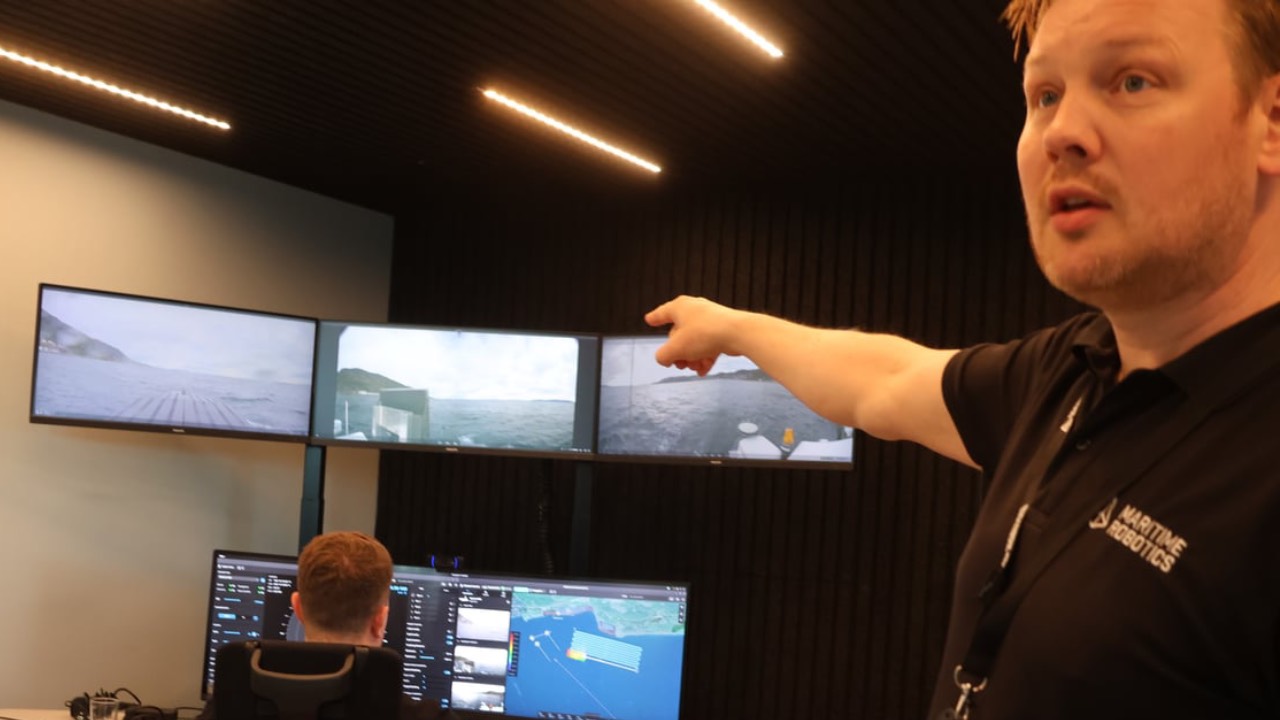

– The US is in the lead. They are placing orders now to build up their arsenal. They understand that you cannot wait two years and see how this develops, says Eirik Hovstein, Vice President Defence & Security at Maritime Robotics.
Autonomous maritime operations were taken from concept to practice as multiple USVs were deployed in realistic scenarios. The demonstration provided participants with a concrete understanding of platform capabilities, including remote control, real-time data transmission, and supervised autonomy in dynamic environments.
.jpg?width=6960&height=4640&name=Maritime%20Robotics%20Demo%20US%20Navy%20Photo%20Lars%20Bugge%20Aarset%20Fremtidens%20Industri%20(59).jpg) Operation controlled from Maritime Robotics Remote Operations Center (ROC) at Brattørkaia in Trondheim. Photo: Lars Bugge Aarset/Fremtidens Industri
Operation controlled from Maritime Robotics Remote Operations Center (ROC) at Brattørkaia in Trondheim. Photo: Lars Bugge Aarset/Fremtidens Industri
Maritime drone swarm demonstration
One of the highlights was the demonstration of a maritime autonomous drone swarm, where multiple vessels operated in coordinated formation to simulate the protection of a mothership, a concept that is becoming increasingly important in modern naval operations.
.jpg?width=6960&height=4640&name=Maritime%20Robotics%20Demo%20US%20Navy%20Photo%20Lars%20Bugge%20Aarset%20Fremtidens%20Industri%20(68).jpg) Autonomous maritime drone swarm. Photo: Lars Bugge Aarset/Fremtidens Industri
Autonomous maritime drone swarm. Photo: Lars Bugge Aarset/Fremtidens Industri
– The way warfare was conducted a year ago – you would not have survived more than a couple of days today, said Hovstein.
The maneuver illustrated how multiple autonomous platforms can operate together under remote supervision, combining autonomy with effective vessel-to-vessel cooperation.
.jpg?width=6960&height=4640&name=Maritime%20Robotics%20Demo%20US%20Navy%20Photo%20Lars%20Bugge%20Aarset%20Fremtidens%20Industri%20(67).jpg) Seabed mapping, autonomous navigation and collision avoidance. Photo: Lars Bugge Aarset/Fremtidens Industri
Seabed mapping, autonomous navigation and collision avoidance. Photo: Lars Bugge Aarset/Fremtidens Industri
Operations in practice
Maritime Robotics’ autonomous vessel Mariner USV carried out advanced seabed mapping, while the larger Mariner X demonstrated autonomous navigation and collision avoidance in dynamic conditions.
The larger vessels departed from Maritime Robotics’s base in Vanvikan on Fosen, while the smaller Otter units operated in the Trondheim harbour basin. All operations were controlled from the company’s Remote Operations Center (ROC) at Brattørkaia in Trondheim, where real-time monitoring and control were maintained throughout the demonstration.
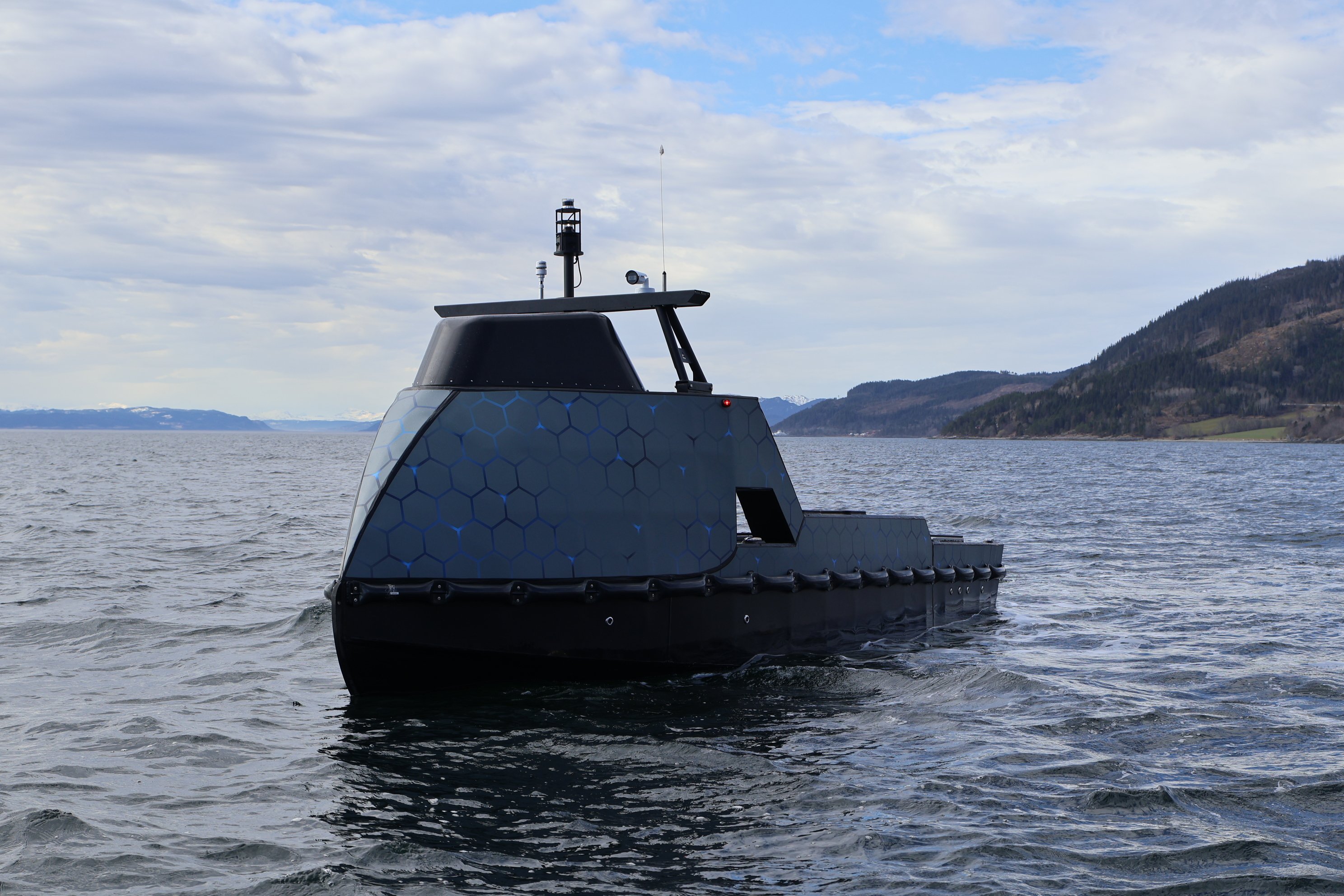 Mariner X. Photo: Maritime Robotics
The Otter platform also carried out deployment and recovery of an underwater ROV, demonstrating how surface and subsea systems can be integrated for real-time data collection.
The demonstration was streamed live to a broad international audience, with real-time data feeds including sonar (MBES), magnetometer data, and video shared throughout the operation. This provided direct insight into key enabling technologies such as beyond-line-of-sight communication, sensor fusion, and human–machine interfaces.
.jpg?width=6960&height=4640&name=Maritime%20Robotics%20Demo%20US%20Navy%20Photo%20Lars%20Bugge%20Aarset%20Fremtidens%20Industri%20(33).jpg) Otter units operating in the Trondheim harbour basin Photo: Lars Bugge Aarset/Fremtidens Industri
Otter units operating in the Trondheim harbour basin Photo: Lars Bugge Aarset/Fremtidens Industri
International interest
The event was conducted in collaboration with Koniag Government Services. A technical Q&A session followed, allowing participants to explore operational aspects such as logistics, deployment, and mission-specific adaptation.
– The pace of development is so fast that technology that was cutting-edge only a few months ago can quickly become outdated, said Hovstein.
– The market is so large that we have no chance of covering it alone, and the maritime drone industry is not set up for scale. Very few players are able to produce thousands of units per year, said Eirik Hovstein.
Experience from Ukraine also demonstrates the operational maturity of the systems, including their use in clearing sea lanes for mine threats to enable Ukrainian grain exports in the Black Sea.
– The systems we delivered in 2023 are still operational – that says something about their robustness. They are being used in some of the most demanding conditions imaginable. In 2025, our systems identified more than 70 subsea objects, and the operators down there are the most experienced we have seen, they use the systems every day and continuously push their limits, said Eirik Hovstein.
The strong international interest contrasts with more limited domestic attention, but underscores a rapidly growing global demand for unmanned systems that enhance maritime security and operational efficiency at sea.
– It is striking that Norway does not yet have operational maritime drones, Eirik Hovstein adds.
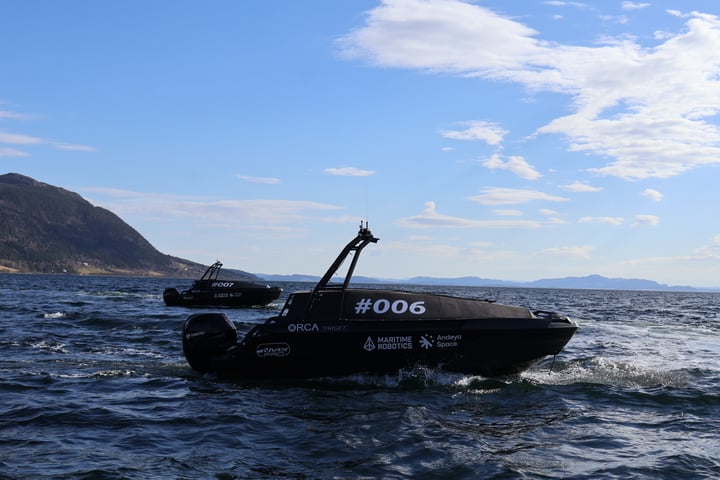
Mariner USV and Mariner X departed from their base in Vanvikan. Photo: Maritime Robotics
Part of strong cluster collaboration
Maritime Robotics is a member of the Ocean Autonomy Cluster, NORDSEC Nordic Defence and Security Cluster, and Maritimt Forum Midt-Norge, main partner for Testination – Test Arena for Maritime Operations in Trondheimsfjorden, as well as an incubator company in the FI Ocean Space Incubator, where the company works closely with a range of other companies across the cluster networks.
For members of the Ocean Autonomy Cluster and NORDSEC, the demonstration highlighted both the maturity of Norwegian-developed technology and the expanding international market for autonomous maritime systems.
.jpg?width=6405&height=4270&name=Maritime%20Robotics%20Demo%20US%20Navy%20Photo%20Lars%20Bugge%20Aarset%20Fremtidens%20Industri%20(14).jpg) Eirik Hovstein in interview with Teknisk Ukeblad. Photo: Lars Bugge Aarset/Fremtidens Industri.
Eirik Hovstein in interview with Teknisk Ukeblad. Photo: Lars Bugge Aarset/Fremtidens Industri.
Video from the demo



Related News.

QatarEnergy extends LNG cancellations into November as Hormuz disruption drags on
QatarEnergy’s latest cancellations run into early November. Buyers in Europe and Asia are finding replacement cargoes, switching to other fuels or…
Shipping must pool demand to unlock alternative fuel investment, says EmissionLink
Shipping must move beyond individual fuel procurement strategies and aggregate demand for alternative fuels if it is to unlock the investment needed…
EuroHoldings announces Charter Contract Extensions for two of its Feeder Containerships, M/V Joanna and M/V Aegean Express
Euroholdings, an owner and operator of container carriers and tanker vessels and provider of container and tanker seaborne transportation…
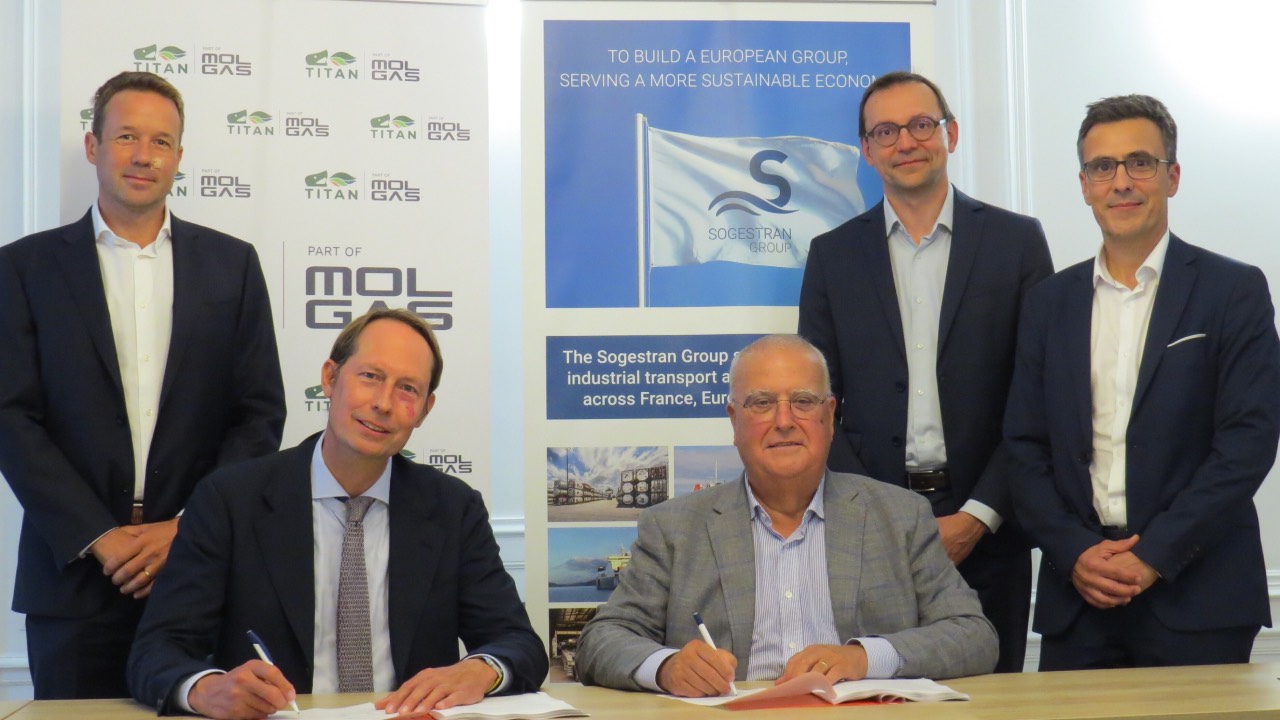
Titan and Sogestran agree long-term partnership for new 6,000cbm LNG bunker vessel
Agreement covers the construction, charter and operation of the vessel in the Western Mediterranean. Titan Clean Fuels, part of Molgas Group, has…
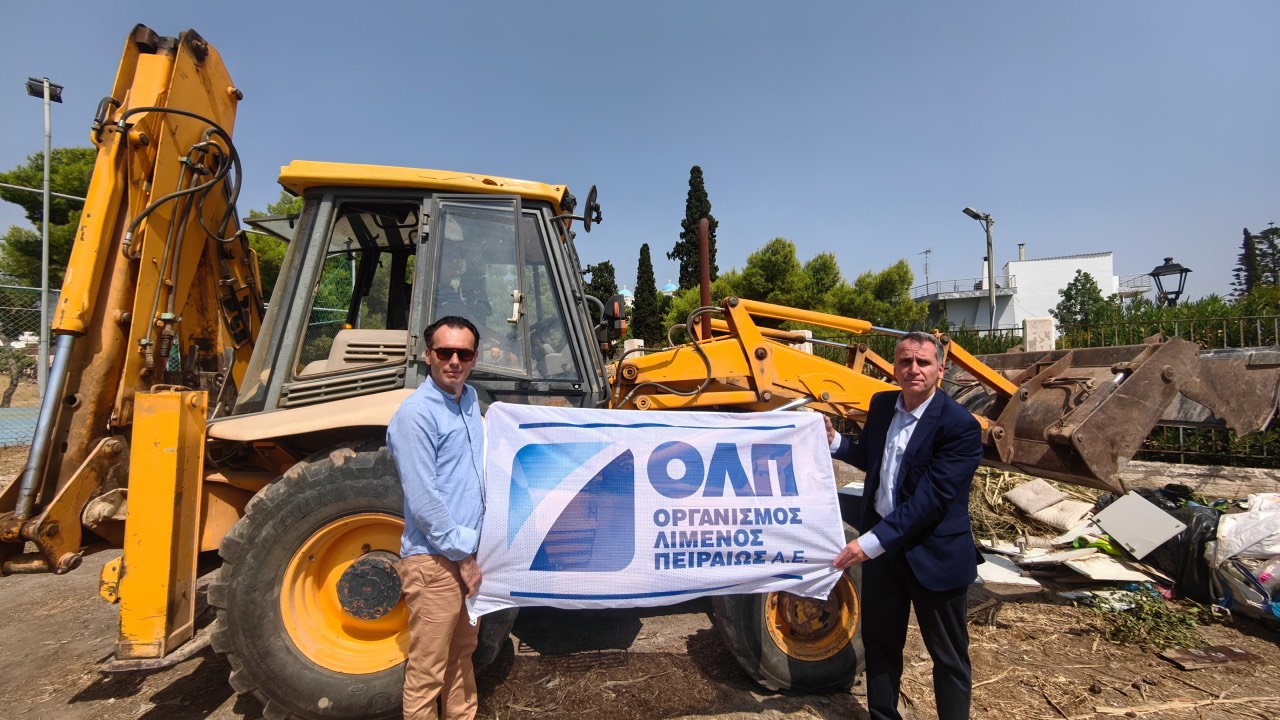
Piraeus Port Authority provides practical support to the Municipality of Salamina for the restoration of recent wildfire affected areas
Immediate response by Piraeus Port Authority through the provision of an excavator to support the removal and collection of fire-damaged materials…

Trump vows US will take ‘all’ of Venezuela’s oil as deal details emerge
The White House has published the terms of its Venezuela oil deal, naming the private company at its centre and confirming Washington’s majority…
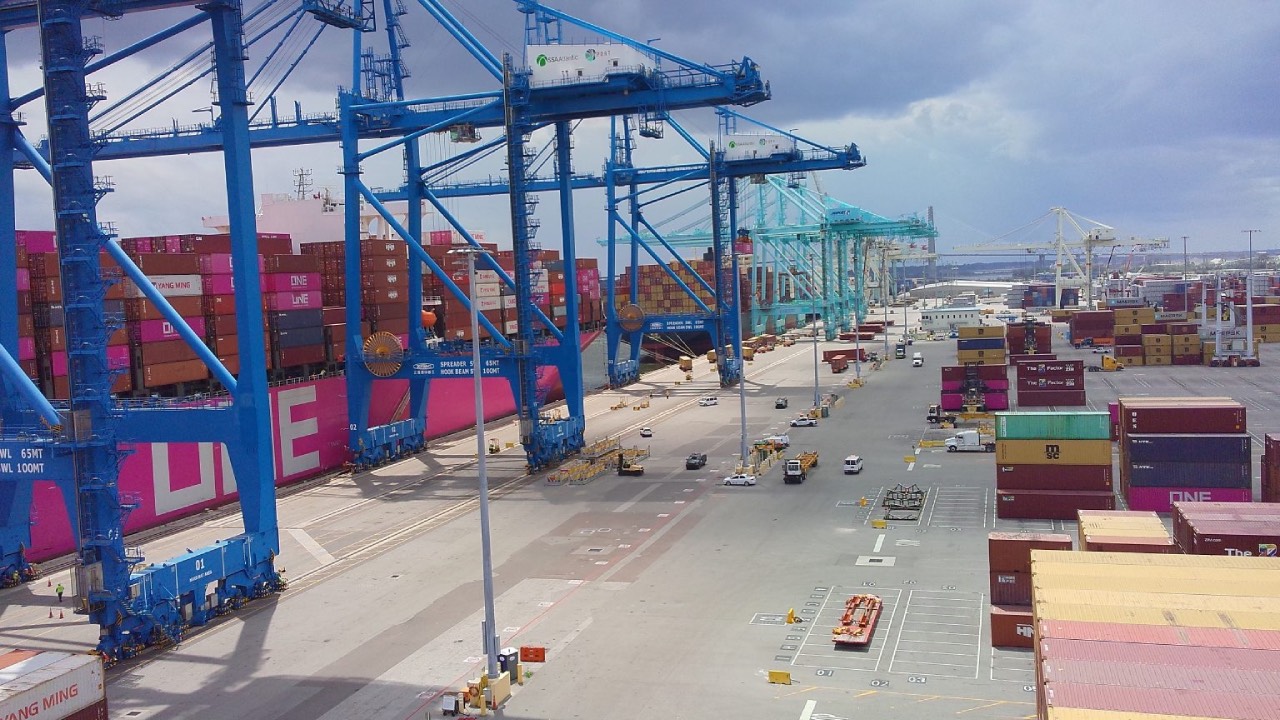
SSA Marine upgrades benefit shippers as air draft project enters final months
Following the completion of a more than $100 million modernization project, SSA Marine is expanding capacity and improving efficiency at its…
Lloyd’s Register launches RouteFlex to provide unprecedented stowage flexibility for container operators
New LR RouteFlex application leverages metocean data to empower operators with more flexible, dynamic, voyage-based stowage optimisation. Lloyd’s…
“Deeper Than It Seems”an awareness campaign revealing the regulatory work behind every coastal tourism experience
The Saudi Red Sea Authority has launched its awareness campaign "Deeper Than It Seems," introducing the regulatory system that underpins maritime and…

Intermodal Report Week 35 2026
Pls find below the Intermodal Report - Week 35 2026 Intermodal Report Week 35 2026
Subscribe to our newsletter!
if you dont want to swim alone in the ocean of news, sign up for the newsletter, and you will receive daily all the important news of world shipping!
