Wärtsilä analysis highlights how optimal technology could unlock more affordable district heating for Polish consumers
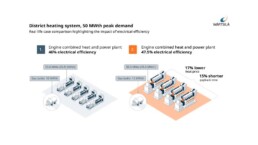

- Wärtsilä’s analysis shows that Polish district heating operators could achieve more efficient cost structures through a more optimal choice of generating technology.
- Modern, flexible combined heat and power plants can actively participate in dynamic electricity markets, strengthening operators’ revenue base.
- High electrical efficiency in combined heat and power engines is critical: it delivers significantly lower heat prices and faster returns.
- According to the analysis, choosing a less efficient heat and power generation technology in an area with a population of 50,000, could result in additional costs of nearly EUR 1.1 million per year.
Technology group Wärtsilä’s analysis indicates that the district heating system in Poland could achieve more efficient cost structures through a more optimal choice of generating technology. The operators could achieve this by raising the importance of electricity production to that of heat generation. This could result in strengthened revenue base for district heating operators, which in turn could enable greater flexibility in how the end-user pricing is structured.
Combined heat and power (CHP), or cogeneration, technology generates heat and electricity simultaneously in a single, energy efficient process. Most of the heat used in Europe’s heating and cooling networks is derived from this technology. However, in Polish cogeneration plants, heat production has been the priority for many years, while the generated electricity has been treated as a by-product. Typically, the electricity produced has been considered a ‘bonus’ and sold at a fixed price, without having any significant impact on the energy market.
The reason for this is that most cogeneration plants were not designed to adapt to frequent switching on and off, nor to respond quickly to changes in electricity prices. At the same time, the core mission for district heating operators has been to supply heat to residents, with little consideration given to delivering value through electricity production.
“For a long time, district heating systems operated ‘alongside’ the electricity market, selling electricity mainly at fixed prices based on long-term contracts and with a subtle link to market dynamics. This is now changing. Across Europe, heating plants are increasingly becoming active participants in the modern energy system, supporting flexibility and responding to market signals rather than acting solely as heat suppliers,” says Krzysztof Łokaj, Manager for Market Development in Europe and Africa at Wärtsilä Energy.
The energy market’s paradigm shift
The increasing adoption of energy from renewable sources, notably solar and wind, is creating fluctuations in electricity production, thus influencing prices. This paradigm shift away from traditional system operation means that production flexibility is needed to be able to respond to rapidly changing situations. The change is, however, also an opportunity for modern cogeneration plants.
By embracing flexible technologies that allow increases or decreases in output, plants can support energy systems, rather than just heat homes. When weather conditions are not favourable for renewable generation, cogeneration plants with engines can be switched on and off as needed and can respond to changes in electricity demand. Thus, a modern plant should not only heat homes but also earn money by producing electricity when it is most expensive. The combination of modern electrical technologies with efficient engines in cogeneration plants allows cities to provide heat in a reliable and affordable manner. At the same time, district heating operators can operate in a financially stable way.
However, some engines are better at converting fuel into electricity than others. As a result, they produce more electricity that can be sold for the same amount of fuel. This, in turn, helps gain more revenue and thus keep heat prices stable, while reducing the investment payback time. The Wärtsilä analysis includes details of the financial benefits gained from utilising high efficiency engines. Using Plexos modelling, Wärtsilä Energy analysed a 50 MWth district heating system under two combined heat and power efficiency scenarios. The results show that higher electrical efficiency delivers significantly lower heat prices and faster returns. The analysis was conducted in February–March 2026.
The move to flexibility
In modern combined heat and power plants, which typically operate with flexible gas engines, both electricity and heat generation are considered equally important. The engines can quickly adjust their power to the current heat requirements or maximise electricity production during periods of high demand. To maximise profits, and in turn reduce heat prices for consumers, by participating in dynamic electricity markets, state-of-the-art engines with the highest electrical efficiency are required.
The impact of increasing levels of renewable generation is that the fluctuations in supply need to be balanced. Traditional baseload power generators start suffering economic losses during the low-price periods as they cannot flexibly follow the price signals.
“This change opens opportunities for district heating operators that use truly flexible and efficient technologies. By using high efficiency engines, combined heat and power plants can become the main source of flexibility for power grids,” emphasises Krzysztof Łokaj.
Combined heat and power plants can generate electricity during periods of high heat demand, but also when renewable generation is not sufficient due to changing weather conditions. Both supply and demand are therefore variable. Combined heat and power plants running on engines can start up and shut down as many times a day as needed, capture price spikes and avoid operating during periods of low or negative prices. This makes them ideal for dynamic heating systems and volatile market environments.
Krzysztof Łokaj notes: “Polish district heating operators sometimes only require the total combined efficiency of a combined heat and power plant, and even prioritise thermal efficiency over electrical efficiency. In our opinion, this is the wrong approach, especially for public utilities, which should strive to achieve the highest possible profitability to ultimately lower heat prices for consumers. According to our analysis, choosing a less efficient heat and power generation technology in an area with a population of 50,000, could result in additional costs of nearly EUR 1.1 million per year.”
Wärtsilä’s analysis concludes that to generate significant revenues, Polish district heating operators need to choose the more efficient technologies for their future operations.



Related News.

Hong Kong Global Maritime Trade Summit to return for third edition
The International Chamber of Shipping, in collaboration with the Transport and Logistics Bureau of the Government of Hong Kong and the Hong Kong…

Appetite for US crude oil exports climbs despite high freight
South Korea tops US crude destinations at 568,600 b/d VLCC rates to Asia double, closing arbitrage window European refining margins…

Shipping stocks Rally as Hormuz Traffic plunges 75%
Ship traffic through the Strait of Hormuz — a critical chokepoint handling about 20% of global crude oil and liquefied natural gas shipments — has…

Diana Shipping announces Time Charter Contract for m/v G P Zafirakis with Classic Maritime
Diana Shipping, a global shipping company specializing in the ownership and bareboat charter-in of dry bulk vessels, announced that, through a…
New IMO ESP Code framework for Remote Inspection Techniques
The International Maritime Organisation, through Resolution MSC.584(111) , has adopted amendments to the International Code on the Enhanced…

ABS opens Offshore & Marine Support Center in Bergen
ABS has expanded its capabilities in the Norwegian maritime market with the opening of a cutting-edge support center in Bergen, bringing advanced…

MOL holds giant step memorial ceremony and beach cleanup at Kashima Coast
Memorial and Reflection 20 Years After the Accident: Learning from the Past to Foster an Even Stronger Safety Culture Mitsui O.S.K. Lines, announced…
KEZAD-based Arabian Gulf Steel Industries achieves lowest verified Carbon Footprint for Rebar
CARES UK verified Environmental Product Declaration confirms 139 kg CO₂e per tonne for rebar produced at AGSI’s KEZAD Abu Dhabi facility Arabian…

Indian Register of Shipping announces launch of first fleet support ship INS Surya
Indian Register of Shipping continues to strengthen its role in supporting the Indian Navy and India’s naval shipbuilding capabilities through the…
VLCCs Climbing the Record Charts
LR2 The TC1 75kt MEG/Japan index decreased by only a single point this week to WS928. The corresponding Baltic round-trip TCE fell by $2,000 to…
Subscribe to our newsletter!
if you dont want to swim alone in the ocean of news, sign up for the newsletter, and you will receive daily all the important news of world shipping!
