
The inaugural CSN Singapore Shipping Debate, held at the Marina Bay Sands during the APM 2026 exhibition, was initially designed to tackle a familiar industry challenge: “Fuels of the Future vs The Reality of Today”. However, against the backdrop of an unprecedented crisis in the Middle East, the agenda was rightly hijacked by the immediate reality on the water.
With the Red Sea compromised and the Strait of Hormuz effectively closed, the underlying premise of the debate shifted dramatically. The pressing question was no longer simply how to reach the IMO’s 2050 Net-Zero targets, but whether the global fleet can physically and financially survive the geopolitical ‘permacrisis’ of 2026.
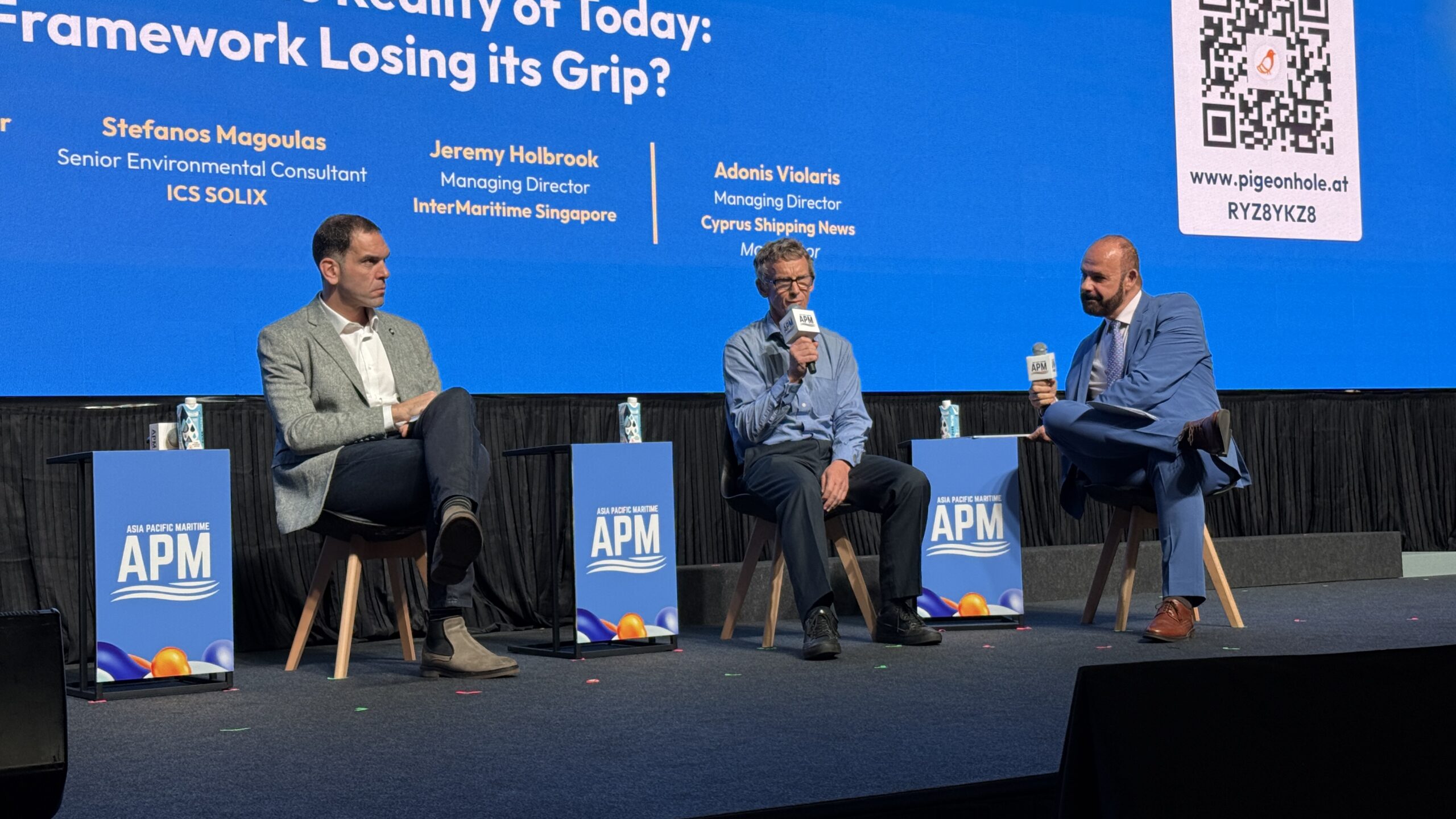
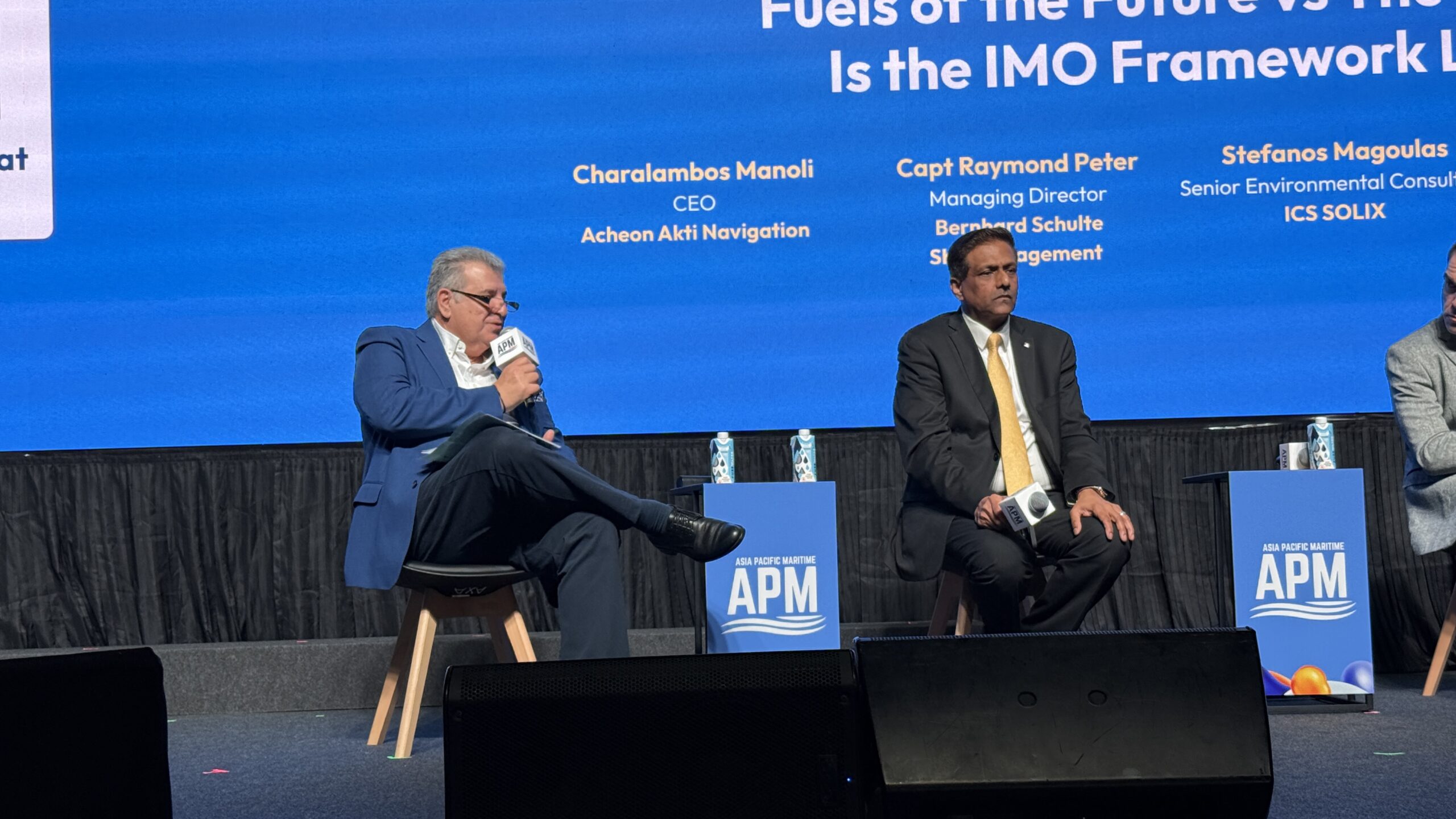
Moderated by CSN Managing Director Adonis Violaris, the panel brought together a formidable cross-section of maritime expertise: Raymond Peter (Bernhard Schulte Shipmanagement), Jeremy Holbrook (Intermaritime Shipmanagement), Stefanos Magoulas (ICS SOLIX Environmental Consultants), and Charalambos Manoli (Acheon Akti Navigation).
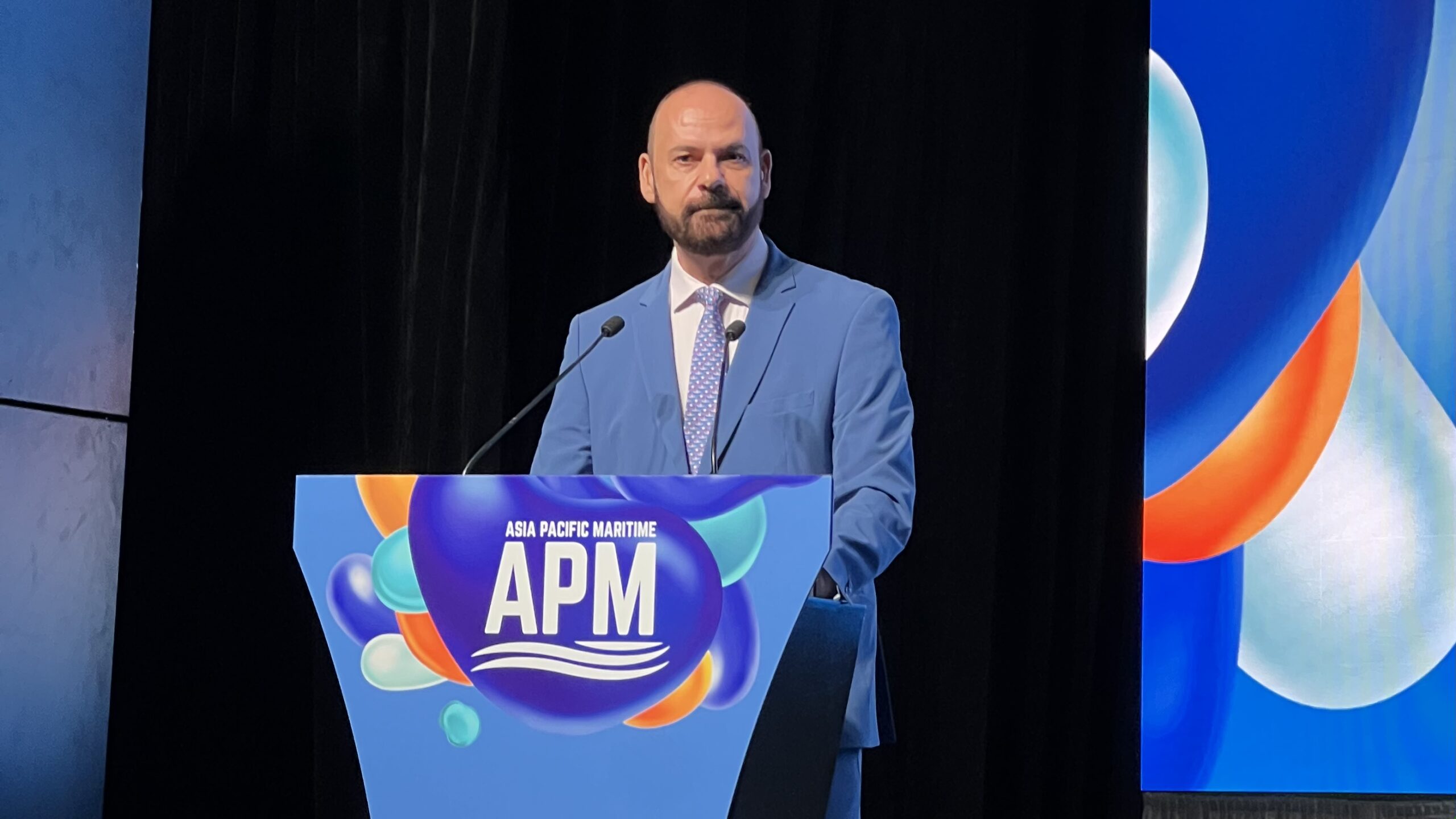
Here are the critical takeaways from a highly charged and grounded discussion.
The End of ‘Just-in-Time’ Shipping
A central theme of the morning was the collapse of lean, efficiency-driven supply chains. Jeremy Holbrook set the strategic baseline, arguing that the era of ‘just-in-time’ shipping is fundamentally incompatible with the current geopolitical map. The panel agreed that shipowners must now price in the cost of structural resilience, building buffer capacity, alternative supplier networks, and accepting massive war-risk premiums, simply to keep global trade moving. Efficiency is no longer the sole metric of success; survival and adaptability have taken precedence.
The Regulatory Disconnect in a War Economy
The tension between physical routing and environmental compliance sparked fierce debate. Stefanos Magoulas highlighted the stark data reality: vessels forced to steam the long way around the Cape of Good Hope to avoid hostile fire are seeing their Carbon Intensity Indicator (CII) ratings decimated. The panel questioned the viability of environmental regulations that penalise ships for taking necessary evasive action.
Furthermore, Raymond Peter addressed the widening ‘regulatory gap’. With the IMO’s Net-Zero Framework facing slippage to 2028, the panel noted that the European Union’s ETS is aggressively filling the void. This regional divergence threatens to create a fragmented, two-tier compliance system precisely when owners are seeking global certainty.
CAPEX Paralysis and the Retreat to the Known
The sheer cost of the green transition remains a monumental hurdle, now exacerbated by the war economy. Charalambos Manoli pointed to the noticeable drop in alternative fuel newbuildings as evidence of ‘CAPEX paralysis’. Facing blocked bunkering hubs and the immense capital requirements of dual-fuel technology, many owners are exhibiting a panic-retreat to conventional, known technologies to guarantee operational certainty.
While biofuels were discussed as a viable, low-CAPEX interim solution, the panel acknowledged that even these supply chains remain highly vulnerable to the broader economic fallout of the Middle East crisis.
The Human Element on the Frontlines
Perhaps the most sobering moments of the debate centred on the seafarers trapped in these conflict zones. Moving beyond the boardroom discussions of future fuels, Raymond Peter brought the focus back to the bridge.
Crews currently operating in the Gulf and the Red Sea are facing active hostilities, spoofed AIS, and severe GNSS interference. The panel concurred that whilst the industry heavily promotes the ship as a ‘floating factory’ empowered by AI and digital monitoring, these advanced systems risk becoming white noise when a Master is navigating physical threats. The immediate priority must be the psychological and physical safety of the crew, supported by practical, crisis-ready technical management.
The Path to 2050
In the closing rapid-fire round, the panellists were asked if the green transition is still on track. The consensus was a pragmatic “yes, but…”
The path to 2050 is not the straight line drawn on regulatory charts. It is currently being forged through severe operational crises. The drive towards decarbonisation remains a core industry mandate, but the 1st CSN Singapore Shipping Debate made one thing abundantly clear: the green agenda must now share the stage with the immediate, harsh realities of geopolitical survival.



Related News.

Navigating the Multi-Orbit Era: In Conversation with Intellian’s Jon Harrison at SMM 2026
At SMM 2026 in Hamburg, the rapid evolution of maritime satellite communications took centre stage. Across the exhibition halls, discussions among…
Cyprus ports need joint energy and investment strategy, shipping agents chief says
Cyprus needs a coordinated strategy for shipping, energy and environmental protection to support port investment and modernisation, Cyprus shipping…
MASO Public Affairs introduces MASO Regulatory Intelligence
A new subscription service helping businesses understand what is changing and what it means for them MASO Public Affairs introduces MASO Regulatory…
Anglo-Eastern helps turn CMBTECH’s ammonia ambition into an operational reality
From early feasibility study and risk-based design to newbuilding supervision, crew readiness and technical management, Anglo-Eastern drew on its…
Escalation of attacks threatens to derail recovery in Middle East oil exports
World oil demand is forecast to fall by 2.5 mb/d y-o-y in 4Q26 and 2.6 mb/d on average in 2026. As the Iran war manifests itself through restricted…
New study finds shipping pays twice its share to EU ETS earmarked revenues should triple to help build market for sustainable fuels and technologies
Shipping is responsible for around 10% of EU ETS emissions but pays almost 20% of the ETS bill. Unlike other sectors, it has never received free…
MSARC strengthens maritime mass rescue readiness through training and national live exercise off Dakar, Senegal
Joint MSARC–FHAS programme combines three days of SAR training with a national multi-agency live exercise The Maritime Search and Rescue Council ,…
Sogese report deliveries are still being delayed as container freight rates fluctuate
FOR IMPORTERS Spot rates into the Mediterranean are back at January levels, Far East to Europe reliability sits at pandemic lows, and nearly…
Glencore begins trading on Australian Securities Exchange
Glencore has begun trading on the Australian Securities Exchange under the ASX code GLC. Gary Nagle, Glencore’s CEO, said it was an exciting day for…
BIMCO Shipping Number of the Week
Suez Canal container ship transits exceed 50% of pre-disruption levels "During the first two weeks of October, weekly container ship capacity…
Subscribe to our newsletter!
if you dont want to swim alone in the ocean of news, sign up for the newsletter, and you will receive daily all the important news of world shipping!
