LNG shock from supply disruption to system strain

Damaged Qatari infrastructure and a near-collapse in Hormuz transit are shifting the LNG market from a supply shock to a flow-constrained crisis.
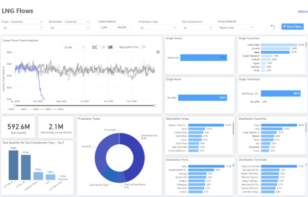
The global LNG market remains under significant stress following Iranian attacks on Qatari energy infrastructure, which have removed approximately 17% of Qatar’s LNG export capacity, equivalent to roughly 3% of global LNG supply. The disruption is concentrated in the LNG liquefaction trains at Ras Laffan, where strikes damaged processing units and associated infrastructure, resulting in multiple trains being taken offline. Repair timelines are currently estimated at three to five years for full capacity restoration.
In an official statement, QatarEnergy confirmed that affected trains were shut down following the incident and that LNG exports are continuing at reduced capacity from unaffected facilities. The company also stated that technical assessments are ongoing and that work has begun to address the damage.
European gas prices reacted sharply following the disruption, with benchmark TTF contracts moving higher. Prices remain elevated, and forward curves indicate continued tightness through 2027.
At the geopolitical level, tensions remain high. Statements by Donald Trump included a 48-hour ultimatum to Iran to reopen the Strait of Hormuz and threats targeting Iranian energy infrastructure. This ultimatum was subsequently delayed, and no military action has been announced.
As of today, the status of U.S.–Iran contacts remains unclear. U.S. officials have indicated that discussions have taken place through intermediaries, while Iranian authorities have publicly denied that any direct negotiations are underway. No agreement has been announced. The LNG market remains impacted by both the physical loss of supply and the ongoing geopolitical uncertainty
Vessel Congestion and Disruption Flows
The first clear indication that the disruption extends beyond production is visible in vessel activity across the Arabian Gulf. LNG carriers are currently in a waiting status, particularly around Ras Laffan, indicating a buildup of idle tonnage.
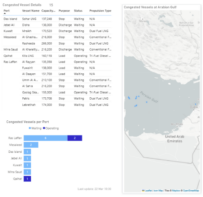
Vessel Positioning: Supply Is Building but Not Moving
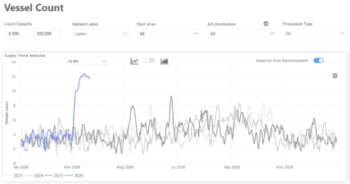
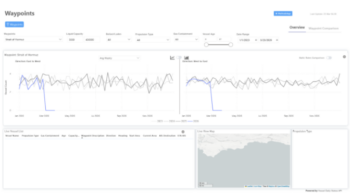
Monthly vessel counts in the Strait of Hormuz show a clear break from seasonal patterns, with a 3-day moving average in March reaching approximately 11 vessels versus a typical 3–4. This reflects vessels accumulating within the corridor rather than clearing it, indicating a disruption to normal transit flows.
Transit Breakdown: Hormuz Crossings Collapse
Waypoint data clearly indicates a more serious disruption, showing a sharp decline in LNG vessel crossings through the Strait of Hormuz in both directions. Flows have fallen to nearly zero in a short time, marking a significant break from past patterns of steady two-way movement.
At the same time, broader shipping activity suggests that transit through the Strait has not ceased entirely but has become selective and non-transparent. Recent reports indicate that passage is being granted on a limited basis, in some cases involving negotiated access or elevated transit costs, particularly for tankers and other commercial vessels.
This divergence highlights a two-tier system in which some vessel segments may still transit under specific conditions, while LNG flows remain effectively constrained due to their structural inflexibility and limited fleet availability.
As a result, the disruption represents not only a reduction in flows but a loss of predictable and open transit, effectively constraining supply from the Gulf to demand centers in Europe and Asia. Even if upstream production stabilizes, the inability to ensure consistent passage through Hormuz remains a key limitation on global LNG availability.
Europe: Crisis Timing During Storage Refill in a Flow-Constrained Market
Europe is facing this disruption at a particularly difficult moment, right at the start of the storage refill season. This is when inventories are rebuilt ahead of winter, so any disruption now has an outsized impact on supply security.
What makes this situation different from previous tight markets is that it’s not just about higher prices or stronger competition. The disruption to LNG transit through the Strait of Hormuz has affected the physical movement of supply, meaning fewer cargoes are actually reaching the market.
As a result, European buyers are not just competing for available volumes; the pool of accessible supply has shrunk. While the United States and other exporters like West Africa can help to some extent, they are unlikely to fully replace the lost flexibility in the near term.
This changes how the market behaves. The focus is shifting away from price competition toward securing actual deliveries. Europe and Asia are now both trying to source replacement cargoes at the same time, putting additional strain on the limited volumes available outside the Gulf. Europe’s reliance on LNG has increased significantly since the reduction in Russian pipeline gas. That makes the region more exposed to disruptions like this, particularly when they affect transport routes rather than just production.
Asia: Policy Response and Shift Toward Coal-Fired Generation
Policy responses across Asia are already becoming visible as LNG availability tightens. In India, coal-fired plants have been instructed to run at full capacity, with maintenance delayed to avoid power shortages during peak summer demand. In South Korea, authorities have moved to ease coal generation limits, reduce LNG usage, and increase nuclear output as part of broader emergency energy measures. Across Southeast Asia — including Vietnam, Thailand, the Philippines, and Indonesia — governments are increasing coal-fired generation and prioritizing domestic fuel supply to maintain system stability as LNG imports become less reliable.
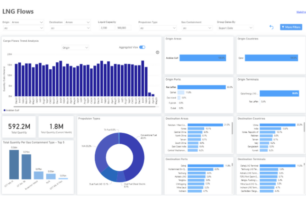
These policy responses are increasingly reflected in flow data. LNG volumes have sharply dropped, with March flows down nearly 87% both month-on-month and year-on-year, highlighting not only the disruption to Gulf supply but also the emerging shift in demand as Asian buyers turn to alternative fuels such as coal.
Source: Signal Ocean



Related News.

Navigating the Multi-Orbit Era: In Conversation with Intellian’s Jon Harrison at SMM 2026
At SMM 2026 in Hamburg, the rapid evolution of maritime satellite communications took centre stage. Across the exhibition halls, discussions among…

Cyprus ports need joint energy and investment strategy, shipping agents chief says
Cyprus needs a coordinated strategy for shipping, energy and environmental protection to support port investment and modernisation, Cyprus shipping…

MASO Public Affairs introduces MASO Regulatory Intelligence
A new subscription service helping businesses understand what is changing and what it means for them MASO Public Affairs introduces MASO Regulatory…

Anglo-Eastern helps turn CMBTECH’s ammonia ambition into an operational reality
From early feasibility study and risk-based design to newbuilding supervision, crew readiness and technical management, Anglo-Eastern drew on its…

Escalation of attacks threatens to derail recovery in Middle East oil exports
World oil demand is forecast to fall by 2.5 mb/d y-o-y in 4Q26 and 2.6 mb/d on average in 2026. As the Iran war manifests itself through restricted…

New study finds shipping pays twice its share to EU ETS earmarked revenues should triple to help build market for sustainable fuels and technologies
Shipping is responsible for around 10% of EU ETS emissions but pays almost 20% of the ETS bill. Unlike other sectors, it has never received free…

MSARC strengthens maritime mass rescue readiness through training and national live exercise off Dakar, Senegal
Joint MSARC–FHAS programme combines three days of SAR training with a national multi-agency live exercise The Maritime Search and Rescue Council ,…

Sogese report deliveries are still being delayed as container freight rates fluctuate
FOR IMPORTERS Spot rates into the Mediterranean are back at January levels, Far East to Europe reliability sits at pandemic lows, and nearly…

Glencore begins trading on Australian Securities Exchange
Glencore has begun trading on the Australian Securities Exchange under the ASX code GLC. Gary Nagle, Glencore’s CEO, said it was an exciting day for…

BIMCO Shipping Number of the Week
Suez Canal container ship transits exceed 50% of pre-disruption levels "During the first two weeks of October, weekly container ship capacity…
Subscribe to our newsletter!
if you dont want to swim alone in the ocean of news, sign up for the newsletter, and you will receive daily all the important news of world shipping!
