Hormuz tensions highlight a new reality: maritime resilience now runs on data and AI


Rising tensions around Iran and the Strait of Hormuz are once again reminding the maritime industry how quickly global shipping routes can change.
Nearly one-fifth of the world’s oil supply moves through the Strait, making it one of the most strategically sensitive corridors in global trade. The region’s recent military escalation, combined with continued disruption in the Red Sea, has created a double-bottleneck situation rarely seen in today’s industry.
For shipping operators, the implications have been immediate. Even the possibility of escalation prompts shipping lines to reconsider routes, while ports and logistics operators are reassessing schedules and capacity.
We are looking at an immediate ripple effect worldwide, with so many of the world’s resources dependent on this tiny corridor. Global economies are facing immediate, painful inflation on essential items.
Events like this expose a growing reality for maritime: resilience is no longer just about planning for disruption. It is about responding quickly when a disruption happens.
And now, that resilience depends on combining trusted operational data with AI-driven insight.
Because when geopolitical shocks hit global shipping networks, the real challenge lies in understanding operational consequences.
A vessel diverting around the Cape of Good Hope rather than transiting the Suez Canal might shift arrival times at multiple ports by days or even weeks. Berth schedules change, cargo flows move, and inland transport plans must be reconfigured.
In the case of the Strait of Hormuz, these issues prove even more critical. Unlike the Red Sea route around the Cape, the Strait has no alternative passage – meaning that if traffic through Hormuz is disrupted, vessels cannot simply detour, and cargo movement stalls entirely.
Without any clear visibility of these impacts, disruption quickly cascades across the supply chain.
This is where artificial intelligence can play a crucial role; instead of replacing human operational expertise, it can strengthen it.
AI models are able to analyse vessel movements, historical voyage patterns, and environmental conditions, generating increasingly accurate arrival predictions. When combined with port and terminal data, these insights can allow operators to understand disruptions earlier, and therefore, assess their operational impact faster.
Considering the current tensions around Hormuz, that visibility can make the difference between reactive disruption and proactive adjustment. Ports would be able to update berth plans earlier. Terminals could reallocate resources. Logistics operators might adapt downstream transport before delays can escalate across the network.
However, AI alone is not the answer.
The effectiveness of any AI system ultimately depends on the quality and reliability of the data behind it. The maritime industry already generates vast amounts of operational information: from vessel movements to port call planning systems.
But the ecosystem has historically struggled with fragmented information. Arrival times, cargo readiness and operational planning data are often distributed across multiple stakeholders and systems. When conditions change rapidly, that fragmentation slows decision-making precisely when the industry needs speed. The challenge is not about generating more data, but in building enough confidence in the existing data to act on it.
When operators can trust their operational data – and combine it with AI-driven insights – they gain something the industry has often lacked: a coherent, continuously updated picture of what is actually happening across the shipping network.
That clarity enables faster, more confident decisions – even the best insights only matter if organisations can respond to them.
To manage any geopolitical disruption effectively, ports, terminals and shipping lines must build processes that allow schedules and operational plans to change quickly. If new arrival predictions cannot be translated into updated berth allocations or revised logistics planning, the value of better information is lost.
True maritime resilience depends on three elements working together:
- trusted operational data
- AI systems that turn that data into predictive insight
- operational processes that enable rapid adjustment
When these elements align, the industry becomes far better equipped to respond to sudden shocks.
Disruptions to global shipping – whether geopolitical, climatic or economic – are unlikely to disappear. If anything, they are becoming more frequent and more complex.
Successful operators won’t simply have the most advanced technology – they’re the ones combining trusted operational data, intelligent insight, and organisational agility to act quickly.
Because in maritime, resilience is not about predicting every disruption.
It is about having the clarity and the capability to change course when the unexpected happens.
Source: PortXchange by Sjoerd de Jager, CEO and Co-Founder



Related News.

Hong Kong Global Maritime Trade Summit to return for third edition
The International Chamber of Shipping, in collaboration with the Transport and Logistics Bureau of the Government of Hong Kong and the Hong Kong…

Appetite for US crude oil exports climbs despite high freight
South Korea tops US crude destinations at 568,600 b/d VLCC rates to Asia double, closing arbitrage window European refining margins…
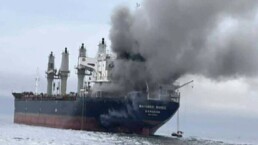
Shipping stocks Rally as Hormuz Traffic plunges 75%
Ship traffic through the Strait of Hormuz — a critical chokepoint handling about 20% of global crude oil and liquefied natural gas shipments — has…
Diana Shipping announces Time Charter Contract for m/v G P Zafirakis with Classic Maritime
Diana Shipping, a global shipping company specializing in the ownership and bareboat charter-in of dry bulk vessels, announced that, through a…
New IMO ESP Code framework for Remote Inspection Techniques
The International Maritime Organisation, through Resolution MSC.584(111) , has adopted amendments to the International Code on the Enhanced…

ABS opens Offshore & Marine Support Center in Bergen
ABS has expanded its capabilities in the Norwegian maritime market with the opening of a cutting-edge support center in Bergen, bringing advanced…

MOL holds giant step memorial ceremony and beach cleanup at Kashima Coast
Memorial and Reflection 20 Years After the Accident: Learning from the Past to Foster an Even Stronger Safety Culture Mitsui O.S.K. Lines, announced…

KEZAD-based Arabian Gulf Steel Industries achieves lowest verified Carbon Footprint for Rebar
CARES UK verified Environmental Product Declaration confirms 139 kg CO₂e per tonne for rebar produced at AGSI’s KEZAD Abu Dhabi facility Arabian…

Indian Register of Shipping announces launch of first fleet support ship INS Surya
Indian Register of Shipping continues to strengthen its role in supporting the Indian Navy and India’s naval shipbuilding capabilities through the…

VLCCs Climbing the Record Charts
LR2 The TC1 75kt MEG/Japan index decreased by only a single point this week to WS928. The corresponding Baltic round-trip TCE fell by $2,000 to…
Subscribe to our newsletter!
if you dont want to swim alone in the ocean of news, sign up for the newsletter, and you will receive daily all the important news of world shipping!
