DNV study for EMSA calls for design‑based safety approach for hydrogen‑fuelled ships
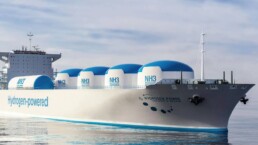

DNV has delivered the European Maritime Safety Agency (EMSA) commissioned multi-year study “Safety of hydrogen for use in ships,” culminating in a final report and a non‑mandatory guidance document. The study concludes that design-based safety is required for hydrogen-fuelled ships and recommends secondary enclosures across all hydrogen carrying components, including on open deck.
Hydrogen is emerging as a potential fuel option for shipping, but wider uptake is expected to take time. The study shows that hydrogen hazards differ from those of other alternative marine fuels such as LNG. Even smaller leaks can quickly form ignitable gas clouds, and combined with hydrogen’s low ignition energy and challenges associated with leak detection, this implies the need for additional onboard technical barriers to reduce explosion risks, particularly where leakage management and protection systems are concerned.
Cristina Saenz de Santa Maria, Interim CEO Maritime at DNV said: “Hydrogen has a viable path as ship fuel but carries safety risks. As new fuel technologies develop, robust safety principles must be built in from the outset. That requires new thinking, early‑stage integration, and close collaboration across the value chain, while keeping seafarer safety firmly at the center.”
Due to its high flammability and the low storage temperatures of its liquefied form, hydrogen also introduces new occupational hazards for seafarers. According to the study, this changes the conditions under which crews operate. As a result, seafarers must be trained to recognize the specific hazards related to using hydrogen as ship fuel and how to mitigate them. This should be supported by clear procedures for operation and safety management systems, with human behavior and organizational safety culture providing an additional layer of risk control.
Linda Hammer, Principal Consultant at DNV and lead author of the study said: “The study concludes that safety for hydrogen‑fuelled ships must be based on technical safety barriers, with robust containment, secondary enclosures, and automated protection systems forming the first line of defense. This reflects both the speed at which hydrogen incidents can escalate and the limitations of detection and response once a release has occurred, particularly in complex maritime environments.”
On the industry collaboration, Hammer added: “We have valued the opportunity to deliver this study for EMSA, and the support from industry partners throughout the process and welcome the continued collaboration with both regulators and industry as the work moves forward.”
The full EMSA study investigating the safety of hydrogen as fuel on ships is available here.



Related News.

Hong Kong Global Maritime Trade Summit to return for third edition
The International Chamber of Shipping, in collaboration with the Transport and Logistics Bureau of the Government of Hong Kong and the Hong Kong…

Appetite for US crude oil exports climbs despite high freight
South Korea tops US crude destinations at 568,600 b/d VLCC rates to Asia double, closing arbitrage window European refining margins…

Shipping stocks Rally as Hormuz Traffic plunges 75%
Ship traffic through the Strait of Hormuz — a critical chokepoint handling about 20% of global crude oil and liquefied natural gas shipments — has…

Diana Shipping announces Time Charter Contract for m/v G P Zafirakis with Classic Maritime
Diana Shipping, a global shipping company specializing in the ownership and bareboat charter-in of dry bulk vessels, announced that, through a…

New IMO ESP Code framework for Remote Inspection Techniques
The International Maritime Organisation, through Resolution MSC.584(111) , has adopted amendments to the International Code on the Enhanced…

ABS opens Offshore & Marine Support Center in Bergen
ABS has expanded its capabilities in the Norwegian maritime market with the opening of a cutting-edge support center in Bergen, bringing advanced…

MOL holds giant step memorial ceremony and beach cleanup at Kashima Coast
Memorial and Reflection 20 Years After the Accident: Learning from the Past to Foster an Even Stronger Safety Culture Mitsui O.S.K. Lines, announced…

KEZAD-based Arabian Gulf Steel Industries achieves lowest verified Carbon Footprint for Rebar
CARES UK verified Environmental Product Declaration confirms 139 kg CO₂e per tonne for rebar produced at AGSI’s KEZAD Abu Dhabi facility Arabian…

Indian Register of Shipping announces launch of first fleet support ship INS Surya
Indian Register of Shipping continues to strengthen its role in supporting the Indian Navy and India’s naval shipbuilding capabilities through the…

VLCCs Climbing the Record Charts
LR2 The TC1 75kt MEG/Japan index decreased by only a single point this week to WS928. The corresponding Baltic round-trip TCE fell by $2,000 to…
Subscribe to our newsletter!
if you dont want to swim alone in the ocean of news, sign up for the newsletter, and you will receive daily all the important news of world shipping!
