Equinor enters bio-methanol agreement with Wallenius Wilhelmsen
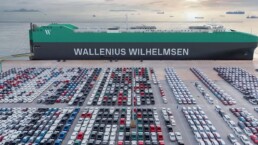

Soon bio-methanol from Equinor will fuel ships that are bringing cars and machinery from points of production to markets. Wallenius Wilhelmsen is a market leader in roll‑on/roll‑off (RoRo) shipping and vehicle logistics and will use the bio‑methanol as bunker fuel for its upcoming dual‑fuel methanol vessels.
Wallenius Wilhelmsen will receive the bio-methanol bunkers at the Ports of Zeebrugge and Antwerp, positioning the partnership within key European maritime hubs. Supplies will commence in late 2026.

“We continue to see increasing interest in bio-methanol as a practical, scalable solution for decarbonisation of shipping. This partnership with Wallenius Wilhelmsen marks a substantial step forward in bringing Equinor’s bio-based methanol to the growing marine segment for low carbon fuels. Equinor has previously signed supply agreements for bio-methanol with Maersk and NCL, and we are progressing several leads for both bio and conventional methanol supply agreements”, says Alex Grant, senior vice president of Crude, Products and Liquids (CPL) in Equinor.
The use of bio-methanol will enable substantial reductions in greenhouse gas emissions from ships that use the fuel and help Wallenius Wilhelmsen provide net zero logistics solutions to their customers.
“Signing this deal with Equinor marks an important milestone for us at Wallenius Wilhelmsen. Securing low-carbon bio-methanol supports the decarbonization of our ocean operations, while strengthening our ability to deliver lower emission end-to-end logistics for customers. Partnerships like this are essential to scaling alternative fuels and moving from ambition to execution,” says Xavier Leroi, chief operating officer Shipping Services at Wallenius Wilhelmsen.
How it works
Equinor’s supply of bio-methanol is based on a combination of methanol produced at Equinor’s facility at Tjeldbergodden, Norway, and biogas certificates stemming from captured biogas from manure and other biomass in accordance with the EU Renewable Energy Directive.
The methanol is produced from the biomethane in the gas grid on a mass-balance basis. This way, bio-methanol can be produced in existing facilities using existing infrastructure and plants, enabling quick production while also allowing for less pressure on pristine land, natural resources and the environment. The method also enables capture of methane emissions that would arise from the manure feedstock if left untouched.



Related News.

Navigating the Multi-Orbit Era: In Conversation with Intellian’s Jon Harrison at SMM 2026
At SMM 2026 in Hamburg, the rapid evolution of maritime satellite communications took centre stage. Across the exhibition halls, discussions among…

Cyprus ports need joint energy and investment strategy, shipping agents chief says
Cyprus needs a coordinated strategy for shipping, energy and environmental protection to support port investment and modernisation, Cyprus shipping…

MASO Public Affairs introduces MASO Regulatory Intelligence
A new subscription service helping businesses understand what is changing and what it means for them MASO Public Affairs introduces MASO Regulatory…

Anglo-Eastern helps turn CMBTECH’s ammonia ambition into an operational reality
From early feasibility study and risk-based design to newbuilding supervision, crew readiness and technical management, Anglo-Eastern drew on its…

Escalation of attacks threatens to derail recovery in Middle East oil exports
World oil demand is forecast to fall by 2.5 mb/d y-o-y in 4Q26 and 2.6 mb/d on average in 2026. As the Iran war manifests itself through restricted…

New study finds shipping pays twice its share to EU ETS earmarked revenues should triple to help build market for sustainable fuels and technologies
Shipping is responsible for around 10% of EU ETS emissions but pays almost 20% of the ETS bill. Unlike other sectors, it has never received free…

MSARC strengthens maritime mass rescue readiness through training and national live exercise off Dakar, Senegal
Joint MSARC–FHAS programme combines three days of SAR training with a national multi-agency live exercise The Maritime Search and Rescue Council ,…

Sogese report deliveries are still being delayed as container freight rates fluctuate
FOR IMPORTERS Spot rates into the Mediterranean are back at January levels, Far East to Europe reliability sits at pandemic lows, and nearly…

Glencore begins trading on Australian Securities Exchange
Glencore has begun trading on the Australian Securities Exchange under the ASX code GLC. Gary Nagle, Glencore’s CEO, said it was an exciting day for…

BIMCO Shipping Number of the Week
Suez Canal container ship transits exceed 50% of pre-disruption levels "During the first two weeks of October, weekly container ship capacity…
Subscribe to our newsletter!
if you dont want to swim alone in the ocean of news, sign up for the newsletter, and you will receive daily all the important news of world shipping!
