Fitch: Iran conflict’s scope and duration will determine sovereign rating impact
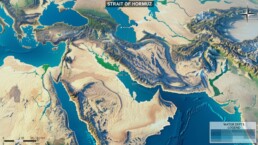

Middle Eastern sovereign ratings generally have sufficient headroom to withstand a short regional conflict that does not escalate further, Fitch Ratings says. However, the course of the conflict is uncertain and lasting damage to key energy infrastructure or protracted hostilities could pose risks to regional sovereign ratings.
The attacks launched by Israel and the US on Iran on 28 February have already had a greater impact than those of June 2025. Fitch’s baseline is that the conflict will last less than a month, with the duration being shaped by factors including the destruction of Iranian military capacity and US aversion to a longer, more involved conflict. Attacks by Iran and its proxies across the region will continue and could intensify over the short term. Material damage to GCC energy export infrastructure would be the most likely channel to pressure sovereign ratings. While some small damage has occurred, this is not in our baseline.
Fitch assumes the Strait of Hormuz will be effectively closed for the duration of the conflict, due to direct physical blockage, vessels being unable to secure insurance or other threat-related factors. Just over 20 million barrels a day of crude and refined products and significant LNG flows transit Hormuz. Saudi Arabia and the UAE have pipelines that can allow much of their production to bypass the Strait and all key oil exporters have oil in storage away from the region.
There is still likely to be some near-term hit to oil and gas activity, particularly for Bahrain, Kuwait and Qatar, which lack supply routes that can bypass Hormuz, and Iraq, whose exports are heavily reliant on the route. Higher energy prices would mitigate the impact of a short-lived disruption on export earnings, to the extent that shipments still get out.
The conflict will have a near-term effect on non-oil economic activity. Much regional air travel has been suspended, consumer activity is likely to have slowed and risk perceptions could have a lingering impact on tourism. Fitch assumes the effect on economic growth will be temporary, but there may be longer-term damage to those parts of the region that position themselves as havens for international businesses and individuals. An outflow of expatriates could put pressure on some GCC housing markets. Most GCC sovereigns have substantial assets that will provide a buffer in the event of short-term energy revenue disruption, while non-energy sectors are lightly taxed so their disruption would have only a small impact on public finances.
An element of geopolitical risk is captured in the ratings of most sovereigns in the region through the World Bank Governance Indicators. In addition, we apply negative qualitative overlay notches to our Sovereign Rating Model (SRM) outputs for Abu Dhabi and the UAE, partly to reflect geopolitical risk, providing additional rating headroom. Israel’s governance indicators already capture some of the exceptional direct security risks, and the hostile external environment is one driver of a negative notch we apply to Israel’s SRM outcome.
However, geopolitical or security events that have a material impact on the economy or public finances are a rating sensitivity, and an extended regional conflict, particularly involving major mobilisation of reservists, could still cause a downgrade, given Israel’s limited headroom at its ‘A’ rating. This is reflected in the Negative Outlook on the rating. Our base case is subject to particularly high uncertainty. A more prolonged disruption to energy exports than we assume would likely have more severe negative repercussions for sovereign credit profiles in the region. The longer-term orientation and stability of Iran’s government, and the implications for regional security, also remain unclear and could have negative or positive rating implications.
Source: Fitch Ratings



Related News.

Navigating the Multi-Orbit Era: In Conversation with Intellian’s Jon Harrison at SMM 2026
At SMM 2026 in Hamburg, the rapid evolution of maritime satellite communications took centre stage. Across the exhibition halls, discussions among…

Cyprus ports need joint energy and investment strategy, shipping agents chief says
Cyprus needs a coordinated strategy for shipping, energy and environmental protection to support port investment and modernisation, Cyprus shipping…

MASO Public Affairs introduces MASO Regulatory Intelligence
A new subscription service helping businesses understand what is changing and what it means for them MASO Public Affairs introduces MASO Regulatory…

Anglo-Eastern helps turn CMBTECH’s ammonia ambition into an operational reality
From early feasibility study and risk-based design to newbuilding supervision, crew readiness and technical management, Anglo-Eastern drew on its…

Escalation of attacks threatens to derail recovery in Middle East oil exports
World oil demand is forecast to fall by 2.5 mb/d y-o-y in 4Q26 and 2.6 mb/d on average in 2026. As the Iran war manifests itself through restricted…

New study finds shipping pays twice its share to EU ETS earmarked revenues should triple to help build market for sustainable fuels and technologies
Shipping is responsible for around 10% of EU ETS emissions but pays almost 20% of the ETS bill. Unlike other sectors, it has never received free…

MSARC strengthens maritime mass rescue readiness through training and national live exercise off Dakar, Senegal
Joint MSARC–FHAS programme combines three days of SAR training with a national multi-agency live exercise The Maritime Search and Rescue Council ,…

Sogese report deliveries are still being delayed as container freight rates fluctuate
FOR IMPORTERS Spot rates into the Mediterranean are back at January levels, Far East to Europe reliability sits at pandemic lows, and nearly…

Glencore begins trading on Australian Securities Exchange
Glencore has begun trading on the Australian Securities Exchange under the ASX code GLC. Gary Nagle, Glencore’s CEO, said it was an exciting day for…

BIMCO Shipping Number of the Week
Suez Canal container ship transits exceed 50% of pre-disruption levels "During the first two weeks of October, weekly container ship capacity…
Subscribe to our newsletter!
if you dont want to swim alone in the ocean of news, sign up for the newsletter, and you will receive daily all the important news of world shipping!
