PwC projects $127 Billion Moon Economy – But energy infrastructure may be the real bottleneck
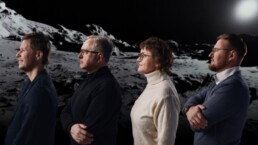

As NASA revises Artemis and PwC outlines $127 billion revenue by 2050 for the Moon’s economy, experts warn that alternative energy infrastructure, not just transportation, will determine whether lunar surface activities will survive long-term.
March 3, 2026. NASA has recently announced major changes to its Moon landing program, Artemis. While crewed missions to the lunar surface were planned for 2028, the administration decided to add a preparatory step to test commercial landers in Earth’s orbit a year earlier, in 2027. This change is meant to reduce risks and represents a shift toward more incremental mission design following recent Artemis delays and safety concerns exposed in February. Despite that, experts claim that transportation issues are just one part of the equation.
The latest PwC Lunar Market Assessment also highlights the growing economic importance of the Moon economy, projecting total revenues of $127.3 billion by 2050, and identifies solar energy systems as one of the priority technologies.
However, according to Mihails Ščepanskis, CEO of Deep Space Energy, it is crucial to understand that solar power will not be an ultimate solution for lunar surface operations, and alternatives must be explored before any long-term mission begins to unlock that economic potential.
“We already learned the lessons here on Earth that power needs can’t be an afterthought, or there will be a price to pay, especially when we discuss resource exploration missions, commercial operations, or permanent systems on the lunar surface,” he says. “Reliable surface energy is still one of the biggest gaps on the Moon.”
Currently, solar power is one of the main proposed energy sources for the future Moon economy. However, conditions on the Moon are far more challenging than on Earth, as one lunar night is equal to approximately 14 days on Earth – a period during which solar panels stop generating power, leaving only batteries and non-solar power to support the systems. Also, during the nighttime, temperatures can fall below –170°C, requiring additional energy to heat both equipment and batteries.
“Because of the long darkness period, relying solely on large battery systems would impose a significant payload penalty. Any long-term operation on the Moon must have reliable solarless power generation to survive lunar night without blowing up the budget,” Ščepanskis added.
Against that backdrop, major powers worldwide are increasingly positioning nuclear energy as a foundation for long-term lunar activity. Last month, NASA and the U.S. Department of Energy committed to developing a lunar surface fission reactor by 2030. Russia has also signalled plans to pursue a nuclear-powered lunar station concept in the mid-2030s.
According to Ščepanskis, the importance of mobility on the Moon should not be overlooked when discussing future energy systems. While large fission reactors may eventually power stationary lunar bases, they are localised solutions and do not address the operational needs of mobile platforms.
“There is no grid on the Moon,” he said. “A reactor can support infrastructure at a base, but lunar rovers, scouting vehicles, and prospecting missions operating far from fixed installations must carry their own reliable power source.”
He argues that sustained exploration and resource assessment, both critical to the development of a functioning Moon economy, will depend on compact, non-solar energy technologies such as radioisotope-based power systems.
“Imagine you appear in the Wild West era, but with a car. You have to reach the West Coast from the East Coast, but there are no fuel stations or infrastructure on your way. So, you run out of fuel, the vehicle becomes useless,” Ščepanskis explained. “The Moon presents a similar situation – a fission reactor or a large solar installation can power a fixed base, but once a rover or scouting mission moves far from base, especially during extended lunar night, there is no ‘gas station’ there. Mobility requires onboard power that can operate independently throughout the lunar night.”
For example, companies like Deep Space Energy are developing compact radioisotope power systems designed for mobility. Ščepanskis shared that the primary constraint in scaling such systems is the limited availability and high cost of space-grade radioisotope fuel.
“Conversion efficiency determines how many missions can realistically be supported with the available supply. If you can generate more electricity from the same quantity of radioisotopes, you can scale deployment without increasing material demand.”
Unlike traditional thermoelectric radioisotope generators currently used in deep space and planetary missions, Deep Space Energy uses a modified Stirling-based conversion approach.
In the past, Stirling systems have been associated with reliability trade-offs due to multiple moving components.
Ščepanskis said that the novel design addresses that limitation by replacing the conventional dual free-piston configuration with a simplified thermo-acoustic architecture. In return, it reduces the number of moving parts to a single piston and eliminates the need for a resonator. Conversion efficiency with such a system is increased up to five times.
Such technology is designed to use Americium-241 sourced from commercial nuclear waste, offering an alternative pathway within constrained space-grade isotope supply chains.
“Solar will remain crucial for daytime operations, nuclear reactors will serve stationary bases, and compact non-solar systems will enable mobility,” Ščepanskis concluded. “We need all of that for sustainable Moon operations.”



Related News.

Hong Kong Global Maritime Trade Summit to return for third edition
The International Chamber of Shipping, in collaboration with the Transport and Logistics Bureau of the Government of Hong Kong and the Hong Kong…

Appetite for US crude oil exports climbs despite high freight
South Korea tops US crude destinations at 568,600 b/d VLCC rates to Asia double, closing arbitrage window European refining margins…

Shipping stocks Rally as Hormuz Traffic plunges 75%
Ship traffic through the Strait of Hormuz — a critical chokepoint handling about 20% of global crude oil and liquefied natural gas shipments — has…

Diana Shipping announces Time Charter Contract for m/v G P Zafirakis with Classic Maritime
Diana Shipping, a global shipping company specializing in the ownership and bareboat charter-in of dry bulk vessels, announced that, through a…

New IMO ESP Code framework for Remote Inspection Techniques
The International Maritime Organisation, through Resolution MSC.584(111) , has adopted amendments to the International Code on the Enhanced…

ABS opens Offshore & Marine Support Center in Bergen
ABS has expanded its capabilities in the Norwegian maritime market with the opening of a cutting-edge support center in Bergen, bringing advanced…

MOL holds giant step memorial ceremony and beach cleanup at Kashima Coast
Memorial and Reflection 20 Years After the Accident: Learning from the Past to Foster an Even Stronger Safety Culture Mitsui O.S.K. Lines, announced…

KEZAD-based Arabian Gulf Steel Industries achieves lowest verified Carbon Footprint for Rebar
CARES UK verified Environmental Product Declaration confirms 139 kg CO₂e per tonne for rebar produced at AGSI’s KEZAD Abu Dhabi facility Arabian…

Indian Register of Shipping announces launch of first fleet support ship INS Surya
Indian Register of Shipping continues to strengthen its role in supporting the Indian Navy and India’s naval shipbuilding capabilities through the…

VLCCs Climbing the Record Charts
LR2 The TC1 75kt MEG/Japan index decreased by only a single point this week to WS928. The corresponding Baltic round-trip TCE fell by $2,000 to…
Subscribe to our newsletter!
if you dont want to swim alone in the ocean of news, sign up for the newsletter, and you will receive daily all the important news of world shipping!
