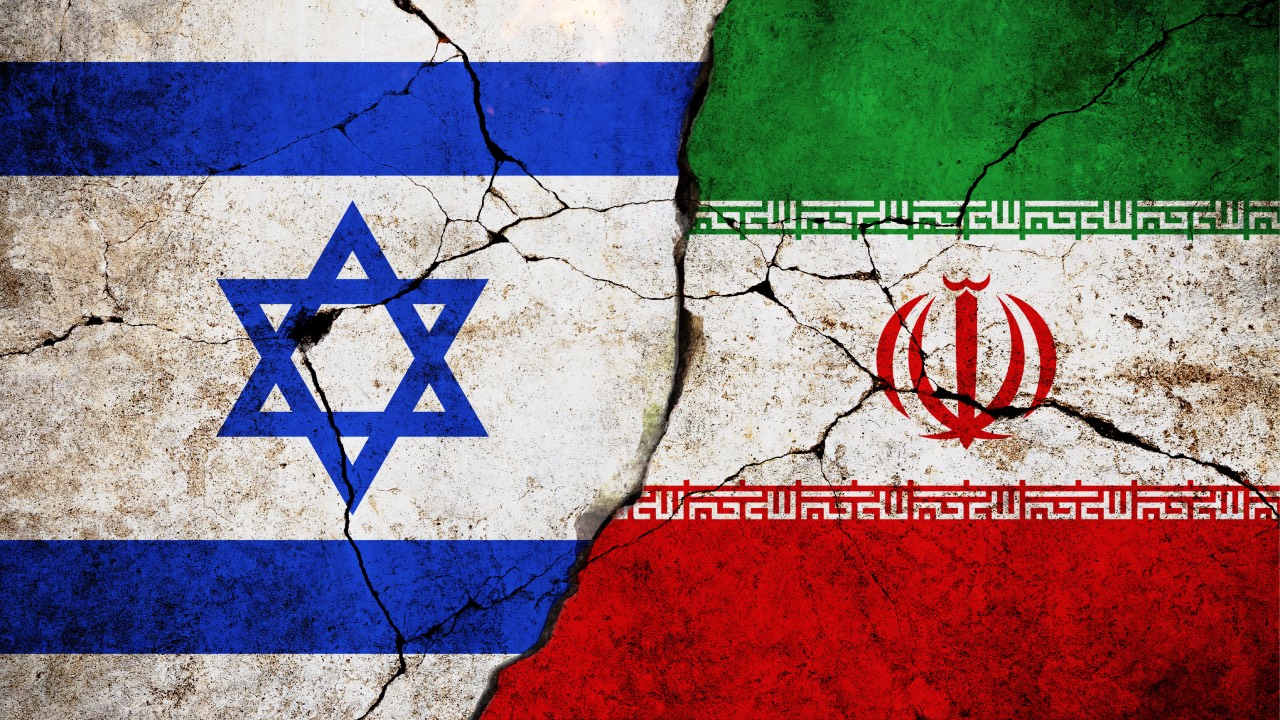

Recent attacks between Israel-US and Iran have significantly heightened tensions, raising concerns about the safety of merchant vessels in and around the Arabian/Persian Gulf and Israeli waters. The situation is evolving rapidly, and there is a growing risk of spillover effects impacting shipping.
With permission from Vanguard, we have reproduced their analysis and recommendations:
Israel and Iran
US Naval Forces Central Command has issued a notice advising that military operations are ongoing across the Arabian Gulf, Gulf of Oman, North Arabian Sea and the Strait of Hormuz amid the current conflict involving the United States, Israel and Iran.
A maritime warning zone has been established to reduce the risk of inadvertent targeting and misidentification during military operations. Commercial vessels remain free to navigate international waters; however, the US Navy has warned that they cannot guarantee the safety of neutral shipping operating within the area. Vessels transiting the region are therefore advised to:
Exercise extreme caution
Maintain a listening watch on VHF Channel 16
Be prepared to respond to coalition naval hails
Maintain a minimum 30-nautical-mile stand-off from US naval units
Avoid the area where operationally feasible
Crew should be prepared to respond to any emergency, such as a fire/explosion following a drone/missile strike.
Ships operating in proximity to military forces risk misidentification and may be subject to defensive measures if perceived as a threat. This advisory remains in effect until military operations against Iranian forces have ceased.
Gulf region
Vanguard is aware of credible reports of a loud explosion in Abu Dhabi, UAE, with additional explosions reportedly heard in Kuwait. Sirens have been activated in multiple locations. Bahrain has confirmed that the headquarters of the United States Fifth Fleet has been targeted by a missile attack. Qatar’s Ministry of Defence reports that an Iranian missile was intercepted by Patriot air defence systems.
These incidents mark a significant escalation in regional hostilities and demonstrate expanding missile and air defence activity across multiple Gulf states. Implications could include:
Immediate elevation of the threat environment across the Arabian Gulf
Increased risk of further missile and air defence engagements near critical ports, terminals and offshore infrastructure
Heightened probability of Iranian asymmetric responses, including IRGC fast craft activity and drones
Elevated risk of misidentification incidents involving naval forces and commercial vessels
Increased likelihood of disruption to tanker traffic and energy export logistics
Increase in risk to US, Israeli and Western-affiliated vessels
There have been reports of the Iranian navy broadcasting on VHF that the Strait of Hormuz is closed for ships. Vessels operating in the Arabian Gulf and approaches to the Strait of Hormuz are advised to exercise extreme caution, maintain enhanced watchkeeping and remain clear of military activity where feasible.
Guidance by Flag States and other sources
We are aware that several Flag States have issued urgent circulars for their fleets, such as India’s DGS Circulars 08/2026 and 09/2026. We strongly advise owners and managers to consult their respective Flag States for the latest requirements and safety protocols. Organisations such as the Maritime Security Centre have also issued updated advisories. They recommend that all vessels maintain a continuous listening watch on VHF Channel 16 and immediately report any suspicious activity or sightings to MSCHOA and UKMTO. Furthermore, some port states have temporarily suspended navigation within their waters; for instance, please refer to the recent official announcement by Qatar.
Electronic interference
Mariners can encounter electronic interference in areas of geopolitical tension. These can be in the form of fake Automatic Identification System (AIS) echoes or GPS interference.
For detailed guidance on detecting and mitigating GPS disruption, reference can be made to Intertanko’s Jamming and Spoofing of GNSS publication. Additionally, Gard has published a case study on a grounding incident caused by GPS disruption.
Contractual implications
The ongoing conflict can lead to charterparty issues, such as if the Master decides to deviate for the safety of the vessel and crew. Who bears the costs depends heavily on the terms of the specific charterparty, particularly the routing and war risk clauses (for example BIMCO’s CONWARTIME 2013/2025 and VOYWAR 2013/2025).
These clauses generally protect shipowners if the vessel “may be exposed” to war risks, potentially allowing deviation from the agreed or customary route, for the safety of the vessel, her crew and her cargo in the Master’s reasonable assessment. However, the application of these clauses and the financial responsibility for deviation costs hinge on factors such as whether the risks have materially changed since the charterparty’s inception, whether a specific route was contractually agreed and the specific wording of any war risk clauses. Whether these clauses could be said to be triggered would have to be assessed on a case-by-case basis.
Source: Gard



Related News.

ISLAND OIL: Unveiling of the Sculpture “Cyprus’s Journey Through the Ages” in Protaras – A Tribute and Landmark to Cyprus’s Historical Memory and Cultural Heritage
In a modest ceremony marked by a moving atmosphere, the sculpture “Cyprus’s Journey Through the Ages”, created by acclaimed Cypriot sculptor…
World Maritime Day 2026 from Policy to Practice – powering Maritime Excellence
Global regulations will deliver safer, more resilient shipping when they are implemented worldwide. The international maritime community marks…

Diana Shipping announces Time Charter Contract for m/v DSI Polaris with Dai An Ocean Shipping
Diana Shipping , a global shipping company specializing in the ownership and bareboat charter-in of dry bulk vessels, announced that, through a…

Chief Economists Expect Global Economy to Stabilize, but Fiscal Constraints, Rising Living Costs and AI Investment Uncertainty Threaten Growth
The global economy is stabilizing, but the fiscal support that cushioned successive shocks since 2020 is unlikely to play the same role in the year…

V. welcomes its new graduate cohort as programme expands across the group
Twelve graduates from nine nationalities join 11th year of V.’s expanded international management programme. V., the global ship manager and marine…

From Policy to Practice: Why Seafarers Are the Key to Maritime Excellence
The shipping industry is no stranger to regulation. Seafarers and ship operators work within a vast framework of international conventions, national…

Intermodal Report – Week 38 2026
Please find below the Intermodal market report for week 38 2026. Intermodal Report Week 38 2026 Market Insight By Nikos Tagoulis, Head of…

Allied – Weekly Market Review – Week 38
Please find below the Allied Weekly Report for Week 38 | 2026 ALLIED - Weekly Market Report- Week 38

Record year on the Northeast Passage but Arctic shipping remains very limited
In 2025, a record 103 transit voyages were made via the Northeast Passage. However, this is still equivalent to only around a day and a half of…

[xclusiv] S&P Report 21th September 2026
Please find below the [xclusiv] latest Weekly S&P Report [xclusiv] 2026_09_21 Market Commentary: VLCCs: Freight Boom Reprices the Fleet The VLCC…
Subscribe to our newsletter!
if you dont want to swim alone in the ocean of news, sign up for the newsletter, and you will receive daily all the important news of world shipping!
