The Week in Alt Fuels: Spain anchors Iberian biomethane push
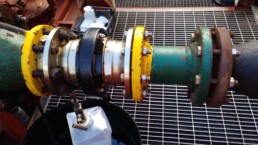

A recent report by industry body Gasnam projects that the Iberian Peninsula could overtake the Netherlands as Europe’s leading bunkering hub for liquefied natural gas (LNG) and its low-emission variants like bio- and e-methane this year.
“Iberia challenges the hegemony of the north of the continent,” Gasnam notes.
The study says a key reason could be that most bunkering activity in the Netherlands is concentrated in the port of Rotterdam, while activity in Iberia is spread across a wider range of ports in Spain, Portugal and Gibraltar.
This geographic spread is reinforced by the peninsula’s location at the western edge of continental Europe, linking the Mediterranean with the Atlantic Ocean and sitting at a key crossroads for shipping traffic between the Americas, Africa and the rest of Europe.
LNG bunkering is widely established across Spain, with a range of ports offering physical deliveries of the fuel, including smaller locations such as Motril, Almeria, Denia, Tenerife and Valencia.
Liquefied biomethane (LBM) bunkering has become more widespread in Spain. ENGINE’s analysis shows that physical LBM deliveries are available in several Spanish ports including Algeciras, Barcelona, Malaga, Cartagena, Bilbao, Huelva, Gijón and Vigo.
In comparison, only a few of ports in Portugal, such as Porto, Sines and Leixoes, have seen LBM bunkering activity to date.
On the infrastructure side, LBM bunkering in Spain benefits from a well-developed natural gas transmission grid.
This can allow the region’s biomethane producers to move volumes for bunkering without physically delivering the fuel to ports, by injecting biomethane anywhere in the gas grid using a mass balance system. Suppliers can then withdraw it as certified green gas.
In addition, a partnership between CycleØ and Nedgia has established private biomethane grid connections in Spain so that remote production sites can be directly connected to the national gas grid.
Another advantage lies in the physical integration of ports and gas infrastructure. Several regasification terminals in Spain are located near ports, allowing fuel to be delivered directly to vessels from the terminals – although cargo ships will often get preference for terminal slots.
For instance, Enagás operates seven regasification plants in Spain and all of them can perform for terminal-to-ship bunker operations. The facilities in Barcelona, Cartagena, Huelva and Gijón have already supplied LBM to ships.
The Reganosa-owned Mugardos Energy Terminal in Galicia is also ready to supply LBM for bunkering, offering both truck-to-ship and terminal-to-ship deliveries.
Bunkering readiness extends to vessel availability, with physical suppliers including Axpo, Titan/Molgas, Peninsula and Enagás deploying bunker vessels to deliver LNG and LBM across Spanish and wider Iberian ports.
A study by Consultancy EU published last March found that 12 of Spain’s 14 installed biomethane plants were connected to the national gas grid with output estimated around 0.5 terawatt hours/year (TWh/year).
Some producers are already positioning themselves for producing higher volumes as demand is expected to rise over time, particularly as FuelEU Maritime’s compliance target will tighten from 2030.
Moeve plans to develop 30 biomethane facilities across Spain by 2030, with a combined expected capacity of around 4 TWh/year, or roughly 260,000 mt/year.
Five Bioenergy is also expanding its footprint, with four biomethane plants under construction in Spain with a combined capacity of at least 640 gigawatt hours/year, equivalent to about 42,000 mt/year. German energy firm Uniper has agreed to purchase biomethane from three of these plants, with deliveries scheduled to begin from 2027.
For now, Spain’s bunkering ecosystem appears to be keeping pace with early LBM demand, with infrastructure and supply broadly aligned with current requirements.
In other news this week, the Canadian Arctic and the Norwegian Sea are set to become new emission control areas (ECAs) from 1 March. While the ECAs will formally enter into force then, the main operational requirement for ships to use fuel with a sulphur cap of 0.10% will apply from 1 March 2027.
German engine manufacturer Everllence and Brazilian mining major Vale will develop an ethanol-powered engine based on Everllence’s two-stroke, dual-fuel platform. Because ethanol remains liquid at standard temperatures and pressures, it can be handled using conventional bunkering and onboard fuel systems without major modifications, Everllence said.
Global logistics firm DSV will use German shipowner Hapag-Lloyd’s biofuel consumption to claim around 18,000 mtCO2-equivalent of well-to-wake emissions reductions over two years under a book-and-claim arrangement.
London-based shipping firm RFOcean has signed a binding long-term off-take agreement with global renewable fuel producer ETFuels to purchase e-methanol at a fixed price from 2030. The fuel will be supplied from ETFuels’ 120,000 mt/year Rattlesnake Gap e-methanol project in West Texas in the US.
Source: ENGINE



Related News.

Hong Kong Global Maritime Trade Summit to return for third edition
The International Chamber of Shipping, in collaboration with the Transport and Logistics Bureau of the Government of Hong Kong and the Hong Kong…

Appetite for US crude oil exports climbs despite high freight
South Korea tops US crude destinations at 568,600 b/d VLCC rates to Asia double, closing arbitrage window European refining margins…

Shipping stocks Rally as Hormuz Traffic plunges 75%
Ship traffic through the Strait of Hormuz — a critical chokepoint handling about 20% of global crude oil and liquefied natural gas shipments — has…

Diana Shipping announces Time Charter Contract for m/v G P Zafirakis with Classic Maritime
Diana Shipping, a global shipping company specializing in the ownership and bareboat charter-in of dry bulk vessels, announced that, through a…
New IMO ESP Code framework for Remote Inspection Techniques
The International Maritime Organisation, through Resolution MSC.584(111) , has adopted amendments to the International Code on the Enhanced…

ABS opens Offshore & Marine Support Center in Bergen
ABS has expanded its capabilities in the Norwegian maritime market with the opening of a cutting-edge support center in Bergen, bringing advanced…

MOL holds giant step memorial ceremony and beach cleanup at Kashima Coast
Memorial and Reflection 20 Years After the Accident: Learning from the Past to Foster an Even Stronger Safety Culture Mitsui O.S.K. Lines, announced…

KEZAD-based Arabian Gulf Steel Industries achieves lowest verified Carbon Footprint for Rebar
CARES UK verified Environmental Product Declaration confirms 139 kg CO₂e per tonne for rebar produced at AGSI’s KEZAD Abu Dhabi facility Arabian…

Indian Register of Shipping announces launch of first fleet support ship INS Surya
Indian Register of Shipping continues to strengthen its role in supporting the Indian Navy and India’s naval shipbuilding capabilities through the…

VLCCs Climbing the Record Charts
LR2 The TC1 75kt MEG/Japan index decreased by only a single point this week to WS928. The corresponding Baltic round-trip TCE fell by $2,000 to…
Subscribe to our newsletter!
if you dont want to swim alone in the ocean of news, sign up for the newsletter, and you will receive daily all the important news of world shipping!
