Britain’s Shore Power Problem Is Not Technology — It’s Economics


The commercial challenges facing publicly funded shore power projects in Aberdeen and Portsmouth should not be dismissed as local pricing anomalies. They are an early warning signal for the UK’s wider maritime decarbonisation strategy.
If shore power cannot be made commercially viable in flagship projects, confidence will erode among investors, shipping lines and port operators alike. And when confidence weakens, investment decisions pause.
This moment matters.
Shore power is not experimental. It is a proven solution to one of shipping’s most visible pollution sources. Vessels running auxiliary engines at berth account for an estimated 30–35 per cent of port-city air pollution, emitting nitrogen oxides, sulphur oxides, particulates and carbon directly into surrounding communities. Plugging into grid electricity cuts those emissions dramatically.
For port communities, this is not abstract climate policy. It is public health.
As Stefano D.M. Sommadossi, Founder and CEO of NatPower Marine, puts it:
“The question is not whether shore power works environmentally. It does. The question is whether the UK can make it work commercially and quickly.”
The problem is structural alignment.
Projects in Aberdeen and Portsmouth were built with serious intent and public backing. But when industrial electricity prices surged, vessels calculated that diesel was cheaper than plugging in. Ports, effectively acting as energy retailers, were left exposed to volatility and underutilisation risk.
Electrification only succeeds when electricity is the rational economic choice. Today, the UK’s pricing framework: high industrial electricity costs, grid charges and policy levies alongside relatively lower marine fuel costs; sends the opposite signal.
Reducing grid-related charges and ensuring clean electricity is prioritised for dedicated maritime “last mile” infrastructure would materially change that equation. Without reform, the system inadvertently penalises the very behaviour it is trying to incentivise.
If that distortion persists, the implications extend beyond shore power. They affect fleet investment decisions, including propulsion.
True maritime electrification does not end at the berth. Shore power is one part of a broader transition that includes electric and hybrid propulsion systems. Shipowners considering those investments require confidence that clean electricity will remain competitively priced not only in port, but across operating models over decades.
Ships are long-life assets. Operators invest on 20–25 year horizons. They will not commit to electrified vessels without predictable energy pricing, corridor-wide infrastructure and a stable regulatory framework. If early projects appear commercially fragile, electrification, at berth and at sea, will be deferred.
And delay is not neutral. It compounds emissions and erodes competitiveness.
Stefano D.M. Sommadossi further notes: “European ports are not standing still. Many operate with discounted electricity regimes, VAT adjustments or structured energy support for green shipping. As carbon pricing expands, ports offering affordable plug-in and electric propulsion solutions will attract traffic.”
Shipping is mobile. Trade flows respond to economics. Competitive advantage can shift gradually, then suddenly.
There is also a structural deployment issue.
Shore power has largely been rolled out berth-by-berth, port-by-port. Shipping operates on corridors. No operator will electrify vessels for a single charging point if the rest of the route remains dependent on diesel.
Electrifying entire corridors changes the equation. It embeds charging into voyage planning and aligns vessel and infrastructure investment. Without a network strategy, isolated assets risk becoming stranded.
But infrastructure reform alone is insufficient. The demand side must also be aligned.
Supporting electric shipowners through reductions in ancillary operating costs, and creating matched energy incentives for cargo owners who choose lower-emission shipping options would strengthen the commercial case across the value chain. Decarbonisation cannot sit solely with vessel operators; cargo interests increasingly influence route and carrier selection.
Regulatory clarity also matters. Aligning UK carbon pricing mechanisms, including the introduction of an emissions trading framework and penalties consistent with EU regimes, would provide long-term signals that reward early adopters rather than disadvantage them.
This is where urgency becomes opportunity.
Shore power systems and electric maritime infrastructure are long-life, utility-scale assets requiring 30 to 40-year investment horizons, sophisticated energy management and price optimisation tools such as battery storage. Expecting ports to absorb that complexity through one-off capital grants is fragile by design.
A more resilient model would see private infrastructure developers finance, build and operate corridor-level charging networks, managing energy risk over the long term. Public funding could then focus on accelerating fleet conversion and supporting early adopters, where commercial barriers remain highest.
In practical terms: private capital builds the backbone; public policy stimulates demand and aligns incentives.
The risk now is drift.
If policymakers misread Aberdeen and Portsmouth as proof that shore power “doesn’t work,” investment will stall. If ports conclude the risk is too high, projects will slow. If shipping lines sense uncertainty around pricing, propulsion economics or carbon policy, fleet decisions will be postponed.
And every year of hesitation locks in diesel dependency and hands advantage to competitors.
Net-zero infrastructure cannot rely on environmental logic alone. It must be commercially durable. That durability requires decisive policy alignment: on electricity pricing, grid reform, fleet incentives and carbon regulation; not incremental adjustment.
To avoid turning early projects into cautionary tales, the UK should act on six fronts:
Establish a stable framework for long-term private investment in port and corridor electrification.
Reduce grid-related charges and address electricity pricing disparities and VAT treatment that disadvantage UK ports.
Prioritise dispatch of clean electricity for dedicated maritime infrastructure.
Support electric and hybrid shipowners through targeted cost reductions and operational incentives.
Create matched energy or commercial incentives for cargo owners choosing green shipping routes.
Align UK emissions trading and penalty structures with EU regimes to ensure competitive parity.
The capital exists. The technology works. The health and climate case is clear.
What is at risk is momentum.
Britain was an early mover in shore power. It should not become a case study in how misaligned incentives undermine ambition.
This is a fixable problem … but only if treated systemically and with urgency.
Because in maritime decarbonisation, standing still is not neutral.
It is falling behind.
Source: NatPower



Related News.

Hong Kong Global Maritime Trade Summit to return for third edition
The International Chamber of Shipping, in collaboration with the Transport and Logistics Bureau of the Government of Hong Kong and the Hong Kong…

Appetite for US crude oil exports climbs despite high freight
South Korea tops US crude destinations at 568,600 b/d VLCC rates to Asia double, closing arbitrage window European refining margins…
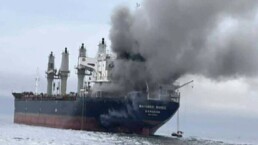
Shipping stocks Rally as Hormuz Traffic plunges 75%
Ship traffic through the Strait of Hormuz — a critical chokepoint handling about 20% of global crude oil and liquefied natural gas shipments — has…

Diana Shipping announces Time Charter Contract for m/v G P Zafirakis with Classic Maritime
Diana Shipping, a global shipping company specializing in the ownership and bareboat charter-in of dry bulk vessels, announced that, through a…
New IMO ESP Code framework for Remote Inspection Techniques
The International Maritime Organisation, through Resolution MSC.584(111) , has adopted amendments to the International Code on the Enhanced…
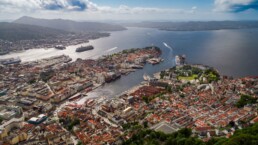
ABS opens Offshore & Marine Support Center in Bergen
ABS has expanded its capabilities in the Norwegian maritime market with the opening of a cutting-edge support center in Bergen, bringing advanced…

MOL holds giant step memorial ceremony and beach cleanup at Kashima Coast
Memorial and Reflection 20 Years After the Accident: Learning from the Past to Foster an Even Stronger Safety Culture Mitsui O.S.K. Lines, announced…

KEZAD-based Arabian Gulf Steel Industries achieves lowest verified Carbon Footprint for Rebar
CARES UK verified Environmental Product Declaration confirms 139 kg CO₂e per tonne for rebar produced at AGSI’s KEZAD Abu Dhabi facility Arabian…
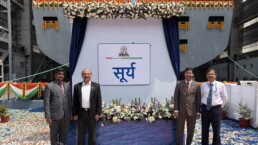
Indian Register of Shipping announces launch of first fleet support ship INS Surya
Indian Register of Shipping continues to strengthen its role in supporting the Indian Navy and India’s naval shipbuilding capabilities through the…

VLCCs Climbing the Record Charts
LR2 The TC1 75kt MEG/Japan index decreased by only a single point this week to WS928. The corresponding Baltic round-trip TCE fell by $2,000 to…
Subscribe to our newsletter!
if you dont want to swim alone in the ocean of news, sign up for the newsletter, and you will receive daily all the important news of world shipping!
