IMO global treaty on fishing vessel safety to enter into force in 2027
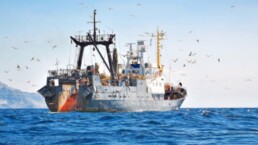

Argentina accedes to the Cape Town Agreement, triggering its entry into force in 12 months.
The 2012 Cape Town Agreement has met the requirements for entry into force and will enter into force in February 2027, closing a longstanding gap in the global maritime safety framework.
The Agreement sets out mandatory safety standards for more than 45,000 fishing vessels of 24 metres in length and over, according to FAO data, helping to prevent casualties, improve working conditions for fishers, enhance competitiveness and protect the marine environment.
Welcoming the milestone, IMO Secretary-General Mr. Arsenio Dominguez said:
“Thousands of fishers lose their lives every year while working to supply the world’s growing appetite for fish and fish products. The 2012 Cape Town Agreement will help protect fishing crews, while safeguarding vessels.”
Argentina accedes to the CTA
Argentina became the latest country to accede to the Agreement, with H.E. Ms. Mariana Edith Plaza, Argentina’s Ambassador to the United Kingdom, depositing the instrument of accession on 24 February 2026 at IMO Headquarters in London.
This brings the total number of Member State accessions to 28, representing 3,754 vessels of 24 metres or more in length. The Cape Town Agreement enters into force 12 months after at least 22 States, collectively representing 3,600 qualifying fishing vessels – typically ocean-going ships operating on the high seas – consent to being bound by the treaty.
Keeping fishers and ships safe
Once in force, States Parties must incorporate the provisions of the 2012 Cape Town Agreement into national law and enforce it as they would any other legislation.
Flag States must ensure that vessels under their registries comply, while Port States have the right to inspect foreign vessels in their ports to verify compliance with the 2012 Cape Town Agreement requirements. These cover the design, construction, equipment and inspection of fishing vessels, as well as vessel stability and seaworthiness, machinery and electrical installations, life-saving appliances, fire protection and communications equipment.
Beyond safety, the Agreement is also expected to support the reduction of marine plastic pollution from abandoned or lost fishing gear.
Four pillars for fishing vessel safety
The 2012 Cape Town Agreement is the culmination of decades of work by IMO, building on earlier international instruments that did not enter into force, including the 1977 Torremolinos International Convention for the Safety of Fishing Vessels and the 1993 Torremolinos Protocol. The treaty is now set to enter into force in 2027, nearly 15 years after it was adopted in 2012.
The Cape Town Agreement represents the fourth pillar in global fishing vessel safety, alongside the following key instruments, all of which are in force:
- IMO’s STCW-F Convention on training and certification of fishers.
- ILO’s Work in Fishing Convention, 2007, which sets minimum requirements for work on board, including hours of rest, food, minimum age and repatriation.
- FAO’s Agreement on Port State Measures to Prevent, Deter and Eliminate Illegal, Unreported and Unregulated (IUU) Fishing, 2009, which seeks to combat IUU fishing through effective port State measures.
Contracting States
With Argentina’s accession, the 28 Contracting States to the Cape Town Agreement, representing 3,754 qualifying fishing vessels, include:
Argentina, Belgium, Belize, Congo, Cook Islands, Croatia, Denmark, Finland, France, Germany, Ghana, Iceland, Japan, Kenya, Namibia, Kingdom of the Netherlands, New Zealand, Nicaragua, Norway, Peru, Portugal, Republic of Korea, Saint Kitts and Nevis, Sao Tome and Principe, Solomon Islands, South Africa, Spain and Vanuatu.
Source:IMO



Related News.

Navigating the Multi-Orbit Era: In Conversation with Intellian’s Jon Harrison at SMM 2026
At SMM 2026 in Hamburg, the rapid evolution of maritime satellite communications took centre stage. Across the exhibition halls, discussions among…

Cyprus ports need joint energy and investment strategy, shipping agents chief says
Cyprus needs a coordinated strategy for shipping, energy and environmental protection to support port investment and modernisation, Cyprus shipping…

MASO Public Affairs introduces MASO Regulatory Intelligence
A new subscription service helping businesses understand what is changing and what it means for them MASO Public Affairs introduces MASO Regulatory…

Anglo-Eastern helps turn CMBTECH’s ammonia ambition into an operational reality
From early feasibility study and risk-based design to newbuilding supervision, crew readiness and technical management, Anglo-Eastern drew on its…

Escalation of attacks threatens to derail recovery in Middle East oil exports
World oil demand is forecast to fall by 2.5 mb/d y-o-y in 4Q26 and 2.6 mb/d on average in 2026. As the Iran war manifests itself through restricted…

New study finds shipping pays twice its share to EU ETS earmarked revenues should triple to help build market for sustainable fuels and technologies
Shipping is responsible for around 10% of EU ETS emissions but pays almost 20% of the ETS bill. Unlike other sectors, it has never received free…

MSARC strengthens maritime mass rescue readiness through training and national live exercise off Dakar, Senegal
Joint MSARC–FHAS programme combines three days of SAR training with a national multi-agency live exercise The Maritime Search and Rescue Council ,…

Sogese report deliveries are still being delayed as container freight rates fluctuate
FOR IMPORTERS Spot rates into the Mediterranean are back at January levels, Far East to Europe reliability sits at pandemic lows, and nearly…

Glencore begins trading on Australian Securities Exchange
Glencore has begun trading on the Australian Securities Exchange under the ASX code GLC. Gary Nagle, Glencore’s CEO, said it was an exciting day for…

BIMCO Shipping Number of the Week
Suez Canal container ship transits exceed 50% of pre-disruption levels "During the first two weeks of October, weekly container ship capacity…
Subscribe to our newsletter!
if you dont want to swim alone in the ocean of news, sign up for the newsletter, and you will receive daily all the important news of world shipping!
