From forecasts to future-proofing industrial resilience reliant on weather intelligence to protect critical infrastructure, says StormGeo
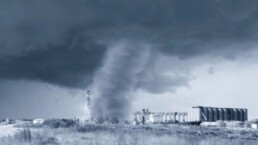

- Escalating extreme weather events take rising toll on safety and efficiency across industries.
- AI-driven analytics and predictive modelling facilitate impact-based forecasting to curb risk.
- Smarter decision-making can support optimized response and boost business continuity
Extreme weather now ranks among the fastest growing threats to business continuity as climate volatility escalates. And tackling the elements is no longer about simply reacting to the weather – but turning data into operational intelligence to build industrial resilience, says StormGeo.
“Every sector is weather-exposed – but few are truly weather-intelligent in their day-to-day operations. The real value emerges when weather insight is embedded directly into operational workflows, enabling faster, safer and better-informed decisions,” says StormGeo’s VP Weather Intelligence, Carsten Torbergsen.
Climate change is taking an increasing toll on industrial operations as extreme events like hurricanes, floods, droughts and wildfires increase in frequency and intensity worldwide, causing extensive and costly disruption, as well as human losses.
“Accurate forecasting is only one side of the equation: as well as knowing what the weather will be, companies also need to know how it will impact their operations, people and assets so they are able to respond proactively and minimize disruption,” Torbergsen says.
Rising cost of climate risk
That is why weather intelligence – turning high-quality meteorological data into actionable insights through AI-driven analytics and predictive modelling, backed by human expertise – has risen up the corporate agenda as a vital tool to support effective business decision-making.
“Cross-industry weather intelligence is emerging as a powerful enabler of resilience and sustainability, providing the situational awareness and decision guidance organizations need to adapt to increasingly volatile weather patterns in favour of safety, uptime and continuity,” he says.
Weather is now more than just a backdrop, but a strategic variable influencing operational resilience, financial performance and sustainability commitments across industries. Growing climate risk results in rising costs running into hundreds of billions of dollars annually, fuelled by insurance payouts and higher regulatory exposure.
A recent study by consultancy Oxera for the International Chamber of Commerce showed that nearly 4000 extreme weather events across six continents between 2014 and 2023 resulted in $2 trillion in economic losses – an average of $200 billion a year over the 10-year period.
“For energy and other infrastructure operators, these costs materialize through unplanned shutdowns, delayed maintenance, safety incidents, damaged assets and prolonged service interruptions. As weather volatility increases, so does the cost of decisions made with insufficient or poorly contextualized weather insight,” Torbergsen explains.
Extreme weather impacts
For offshore oil and gas and offshore wind, weather directly governs safety-critical decisions such as lifting operations, crew transfers, drilling activities and turbine maintenance. Small changes in wave height, wind gusts or visibility can have major operational consequences.
Utilities face an equally complex challenge. Storms, icing and wildfires threaten grid stability, while restoration efforts depend on knowing not just when severe weather will occur, but how it will impact specific assets and service territories.
When ports close, roads flood or power supply is disrupted, knock-on effects cascade across supply chains, delaying critical components and amplifying economic losses.
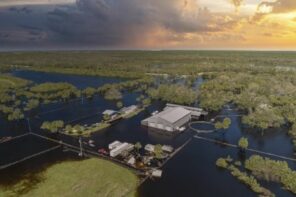
For example, Hurricane Ida in 2021 resulted in damages estimated at $65 billion, including significant impacts on the US energy sector due to outages and remedial maintenance costs. Floods in Thailand in 2011 caused an estimated $45 billion in damages, hitting the supply chain for the global electronics industry.
Even healthcare systems are increasingly vulnerable, with heatwaves, heavy rainfall and storms causing patient surges, hospital evacuations and facility disruptions.
Going beyond forecasting
“Traditional weather forecasting is essential, but operational decision-making demands more than knowing what the weather will be,” Torbergsen says. “What matters is whether the forecast is accurate enough for the specific operational threshold that determines action – whether that is a safe helicopter landing, a turbine access window, or a grid-switching operation.”
Advanced weather intelligence applies AI and machine learning to continuously improve forecast accuracy in complex environments, quantify uncertainty, and translate meteorological conditions into operational impact. This allows organizations to make better and more timely decisions based not just on a forecast, but on confidence levels, risk exposure and operational consequences.Weather intelligence means integrating real-time meteorological data, predictive analytics and domain expertise into business operations as part of a continuous decision support system across planning, logistics, maintenance and risk management. Core components are:
- Operational-grade forecasting: Accuracy optimized for specific environments such as offshore, coastal and grid-scale operations.
- Impact and risk modelling: Translating weather into safety, asset and performance implications using domain-specific models.
- Decision support integration: Embedding weather intelligence directly into operational systems, workflows and alerting structures.
Actionable insight, strategic advantage
“By turning complex environmental data into clear, actionable insight, weather intelligence elevates resilience, strengthens sustainability performance and unlocks new operational efficiencies to deliver strategic advantage,” Torbergsen says.
For energy and utilities, this might mean using predictive weather data to balance power generation with demand or forecasting wildfire risk days in advance and staging resources to prevent outages. Manufacturing can schedule logistics and production around storm events to avoid disruption, while healthcare is able to anticipate patient surges and protect vulnerable populations in a heatwave.
As well as operational resilience, weather intelligence enhances workforce safety and ensures essential services like power, health and food supply are maintained, while lowering insurance and asset-loss costs, and protecting supply chains and manpower productivity.
It also drives environmental sustainability by enhancing efficiency in energy and logistics, reducing emissions from avoidable downtime or reactive maintenance, and supporting climate adaptation and risk mitigation strategies aligned with ESG goals.
Getting weather-smart
“The shift beyond reactive forecasting to weather intelligence allows climate uncertainty to be turned into strategic clarity. And organizations that treat weather intelligence as a strategic capability will lead in both resilience and sustainability performance,” Torbergsen says.
The weather-smart enterprise integrates advanced meteorology, AI-driven analytics and deep domain expertise into a continuous decision support loop. Rather than replacing human judgment, AI enhances forecast skill and consistency, while expert meteorologists ensure insights remain operationally relevant, trusted and actionable in high-risk environments.
Torbergsen concludes: “Weather can no longer be treated as an uncontrollable externality; it’s a manageable, measurable business factor. Industry cannot control the weather – but, with the right intelligence, it can better control decision-making to minimize the impact on its operations.”



Related News.

Navigating the Multi-Orbit Era: In Conversation with Intellian’s Jon Harrison at SMM 2026
At SMM 2026 in Hamburg, the rapid evolution of maritime satellite communications took centre stage. Across the exhibition halls, discussions among…

Cyprus ports need joint energy and investment strategy, shipping agents chief says
Cyprus needs a coordinated strategy for shipping, energy and environmental protection to support port investment and modernisation, Cyprus shipping…

MASO Public Affairs introduces MASO Regulatory Intelligence
A new subscription service helping businesses understand what is changing and what it means for them MASO Public Affairs introduces MASO Regulatory…

Anglo-Eastern helps turn CMBTECH’s ammonia ambition into an operational reality
From early feasibility study and risk-based design to newbuilding supervision, crew readiness and technical management, Anglo-Eastern drew on its…

Escalation of attacks threatens to derail recovery in Middle East oil exports
World oil demand is forecast to fall by 2.5 mb/d y-o-y in 4Q26 and 2.6 mb/d on average in 2026. As the Iran war manifests itself through restricted…

New study finds shipping pays twice its share to EU ETS earmarked revenues should triple to help build market for sustainable fuels and technologies
Shipping is responsible for around 10% of EU ETS emissions but pays almost 20% of the ETS bill. Unlike other sectors, it has never received free…

MSARC strengthens maritime mass rescue readiness through training and national live exercise off Dakar, Senegal
Joint MSARC–FHAS programme combines three days of SAR training with a national multi-agency live exercise The Maritime Search and Rescue Council ,…

Sogese report deliveries are still being delayed as container freight rates fluctuate
FOR IMPORTERS Spot rates into the Mediterranean are back at January levels, Far East to Europe reliability sits at pandemic lows, and nearly…

Glencore begins trading on Australian Securities Exchange
Glencore has begun trading on the Australian Securities Exchange under the ASX code GLC. Gary Nagle, Glencore’s CEO, said it was an exciting day for…

BIMCO Shipping Number of the Week
Suez Canal container ship transits exceed 50% of pre-disruption levels "During the first two weeks of October, weekly container ship capacity…
Subscribe to our newsletter!
if you dont want to swim alone in the ocean of news, sign up for the newsletter, and you will receive daily all the important news of world shipping!
