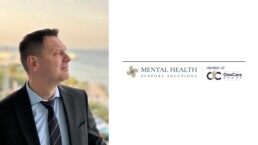

Seafarers continue to face serious mental health challenges following encounters with maritime piracy, according to Mental Health Support Solutions(MHSS), member of OneCare Group.
Clinical Psychologist at MHSS, Alexander Dimitrevich, has extensive experience working with piracy survivors. Through the Maritime Piracy Humanitarian Response Program, he has conducted more than 140 interviews and meetings with former hostages and their families, gaining deep insight into the long-term psychological effects of captivity.
Whilst piracy remains an industry issue, it’s seafarers who bear the brunt of it, and it is crucial maritime leaders treat this extreme security threat as a priority when it comes to the safety of crews, Mr Dimitrevich explained.
“The maritime sector must finally accept that piracy is, at its core, a human problem. The people at risk are not abstractions. They are the very workforce that keeps global trade functioning, and their psychological resilience is not a luxury or an optional extra. It must become standard practice for companies to provide serious pre-joining preparation, clear and honest communication about protocols, structured decompression time after release and long-term access to qualified mental health professionals. Anything less is a failure of duty and a failure of leadership, he said.”
Over the past decade, more than 6,000 seafarers have been held hostage by pirates, often enduring prolonged captivity and intense psychological pressure. MHSS reports that the mental and emotional impact of these experiences can last much long post-release.
“Some seafarers develop anxiety or hyper-vigilance when operating in high-risk areas, while others can initially refuse to acknowledge potential danger. Both responses can affect their ability to follow safety protocols and manage risk effectively,” he said.
MHSS emphasises that many seafarers join vessels without adequate psychological preparation. Clear company protocols and guidance on emergency procedures are crucial for helping crews manage the stress and uncertainty of piracy situations.
“Seafarers need to understand not only the operational procedures but also how their company will support them and their families if an incident occurs,” Mr Dimitrevech added.
He also explained the unexpected differences in piracy globally, stating that piracy often involves the hijacking of entire vessels and can include prolonged captivity, manipulation, and harsh treatment of crews. In contrast, Nigerian piracy typically targets crews for shorter periods, with seemingly less cases of violence, however significant psychological effects still remain.
MHSS urges shipping companies and charterers to recognise the mental health risks associated with piracy and to provide proactive and informative access to psychological support before, during, and after exposure to high-risk waters.



Related News.
Hong Kong Global Maritime Trade Summit to return for third edition
The International Chamber of Shipping, in collaboration with the Transport and Logistics Bureau of the Government of Hong Kong and the Hong Kong…

Appetite for US crude oil exports climbs despite high freight
South Korea tops US crude destinations at 568,600 b/d VLCC rates to Asia double, closing arbitrage window European refining margins…
Shipping stocks Rally as Hormuz Traffic plunges 75%
Ship traffic through the Strait of Hormuz — a critical chokepoint handling about 20% of global crude oil and liquefied natural gas shipments — has…
Diana Shipping announces Time Charter Contract for m/v G P Zafirakis with Classic Maritime
Diana Shipping, a global shipping company specializing in the ownership and bareboat charter-in of dry bulk vessels, announced that, through a…
New IMO ESP Code framework for Remote Inspection Techniques
The International Maritime Organisation, through Resolution MSC.584(111) , has adopted amendments to the International Code on the Enhanced…

ABS opens Offshore & Marine Support Center in Bergen
ABS has expanded its capabilities in the Norwegian maritime market with the opening of a cutting-edge support center in Bergen, bringing advanced…
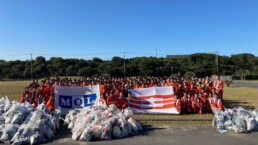
MOL holds giant step memorial ceremony and beach cleanup at Kashima Coast
Memorial and Reflection 20 Years After the Accident: Learning from the Past to Foster an Even Stronger Safety Culture Mitsui O.S.K. Lines, announced…
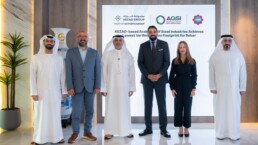
KEZAD-based Arabian Gulf Steel Industries achieves lowest verified Carbon Footprint for Rebar
CARES UK verified Environmental Product Declaration confirms 139 kg CO₂e per tonne for rebar produced at AGSI’s KEZAD Abu Dhabi facility Arabian…
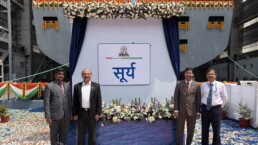
Indian Register of Shipping announces launch of first fleet support ship INS Surya
Indian Register of Shipping continues to strengthen its role in supporting the Indian Navy and India’s naval shipbuilding capabilities through the…

VLCCs Climbing the Record Charts
LR2 The TC1 75kt MEG/Japan index decreased by only a single point this week to WS928. The corresponding Baltic round-trip TCE fell by $2,000 to…
Subscribe to our newsletter!
if you dont want to swim alone in the ocean of news, sign up for the newsletter, and you will receive daily all the important news of world shipping!
