Maintaining an effective bridge watch while at anchor
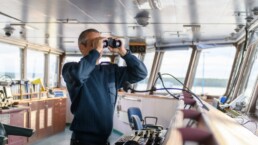

This circular provides an overview of the standards, regulatory framework, and professional expectations associated with maintaining an effective bridge watch while a vessel is at anchor. Incidents arising at anchor continue to constitute a notable proportion of navigational claims, including collisions, groundings, pollution events, and contact damage. Adherence to the requirements set out in the STCW Code and applicable IMO guidance remains essential to ensuring safe operations and preventing avoidable losses.
International regulatory provisions establish clear responsibilities for masters and officers regarding anchor watchkeeping. STCW.7/Circ.14 offers specific IMO guidance on maintaining a safe anchor watch, emphasising continuous monitoring, immediate readiness to respond to developing risks, and the consistent application of professional judgement. STCW Code Part A VIII/2 further requires that a qualified deck officer be responsible for the watch at all times, taking into consideration weather conditions, visibility, traffic density, and the characteristics of the anchorage. These requirements operate alongside COLREG Rule 5, which mandates maintaining a proper lookout by sight, hearing, and all available means.
An effective anchor watch must be structured around systematic and continuous monitoring of the vessel’s position. The officer on watch is expected to determine and plot the vessel’s position promptly after anchoring and subsequently at appropriately frequent intervals. The use of visual bearings, shore marks, radar ranges, ECDIS plots, and electronic anchor alarms collectively supports the verification of the vessel’s holding status and ensures timely detection of any deviation from the expected swinging circle.
Maintaining a proper lookout remains an indispensable obligation. Vigilance must be exercised through visual observation, auditory awareness, and the use of navigational equipment. Particular attention is required during periods of reduced visibility, deteriorating weather, strong tidal influences, or when operating within congested anchorages where the risk of contact or close-quarter situations is heightened.
Environmental factors—including wind, tide, current, and sea state—must be continually assessed, as these directly influence anchor behaviour and holding power. Officers should recognise that unsheltered or partially exposed anchorages require more frequent monitoring, especially when forecasts indicate worsening meteorological conditions.
The early detection of anchor dragging is fundamental to loss prevention. Reference bearings, GPS-integrated alarms, radar parallel indexing, and rate-of-turn indicators all assist in identifying unintended movement. The plotting of a swing circle—calculated using the length of the vessel and the amount of anchor chain deployed—provides a critical reference framework. Any movement outside this radius must be considered a strong indication of dragging, requiring immediate action, including notifying the master and preparing the main engine for manoeuvring.
Engine readiness must reflect the prevailing and forecast environmental conditions, traffic density, and operational risk. The master should provide clear instructions regarding the engine’s status, and appropriate standby personnel must be available to respond without delay. Effective communication with port authorities, VTS, nearby vessels, and onboard personnel is equally vital.
The vessel must display appropriate lights and shapes and utilise sound signals in accordance with the COLREGS. Additionally, the anchor watch is responsible for monitoring ongoing security risks, identifying any unauthorised approaches, and ensuring compliance with pollution prevention measures, especially when conducting cargo or bunkering operations at anchor.
A recent incident involving a handymax bulk carrier at an exposed anchorage illustrates the consequences of inadequate anchor watchkeeping. Strengthening winds and moderate traffic were not appropriately factored into the vessel’s watch arrangements. The failure to conduct regular position checks, combined with overreliance on electronic alarms—some of which had been silenced earlier due to false alerts—resulted in the vessel dragging anchor unnoticed. The subsequent collision with a neighbouring tanker led to hull damage, operational delays, and pollution-control requirements, generating substantial financial expenditure and P&I liabilities.
To support safe anchorage operations, masters and operators are advised to implement standing orders requiring regular and documented position verification, promote dual-source monitoring involving both visual and electronic means, reinforce onboard training concerning STCW standards, and conduct periodic audits of watchkeeping procedures. Masters must be encouraged and supported in exercising their discretion regarding safe manning levels at anchor.
In conclusion, effective anchor watchkeeping forms a cornerstone of safe maritime operations. The consistent application of regulatory standards, professional watchkeeping practice, and proactive risk management substantially reduces the likelihood of incidents while safeguarding the crew, vessel, environment, and surrounding traffic.
Source: Skuld



Related News.

Hong Kong Global Maritime Trade Summit to return for third edition
The International Chamber of Shipping, in collaboration with the Transport and Logistics Bureau of the Government of Hong Kong and the Hong Kong…

Appetite for US crude oil exports climbs despite high freight
South Korea tops US crude destinations at 568,600 b/d VLCC rates to Asia double, closing arbitrage window European refining margins…
Shipping stocks Rally as Hormuz Traffic plunges 75%
Ship traffic through the Strait of Hormuz — a critical chokepoint handling about 20% of global crude oil and liquefied natural gas shipments — has…
Diana Shipping announces Time Charter Contract for m/v G P Zafirakis with Classic Maritime
Diana Shipping, a global shipping company specializing in the ownership and bareboat charter-in of dry bulk vessels, announced that, through a…
New IMO ESP Code framework for Remote Inspection Techniques
The International Maritime Organisation, through Resolution MSC.584(111) , has adopted amendments to the International Code on the Enhanced…

ABS opens Offshore & Marine Support Center in Bergen
ABS has expanded its capabilities in the Norwegian maritime market with the opening of a cutting-edge support center in Bergen, bringing advanced…

MOL holds giant step memorial ceremony and beach cleanup at Kashima Coast
Memorial and Reflection 20 Years After the Accident: Learning from the Past to Foster an Even Stronger Safety Culture Mitsui O.S.K. Lines, announced…
KEZAD-based Arabian Gulf Steel Industries achieves lowest verified Carbon Footprint for Rebar
CARES UK verified Environmental Product Declaration confirms 139 kg CO₂e per tonne for rebar produced at AGSI’s KEZAD Abu Dhabi facility Arabian…
Indian Register of Shipping announces launch of first fleet support ship INS Surya
Indian Register of Shipping continues to strengthen its role in supporting the Indian Navy and India’s naval shipbuilding capabilities through the…

VLCCs Climbing the Record Charts
LR2 The TC1 75kt MEG/Japan index decreased by only a single point this week to WS928. The corresponding Baltic round-trip TCE fell by $2,000 to…
Subscribe to our newsletter!
if you dont want to swim alone in the ocean of news, sign up for the newsletter, and you will receive daily all the important news of world shipping!
