Hydrogen’s potential and its limits for decarbonisation highlighted in LR’s latest Fuel for thought report
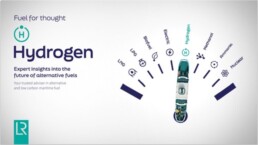

Fuel for thought: Hydrogen offers a comprehensive exploration of hydrogen’s potential in shipping’s energy transition.
Lloyd’s Registerhas published the latest report in its award-winning Fuel for thought series, providing a comprehensive assessment of hydrogen’s potential role in maritime decarbonisation.
Fuel for thought: Hydrogen examines hydrogen from production and supply through to onboard use, highlighting the fuel’s advantages alongside the safety, infrastructure and cost challenges that currently restrict its adoption.
Green hydrogen has the potential to deliver zero tank-to-wake greenhouse gas emissions when used in fuel cells and has a vital role as the building block for e-fuels such as ammonia and methanol. But hydrogen’s low volumetric energy density, the need for cryogenic storage at –253°C and heightened safety risks means that the fuel is far from a ready-made solution for most ship types.
The report notes that while interest is rising, particularly as regulatory measures tighten, hydrogen-capable vessels still represent less than 0.5% of the global orderbook.
The assessment comes as shipowners face increasing pressure to cut emissions under the EU ETS, FuelEU Maritime and the IMO’s 2050 net-zero ambition. Green hydrogen stands to gain from FuelEU Maritime’s two-times multiplier for renewable fuels of non-biological origin until 2033, a mechanism that could accelerate its uptake as production scales.
Infrastructure—and the lack of it—remain a critical challenge. Despite a few emerging bunkering projects, low-emissions hydrogen as a whole – including hydrogen produced via renewable-energy powered electrolysis (green hydrogen), biomass and fossil fuels with high levels of carbon capture and permanent storage (blue hydrogen) – accounted for less than 1% of global production in 2025, according to IEA figures 1.
Significant investment in production, transport and bunkering infrastructure is needed before the fuel can support wider maritime demand. Shipping will also need to compete with other industries for green hydrogen, driving the need for robust certification schemes and transparent lifecycle assessments.
Safety emerges as a key theme. Hydrogen’s wide flammability range, low ignition energy and potential for embrittlement require rigorous design standards and specialised crew training.
LR’s own hydrogen requirements, set out in Appendix LR3 of its Rules for Ships Using Gases or Other Low-Flashpoint Fuels, provide a framework to manage those issues, supported by guidance on fuel cells, composite cylinders, liquid hydrogen systems and bunkering arrangements.
Despite these hurdles, the analysis points to near-term opportunities. Early adoption is most viable for short-sea trades such as ferries, tugs and coastal vessels where regular bunkering cycles reduce the constraints of onboard storage.
Fuel cell technologies show particular promise for these applications, supported by improving cost trajectories and advances in durability. Hydrogen-ready designs and hybrid fuel strategies also offer shipowners a practical route to futureproof assets.
Padmini Mellacheruvu, LR’s Lead Technical Specialist in Cryogenic and Compressed Fuel Systems, said: “Hydrogen has an important role to play in the maritime energy transition, but the pathway to scale is complex. Progress will depend on early investment, careful planning and a clear focus on safety.
“Our latest Fuel for Thought report brings clarity to both the potential of hydrogen and the substantial work still required to enable its safe, scalable and commercially viable use.”
The report was written with a foreword by Dr Maximilian Kuhn, advisor and ISO TC 197 liaison to the IMO, as well as advisor to Hydrogen Europe. He said: “At Hydrogen Europe, we believe that hydrogen is more than just a fuel; it is one of the main drivers of systemic change.
“Its versatility, scalability and compatibility with renewable energy sources put it in a unique position to address the complex challenges of maritime decarbonisation. Yet the path forward is not without obstacles: Infrastructure, regulation, safety and cost remain critical hurdles.
“This report does not shy away from these realities. Instead, it provides a clear-eyed assessment of the current landscape while charting a course for innovation, investment and international collaboration.”



Related News.

Navigating the Multi-Orbit Era: In Conversation with Intellian’s Jon Harrison at SMM 2026
At SMM 2026 in Hamburg, the rapid evolution of maritime satellite communications took centre stage. Across the exhibition halls, discussions among…
Cyprus ports need joint energy and investment strategy, shipping agents chief says
Cyprus needs a coordinated strategy for shipping, energy and environmental protection to support port investment and modernisation, Cyprus shipping…

MASO Public Affairs introduces MASO Regulatory Intelligence
A new subscription service helping businesses understand what is changing and what it means for them MASO Public Affairs introduces MASO Regulatory…
Anglo-Eastern helps turn CMBTECH’s ammonia ambition into an operational reality
From early feasibility study and risk-based design to newbuilding supervision, crew readiness and technical management, Anglo-Eastern drew on its…

Escalation of attacks threatens to derail recovery in Middle East oil exports
World oil demand is forecast to fall by 2.5 mb/d y-o-y in 4Q26 and 2.6 mb/d on average in 2026. As the Iran war manifests itself through restricted…
New study finds shipping pays twice its share to EU ETS earmarked revenues should triple to help build market for sustainable fuels and technologies
Shipping is responsible for around 10% of EU ETS emissions but pays almost 20% of the ETS bill. Unlike other sectors, it has never received free…

MSARC strengthens maritime mass rescue readiness through training and national live exercise off Dakar, Senegal
Joint MSARC–FHAS programme combines three days of SAR training with a national multi-agency live exercise The Maritime Search and Rescue Council ,…
Sogese report deliveries are still being delayed as container freight rates fluctuate
FOR IMPORTERS Spot rates into the Mediterranean are back at January levels, Far East to Europe reliability sits at pandemic lows, and nearly…

Glencore begins trading on Australian Securities Exchange
Glencore has begun trading on the Australian Securities Exchange under the ASX code GLC. Gary Nagle, Glencore’s CEO, said it was an exciting day for…
BIMCO Shipping Number of the Week
Suez Canal container ship transits exceed 50% of pre-disruption levels "During the first two weeks of October, weekly container ship capacity…
Subscribe to our newsletter!
if you dont want to swim alone in the ocean of news, sign up for the newsletter, and you will receive daily all the important news of world shipping!
