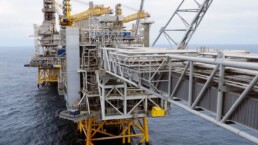

To achieve Equinor’s ambition for the Norwegian continental shelf by 2035, and to contribute to energy security and continued value creation, AI is crucial.

“AI is a central part of our operations. Moving forward, AI will become even more important for solving industrial tasks safely, faster, more profitably, and at scale. With AI, we can analyse seismic data ten times faster, plan wells and field development in new and better ways and operate our facilities more efficiently. Industrial processes generate vast amounts of data, and we can use AI to ‘produce’ knowledge from this data. This has already been transformative and profitable, even though we are still early in the AI revolution,” says Hege Skryseth, executive vice president for Technology, Digital, and Innovation in Equinor.
Equinor currently has a range of AI solutions in use, and over a hundred new use cases have been identified.
Here are three valuable contributors that have been implemented:
- Monitoring of over 700 rotating machines with 24,000 sensors across all facilities. This predicts failures and maintenance needs, known as predictive maintenance. It improves safety, provides more stable operations, and reduces the risk of sudden shutdowns that can lead to flaring and increased CO2 emissions. This alone has created value of USD 120 million since 2020.
- AI-driven planning of wells and field development generates thousands of alternatives, allowing the experts to focus on the best proposals. In the Johan Sverdrup phase 3, AI found a solution that no one had considered, saving the partnership USD 12 million.
- AI is also used as a tool to interpret more seismic data, faster. The tool provides a tenfold increase in interpretation capacity. With AI, that more data can be interpreted, covering more square kilometres and enhancing the overall understanding of an area and of the Norwegian continental shelf. A good geological understanding is key to new discoveries, and this is an important tool. In 2025, 2 million square kilometres were interpreted using the AI tool.
“Since 2020, we have realized values of over 330 million USD with artificial intelligence in industrial processes, of which 130 million USD came in 2025. We primarily use ‘traditional’ machine learning on our operational data. Our employees can use AI tools like copilots, chatbots and agentic AI to solve tasks and work in new ways,” says Skryseth.
Equinor aims to maintain production on the Norwegian continental shelf at 2020 levels through 2035, which means around 1.2 million barrels of oil equivalents per day.
“We use AI to interpret more seismic data, plan and drill more wells, and operate our facilities safely and profitably, while also using the technology to optimize energy consumption and reduce CO2 emissions,” explains Skryseth.



Related News.
Hong Kong Global Maritime Trade Summit to return for third edition
The International Chamber of Shipping, in collaboration with the Transport and Logistics Bureau of the Government of Hong Kong and the Hong Kong…

Appetite for US crude oil exports climbs despite high freight
South Korea tops US crude destinations at 568,600 b/d VLCC rates to Asia double, closing arbitrage window European refining margins…
Shipping stocks Rally as Hormuz Traffic plunges 75%
Ship traffic through the Strait of Hormuz — a critical chokepoint handling about 20% of global crude oil and liquefied natural gas shipments — has…
Diana Shipping announces Time Charter Contract for m/v G P Zafirakis with Classic Maritime
Diana Shipping, a global shipping company specializing in the ownership and bareboat charter-in of dry bulk vessels, announced that, through a…
New IMO ESP Code framework for Remote Inspection Techniques
The International Maritime Organisation, through Resolution MSC.584(111) , has adopted amendments to the International Code on the Enhanced…

ABS opens Offshore & Marine Support Center in Bergen
ABS has expanded its capabilities in the Norwegian maritime market with the opening of a cutting-edge support center in Bergen, bringing advanced…
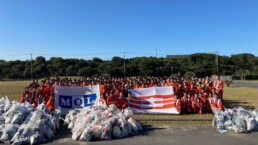
MOL holds giant step memorial ceremony and beach cleanup at Kashima Coast
Memorial and Reflection 20 Years After the Accident: Learning from the Past to Foster an Even Stronger Safety Culture Mitsui O.S.K. Lines, announced…
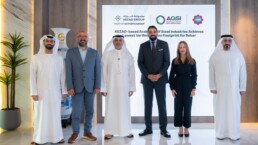
KEZAD-based Arabian Gulf Steel Industries achieves lowest verified Carbon Footprint for Rebar
CARES UK verified Environmental Product Declaration confirms 139 kg CO₂e per tonne for rebar produced at AGSI’s KEZAD Abu Dhabi facility Arabian…
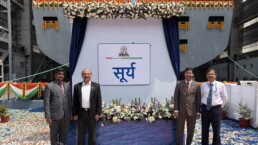
Indian Register of Shipping announces launch of first fleet support ship INS Surya
Indian Register of Shipping continues to strengthen its role in supporting the Indian Navy and India’s naval shipbuilding capabilities through the…

VLCCs Climbing the Record Charts
LR2 The TC1 75kt MEG/Japan index decreased by only a single point this week to WS928. The corresponding Baltic round-trip TCE fell by $2,000 to…
Subscribe to our newsletter!
if you dont want to swim alone in the ocean of news, sign up for the newsletter, and you will receive daily all the important news of world shipping!
