LR charting new ground in cruise ship LNG dry-docks
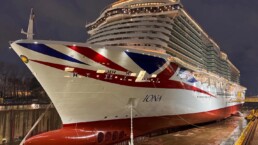

LR, Carnival UK, and Carnival Cruise Line have successfully completed Europe’s first major LNG dry-docks for large passenger vessels, setting a new standard in LNG management and giving important insights for the cruise industry to adopt lower-carbon propulsion
As the cruise industry advances towards lower-carbon propulsion, the maturing fleet of LNG-fuelled passenger vessels enters a new lifecycle phase. For the earliest adopters, this means navigating their first major renewal surveys and dry-docking campaigns with systems that are significantly more complex than those found on conventionally fuelled vessels.
The recent renewal surveys and dry-docks of Carnival UK’s (CUK) Iona and Carnival Cruise Line’s (CCL) Mardi Gras marked the first major LNG dry-docks for large passenger vessels in Europe. Pivotal to these achievements were the early, structured, and sustained involvement of LR’s Cruise Ship Centre of Expertise (CCoE). The CCoE orchestrated the technical alignment, planning discipline and global survey coordination required for such complex projects.
For LR, CUK and CCL, the work represented the execution of a highly sophisticated technical programme, the culmination of more than a year of detailed collaboration, planning and risk management. The lessons learned already shape thinking around future alternative-fuel ship designs and the evolving expectations of operators undertaking demanding maintenance schedules.
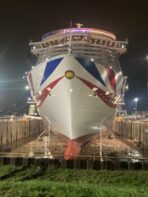
A new era of dry-docking
Dry-docking a LNG-fuelled cruise ship is a fundamentally different exercise from a conventional refit. With vessels spending only a brief period out of service, LNG system maintenance windows are correspondingly narrow.
As Remco van Ee, Senior Surveyor in Charge New Construction and MEC Rotterdam at LR, explains, “Cruise ships spend a relatively short time in drydock, limiting the time we have for the maintenance of the LNG system. Halfway through each dry-dock, we needed to start preparing the LNG installation for taking on its first bunkering directly after the docking period.”
This compression of activity drove the need for unprecedented levels of forward planning. Spare part procurement alone demanded long-range forecasting, with lead times of up to 12 months for items such as LNG pumps. OEM specialist availability had to be locked-in early, and survey sequences aligned around delivery schedules and the operational constraints of the vessels themselves.
Andrew Bennett, Machinery Survey Policy Manager in LR’s Technical Directorate, explains. “Starting 18 months in advance, we worked closely with the client to understand their specific operation, maintenance and drydocking challenges, and helped them to develop detailed schedules, with optimised surveys agreed in advance and aligned to meet their requirements.
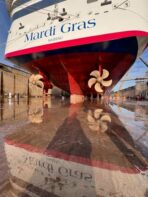
This collaborative planning effort included shipboard visits, risk assessments, technical workshops and repeated sessions with Carnival’s technical teams in Miami, Southampton, Marseille and at the Carnival training centre. The aim was to build a shared and granular understanding of system conditions, survey requirements, and the operational profile of each vessel.
Vincenzo Prinzi, Technical Operation Director, CCL, reflects: “The preparation for this project was extensive, and it allowed us to engage in meaningful discussions and work together with determination. Our strong communication played a key role in reaching a consensus on everything we planned.”
John Waters, LNG Inspection Project Manager, CUK, says: “The recent inspection of the LNG fuel system on Iona marked a first for Carnival UK and the collaboration with LR was important in its success. The communication and constructive approach helped navigate this new ground with confidence. Working closely together allowed us to address challenges quickly, maintain high safety standards and strengthen our capabilities in this emerging area.”
The inherent complexity of LNG fuel systems shaped every decision. Both Iona and Mardi Gras feature three fuel tanks and dual fuel trains designed for full redundancy, supported by sophisticated control logic and an extensive cryogenic piping network.
“Managing the inspection, testing and recommissioning of these systems within the confines of a passenger ship’s operational profile required not only expert knowledge but tight integration between the shipboard team, the technical office and the attending class surveyors,” says van Ee.
“We had to define a very detailed Inspection and Test Plan for these vessels, down to the smallest valve which required overhaul well in advance of the actual surveys.”



Related News.
Hong Kong Global Maritime Trade Summit to return for third edition
The International Chamber of Shipping, in collaboration with the Transport and Logistics Bureau of the Government of Hong Kong and the Hong Kong…

Appetite for US crude oil exports climbs despite high freight
South Korea tops US crude destinations at 568,600 b/d VLCC rates to Asia double, closing arbitrage window European refining margins…
Shipping stocks Rally as Hormuz Traffic plunges 75%
Ship traffic through the Strait of Hormuz — a critical chokepoint handling about 20% of global crude oil and liquefied natural gas shipments — has…
Diana Shipping announces Time Charter Contract for m/v G P Zafirakis with Classic Maritime
Diana Shipping, a global shipping company specializing in the ownership and bareboat charter-in of dry bulk vessels, announced that, through a…
New IMO ESP Code framework for Remote Inspection Techniques
The International Maritime Organisation, through Resolution MSC.584(111) , has adopted amendments to the International Code on the Enhanced…
ABS opens Offshore & Marine Support Center in Bergen
ABS has expanded its capabilities in the Norwegian maritime market with the opening of a cutting-edge support center in Bergen, bringing advanced…
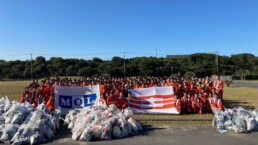
MOL holds giant step memorial ceremony and beach cleanup at Kashima Coast
Memorial and Reflection 20 Years After the Accident: Learning from the Past to Foster an Even Stronger Safety Culture Mitsui O.S.K. Lines, announced…
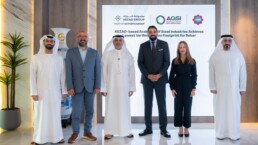
KEZAD-based Arabian Gulf Steel Industries achieves lowest verified Carbon Footprint for Rebar
CARES UK verified Environmental Product Declaration confirms 139 kg CO₂e per tonne for rebar produced at AGSI’s KEZAD Abu Dhabi facility Arabian…
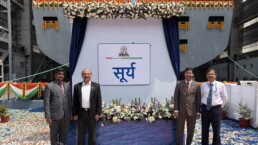
Indian Register of Shipping announces launch of first fleet support ship INS Surya
Indian Register of Shipping continues to strengthen its role in supporting the Indian Navy and India’s naval shipbuilding capabilities through the…

VLCCs Climbing the Record Charts
LR2 The TC1 75kt MEG/Japan index decreased by only a single point this week to WS928. The corresponding Baltic round-trip TCE fell by $2,000 to…
Subscribe to our newsletter!
if you dont want to swim alone in the ocean of news, sign up for the newsletter, and you will receive daily all the important news of world shipping!
