New MIT–Mecalux study finds AI now embedded in 60% of warehouses, reshaping productivity and workforce models worldwide
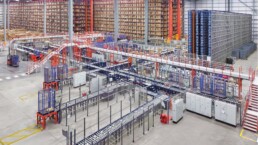

With more than 9 out of 10 warehouses now using some form of AI or advanced automation, the sector has reached a surprising level of maturity. Over half of surveyed organisations report operating at advanced or fully automated maturity levels, especially among larger businesses with complex multi-site logistics networks. Warehouses have moved well beyond isolated pilots in that AI increasingly supports day-to-day workflows, including order picking, inventory optimisation, equipment maintenance, labour planning and safety monitoring.
“The data show that intelligent warehouses outperform not only in volume and accuracy, but in adaptability,” says Javier Carrillo, CEO of Mecalux. “As peak season approaches, companies that have invested in AI aren’t just faster — they’re more resilient, more predictable and better positioned to navigate volatility.”
The study also finds that AI investments are paying off more quickly than many expected. Most businesses now dedicate between 11% and 30% of their warehouse technology budgets to AI and machine-learning initiatives, and the typical payback period is just two to three years. These returns stem from measurable gains in inventory accuracy, throughput, labour efficiency and error reduction. They also reinforce a shift from exploratory spending to long-term capability building. Cost savings, customer expectations, labour shortages, sustainability goals and competitive pressure all drive these investments, demonstrating that AI’s value extends far beyond automation alone.
Despite this progress, organisations continue to face challenges as they scale AI across their operations. “The hard part now is the last mile: integrating people, data and analytics seamlessly into existing systems,” says Dr. Matthias Winkenbach, Director of the MIT ILS Lab. The leading barriers include technical expertise, system integration, data quality and implementation cost, reflecting the underlying work required to connect advanced tools with legacy systems. Even so, companies report strong foundations in data and project management, and they identify better tools, clearer roadmaps, expanded budgets and stronger internal expertise as key accelerators for continued adoption.
Crucially, the report challenges persistent fears about automation replacing human workers. Rather than supplanting human workers, AI is contributing to higher productivity, greater job satisfaction and expanded workforce opportunities. More than three-quarters of surveyed organisations saw a rise in employee productivity and satisfaction after implementing AI tools, and over half reported growing the size of their workforce. New roles are emerging across the board, including AI/ML engineers, automation specialists, process-improvement experts and data scientists — evidence that intelligent automation is expanding, rather than reducing, the human role in warehouse operations.
Looking ahead, nearly every company surveyed plans to scale up its use of AI over the next two to three years. An overwhelming 87% expect to increase their AI budgets, and 92% are currently implementing or planning new AI projects. The next frontier, the report shows, will centre on decision-making technologies — especially generative AI. Businesses identify generative AI as the single most valuable method in today’s logistics facilities, citing applications such as automated documentation, warehouse-layout optimisation, process-flow design and even code generation for automation systems. As these capabilities advance, AI will help a growing number of warehouses move from predictive insight to automated action.
“Traditional machine learning is great at predicting problems, but generative AI actually helps you engineer the solution,” says Dr. Winkenbach. “That’s why companies see it as the biggest value generator in the warehouse today. Ultimately, the measurable gains from automation are productivity wins, making existing systems work smoother, faster and with fewer disruptions.”
The study underscores that as the logistics sector enters the year’s busiest season, the warehouses behind Black Friday orders are not only becoming more automated, but more intelligent systems. With AI boosting performance, supporting workers and enabling new capabilities across global networks, the coming years propose even deeper integration of data and decision-making into the core of warehouse operations.



Related News.

Navigating the Multi-Orbit Era: In Conversation with Intellian’s Jon Harrison at SMM 2026
At SMM 2026 in Hamburg, the rapid evolution of maritime satellite communications took centre stage. Across the exhibition halls, discussions among…
Cyprus ports need joint energy and investment strategy, shipping agents chief says
Cyprus needs a coordinated strategy for shipping, energy and environmental protection to support port investment and modernisation, Cyprus shipping…

MASO Public Affairs introduces MASO Regulatory Intelligence
A new subscription service helping businesses understand what is changing and what it means for them MASO Public Affairs introduces MASO Regulatory…
Anglo-Eastern helps turn CMBTECH’s ammonia ambition into an operational reality
From early feasibility study and risk-based design to newbuilding supervision, crew readiness and technical management, Anglo-Eastern drew on its…

Escalation of attacks threatens to derail recovery in Middle East oil exports
World oil demand is forecast to fall by 2.5 mb/d y-o-y in 4Q26 and 2.6 mb/d on average in 2026. As the Iran war manifests itself through restricted…

New study finds shipping pays twice its share to EU ETS earmarked revenues should triple to help build market for sustainable fuels and technologies
Shipping is responsible for around 10% of EU ETS emissions but pays almost 20% of the ETS bill. Unlike other sectors, it has never received free…

MSARC strengthens maritime mass rescue readiness through training and national live exercise off Dakar, Senegal
Joint MSARC–FHAS programme combines three days of SAR training with a national multi-agency live exercise The Maritime Search and Rescue Council ,…
Sogese report deliveries are still being delayed as container freight rates fluctuate
FOR IMPORTERS Spot rates into the Mediterranean are back at January levels, Far East to Europe reliability sits at pandemic lows, and nearly…

Glencore begins trading on Australian Securities Exchange
Glencore has begun trading on the Australian Securities Exchange under the ASX code GLC. Gary Nagle, Glencore’s CEO, said it was an exciting day for…
BIMCO Shipping Number of the Week
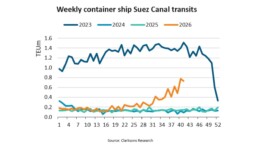
Suez Canal container ship transits exceed 50% of pre-disruption levels "During the first two weeks of October, weekly container ship capacity…
Subscribe to our newsletter!
if you dont want to swim alone in the ocean of news, sign up for the newsletter, and you will receive daily all the important news of world shipping!
