VIKAND highlights bullying and harassment as major mental health concern ahead of STCW amendments
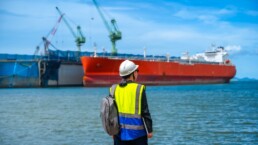

VIKAND has highlighted the need for cultural change in the maritime sector as reports of bullying, harassment, and conflict at sea continue to rise.
With new amendments to the Standards of Training, Certification and Watchkeeping (STCW) set to take effect on 1st January 2026, explicitly addressing bullying and harassment, the global leader in maritime healthcare warns that, though welcome, regulations alone will not solve the problem unless companies also address the root causes: leadership culture, communication, and respect onboard.
According to the report “Workplace bullying and harassment at sea: A structured literature review,” [1] prevalence rates of workplace bullying and harassment at sea range from 8% to 25% of all seafarers, and over 50% among women seafarers.
Adding to this, the recently published 2025 Seafarer Survey by Danica Crewing Specialists found that in 2025, 16% of the respondents reported being subjected to bullying, racism or harassment, compared to only 7% in 2019 when the survey first took place. These findings highlight the scale of the problem and the urgent need for cultural and behavioural change within the industry.

“It’s quite easy to put regulations in place,” said Martin Hedman, Director of Mental Wellness Practices at VIKAND. “Companies need to have a policy — for instance, around bullying and harassment — and the right tools, buy in and executive commitment to support their people. The STCW amendment is a strong step, but recognition of the problem is the crucial first step. True change will only come when companies are willing to invest and engage on a deeper level than just setting up a generic training course for seafarers.”
He notes that many of the mental health cases VIKAND is involved with today stem from relational issues and poor leadership onboard, rather than isolation alone.
“Many mental health issues are triggered by interpersonal issues onboard. People may feel disrespected or harassed by a superior officer or supervisor, and that’s becoming increasingly prevalent. It’s not just the isolation, it’s when things become explosive, such as with conflicts, where communication and attitudes becomes harsh and accusing, that mental health deteriorates quickly,” he said.
VIKAND emphasises that bullying and harassment can lead to severe psychological distress, including depression and suicidal thought, especially when compounded by long periods away from loved ones. The company believes that leadership and communication onboard ships must become more inclusive, empathetic, and proactive to create a safer and healthier environment for all crew members.
VIKAND views constructive communication as a cornerstone of psychological safety and overall mental wellbeing for seafarers. The company says these findings highlight a broader global need for improvement in how feedback and communication are delivered, particularly within the maritime environment.
Seafarers today require clear and effective communication not just to build trust and teamwork, but also to adapt to a generational shift in expectations about feedback and treatment. Unlike in the past, when a more authoritarian approach was common and accepted, today’s workforce values respectful and constructive dialogue. The new generation of seafarers expects meaningful, balanced feedback that emphasises growth rather than blame, highlighting the need for communication that focuses on delivery, tone, and respect.
“Feedback that is poorly delivered can lead to unnecessary stress, lower motivation, and even cause crew members to question their career in the industry,” explains Mr Hedman. “By prioritising constructive and supportive communication, we foster a more resilient, engaged, and mentally healthy workforce at sea.”
He adds: “Ultimately, addressing bullying and harassment at sea requires more than policies or regulations. It requires a culture shift, starting with leadership onboard and strengthened through comprehensive engagement and accountability from company executives and management ashore.”
“By fostering respect, inclusivity, and psychological safety, shipping companies can directly reduce the incidence of bullying and harassment, improve mental health outcomes, and create a safer, more supportive environment for all seafarers. The upcoming STCW amendments provide a framework, but true change will only come when companies actively implement these policies, train their leaders, and ensure every crew member feels valued and heard.”



Related News.
Navigating the Multi-Orbit Era: In Conversation with Intellian’s Jon Harrison at SMM 2026
At SMM 2026 in Hamburg, the rapid evolution of maritime satellite communications took centre stage. Across the exhibition halls, discussions among…
Cyprus ports need joint energy and investment strategy, shipping agents chief says
Cyprus needs a coordinated strategy for shipping, energy and environmental protection to support port investment and modernisation, Cyprus shipping…

MASO Public Affairs introduces MASO Regulatory Intelligence
A new subscription service helping businesses understand what is changing and what it means for them MASO Public Affairs introduces MASO Regulatory…
Anglo-Eastern helps turn CMBTECH’s ammonia ambition into an operational reality
From early feasibility study and risk-based design to newbuilding supervision, crew readiness and technical management, Anglo-Eastern drew on its…

Escalation of attacks threatens to derail recovery in Middle East oil exports
World oil demand is forecast to fall by 2.5 mb/d y-o-y in 4Q26 and 2.6 mb/d on average in 2026. As the Iran war manifests itself through restricted…
New study finds shipping pays twice its share to EU ETS earmarked revenues should triple to help build market for sustainable fuels and technologies
Shipping is responsible for around 10% of EU ETS emissions but pays almost 20% of the ETS bill. Unlike other sectors, it has never received free…
MSARC strengthens maritime mass rescue readiness through training and national live exercise off Dakar, Senegal
Joint MSARC–FHAS programme combines three days of SAR training with a national multi-agency live exercise The Maritime Search and Rescue Council ,…
Sogese report deliveries are still being delayed as container freight rates fluctuate
FOR IMPORTERS Spot rates into the Mediterranean are back at January levels, Far East to Europe reliability sits at pandemic lows, and nearly…
Glencore begins trading on Australian Securities Exchange
Glencore has begun trading on the Australian Securities Exchange under the ASX code GLC. Gary Nagle, Glencore’s CEO, said it was an exciting day for…
BIMCO Shipping Number of the Week
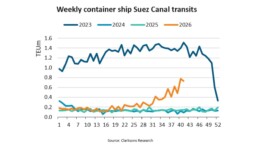
Suez Canal container ship transits exceed 50% of pre-disruption levels "During the first two weeks of October, weekly container ship capacity…
Subscribe to our newsletter!
if you dont want to swim alone in the ocean of news, sign up for the newsletter, and you will receive daily all the important news of world shipping!
