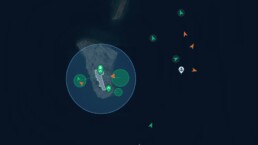

In a significant break from years of cloaked operations, Iranian crude tankers – including non-Iranian-flagged ships – are now transmitting AIS signals with rare consistency. Kpler’s latest tracking shows that only 14 out of 89 vessels carrying Iranian oil remained dark over the past 48 hours, reversing a longstanding evasion pattern.
Key takeaways:
- More than 80% of Iranian-laden tankers transmitted AIS in the past 48h – a major behavioural shift.
- The move comes just after political signalling from Washington but without clear sanctions relief in sight.
- Most plausible driver: legal positioning under revived UN sanctions and risk mitigation against seizure.
- China may be shifting its posture on US sanctions enforcement after the Rizhao Terminal listing, potentially enabling direct discharge of sanctioned vessels.
- If Chinese ports begin accepting OFAC-sanctioned ships, Iran could reduce costly STS operations, streamlining crude logistics and improving margins.
- Other reasons include a possible attempt to reassure China or deter third-party enforcement.
The timing of this shift is fuelling market speculation that sanctions relief is coming. It follows US President Donald Trump’s recent remarks in Israel’s Knesset, where he stated he would “love to remove sanctions when Iran is ready to talk.” While rhetorically notable, Kpler finds no current evidence of impending sanctions relief. Nuclear negotiations remain stalled over uranium enrichment levels, with the US maintaining its demand for zero enrichment — a condition Iran continues to reject. Direct backchannels may exist, but diplomacy remains gridlocked.
Instead, a more credible driver may be Iran’s legal positioning under the UN snapback mechanism, which reinstated pre-2015 sanctions. These reimposed measures expand the legal basis for third countries to detain or seize Iranian tankers, especially those lacking proper insurance. By reactivating AIS signals, Iran may be seeking to demonstrate cargo legitimacy: showing that vessels are transporting crude, not prohibited goods such as arms or nuclear-related materials. Enhanced visibility could be a strategic effort to reduce seizure risk by signalling compliance with maritime norms under international law.
This AIS shift could also serve as a strategic deterrent: making Iranian cargoes visible could signal that any seizure could be met with retaliatory action, particularly in the Strait of Hormuz, where Iran has previously targeted foreign tankers in tit-for-tat enforcement. While less likely, the move could also be intended as a display of resilience: a signal that US and UN sanctions are not disrupting the volume or consistency of crude exports to China, despite mounting legal and logistical pressure.
A third, subtler angle lies with China. Iran may be using AIS transparency to build political goodwill with Beijing, which, alongside Russia, opposed the UN snapback. But the move also risks exposing China diplomatically. Despite its rejection of both US and UN sanctions, China generally masks Iranian imports under third-country origins (e.g. Malaysia). Open AIS tracking could complicate Beijing’s effort to maintain plausible deniability.
Another possibility is that, following US sanctions on the Rizhao Terminal last week, China plans to no longer bow to US pressure and disregard sanctions. The US has increased pressure on vessels that handle Iranian crude this year. Over 60% of the vessels that have loaded Iranian crude in the last 12 months are now sanctioned by OFAC, having risen from 38% one year ago.
This has ramifications on the whole logistics chain as most Chinese ports won’t receive vessels sanctioned by OFAC. As a result, more Iranian crude cargoes need to be transferred to a “clean” ship before discharge, increasing the cost. If there is a change in approach from China, and all ports are able to receive sanctioned vessels, there will be no need to hide vessel locations or move the cargo between sanctioned and non-sanctioned vessels, reducing logistical costs for Iran.
Vessel laden with Iranian crude
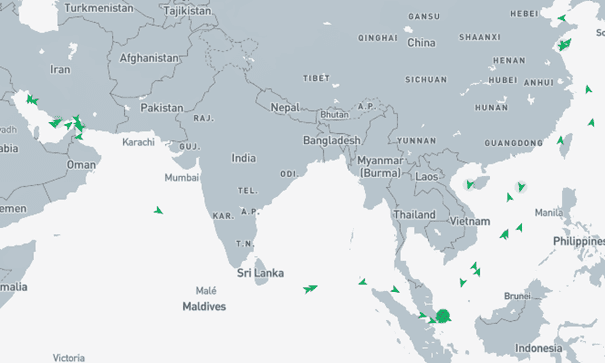
Source: Kpler



Related News.

Spyros Papavassiliou honoured with the “Ge’ Néo Epicheirein” 2026 Award in the Shipping Enterprises category
Celebrating leadership, entrepreneurial excellence and a strong contribution to Cyprus shipping. Island Energies is proud to announce that Mr Spyros…
ABP welcomes HANSEATIC spirit the largest ever cruise ship to visit the Port of Ipswich
Hapag-Lloyd Cruises’ expedition vessel, HANSEATIC spirit, becomes the largest cruise ship ever to visit Ipswich, highlighting the growing appeal of…
Prime Tanker Management deploys ShipIn across its entire fleet to improve safety performance
Master-led use of operational insight supports measurable improvement across PPE, bridge, and technical performance while strengthening fleet-wide…
Goltens Worldwide enters into agreement for sale to HD Hyundai Marine Solution
Proposed acquisition supports long-term growth while preserving Goltens’ independence and commitment to customers Goltens Worldwide announced that it…

Port of Piraeus receives special award marking 10 years since COSCO SHIPPING joined its Shareholding Structure
Award presented at the 9th Infrastructure and Transport Conference ITC 2026 A significant milestone in the history of Piraeus Port Authority and the…

Seafarers’ voices must shape the future of mental health support at sea, says OneCare Group
The shipping industry must listen more closely to the lived experiences of seafarers if it is to build working environments that genuinely protect…

Bangladesh’s Chittagong Port Authority and DP World sign 15 year concession for new Mooring Container Terminal
The Chittagong Port Authority and DP World have signed a 15-year concession agreement for the operation and maintenance of the New Mooring Container…

ABP’s HELM Immingham opens for business
Associated British Ports marked the official opening of its HELM Immingham site, a 227-acre industrial and logistics development site. Seen as one…
Veson Nautical and Marcura expand partnership to Streamline Demurrage Management
Marcura Claims now integrates with IMOS, giving joint clients another way to manage demurrage. Global maritime technology leaders Veson Nautical and…
Thermal Weakness Drags Global Coal Flows Lower
Global seaborne coal flows fell 6.7% year on year in September 2026 to 115 Mt. Thermal coal drove the decline, and a rise in met coal flows was not…
Subscribe to our newsletter!
if you dont want to swim alone in the ocean of news, sign up for the newsletter, and you will receive daily all the important news of world shipping!
