Baltic Exchange launches new tanker routes in response to tariff and geopolitical uncertainty
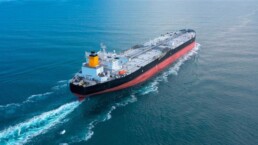

Baltic Exchange has launched a series of new Aframax tanker benchmarks, TD28 and TD29, in response to shifting global trade dynamics, escalating geopolitical tensions, and a dramatic surge in Canadian crude exports to Asia. The new assessments are also designed to strengthen the Baltic’s position as the leading provider of freight benchmarks and reflect the shipping industry’s need for greater transparency amid a rapidly changing energy landscape.
TD28, listed on the Intercontinental Exchange (ICE) on 13 October, tracks voyages from Vancouver to Ningbo, China, while TD29 assesses voyages from Vancouver to the Pacific Area Lightering (PAL) zone off the US West Coast. Both routes have emerged as strategically important flows following the completion of the Trans Mountain Expansion (TMX) project, which began commercial operations on 1 May 2024.
The TMX nearly tripled Canada’s pipeline capacity from 300,000 barrels per day (bpd) to 890,000 bpd, transforming the country’s export profile and providing new direct access to Asian energy markets. Crucially, the expansion has reshaped the logistics landscape: Vancouver’s Westridge Marine Terminal, previously limited to around five Aframax calls per month, can now accommodate up to 34, a huge shift in export potential that has elevated Canada’s role in global crude trade.
“This is a classic example of the Baltic responding directly to market needs,” said Matt Cox, Head of Benchmark Production at the Baltic Exchange. “The development of these new routes reflects how trade flows evolve in response to geopolitical realities, from tariff disputes and shifting alliances to sanctions and changing energy security priorities. Our role is to ensure the market has reliable benchmarks that reflect these new dynamics.”
The launch comes as the global oil and shipping industries adapt to a complex geopolitical environment. Rising US-China trade tensions, Western sanctions on Russian energy, and growing competition for secure, diversified energy supplies have made Canada’s Pacific export corridor a strategic alternative for Asian buyers. As the United States and China spar over technology and tariffs, Canadian crude offers a politically safer, commercially viable source of supply, and with TMX now online, the Pacific coast has become a critical export gateway.
Because fully loaded VLCCs cannot load at Vancouver, Aframax vessels have become the standard for these shipments. Cargoes either sail directly across the Pacific to China (TD28) or are lightered onto larger tankers off California before continuing their journey (TD29). As these flows grow, particularly amid heightened interest from Chinese refiners and diversification strategies among Asian buyers, the need for independent, transparent benchmarks has intensified.
The development of TD28 and TD29 followed the Baltic’s rigorous index creation process, including blind and private trials with market panellists and a public consultation phase. Both routes met the Baltic’s strict criteria for liquidity, panel participation and commercial relevance before being adopted.
Matt emphasised that the Baltic’s collaborative, data-driven approach is key to its benchmark development. “New routes are launched after extensive monitoring, consultation and testing to ensure it reflects genuine trade flows and provides real value to the market,” he said. “Collaboration with our panel and advisory councils is central to this process and ensures our benchmarks mirror market reality as closely as possible.”
The launch also underscores Baltic Exchange’s commitment to agility and innovation in a shifting geopolitical and regulatory environment. Regular advisory council meetings and ongoing dialogue with industry participants ensure benchmarks evolve alongside new trade patterns, sanctions regimes, and decarbonisation policies such as the EU ETS and FuelEU Maritime.
“Our engagement with the market is continuous,” Matt added. “TD28 and TD29 are the latest examples of how we listen to members and deliver products that meet the industry’s changing needs. They also show how benchmarks can act as early indicators of deeper geopolitical and commercial trends.”
Looking ahead, Matt said the early signs for both routes are promising. “Flows of Canadian crude are growing rapidly, and these benchmarks will provide the transparency and consistency needed as the trade matures,” he noted. “Ultimately, the success of any index depends on adoption, and we’re confident these routes will quickly become trusted reference points for market participants across the Pacific.”
With Canada’s expanded Pacific capacity reshaping global supply chains and energy security strategies, the Baltic expects TD28 and TD29 to become critical tools for managing risk, improving price discovery, and navigating the evolving geopolitics of energy trade.



Related News.

Navigating the Multi-Orbit Era: In Conversation with Intellian’s Jon Harrison at SMM 2026
At SMM 2026 in Hamburg, the rapid evolution of maritime satellite communications took centre stage. Across the exhibition halls, discussions among…
Cyprus ports need joint energy and investment strategy, shipping agents chief says
Cyprus needs a coordinated strategy for shipping, energy and environmental protection to support port investment and modernisation, Cyprus shipping…

MASO Public Affairs introduces MASO Regulatory Intelligence
A new subscription service helping businesses understand what is changing and what it means for them MASO Public Affairs introduces MASO Regulatory…
Anglo-Eastern helps turn CMBTECH’s ammonia ambition into an operational reality
From early feasibility study and risk-based design to newbuilding supervision, crew readiness and technical management, Anglo-Eastern drew on its…

Escalation of attacks threatens to derail recovery in Middle East oil exports
World oil demand is forecast to fall by 2.5 mb/d y-o-y in 4Q26 and 2.6 mb/d on average in 2026. As the Iran war manifests itself through restricted…
New study finds shipping pays twice its share to EU ETS earmarked revenues should triple to help build market for sustainable fuels and technologies
Shipping is responsible for around 10% of EU ETS emissions but pays almost 20% of the ETS bill. Unlike other sectors, it has never received free…

MSARC strengthens maritime mass rescue readiness through training and national live exercise off Dakar, Senegal
Joint MSARC–FHAS programme combines three days of SAR training with a national multi-agency live exercise The Maritime Search and Rescue Council ,…
Sogese report deliveries are still being delayed as container freight rates fluctuate
FOR IMPORTERS Spot rates into the Mediterranean are back at January levels, Far East to Europe reliability sits at pandemic lows, and nearly…

Glencore begins trading on Australian Securities Exchange
Glencore has begun trading on the Australian Securities Exchange under the ASX code GLC. Gary Nagle, Glencore’s CEO, said it was an exciting day for…
BIMCO Shipping Number of the Week
Suez Canal container ship transits exceed 50% of pre-disruption levels "During the first two weeks of October, weekly container ship capacity…
Subscribe to our newsletter!
if you dont want to swim alone in the ocean of news, sign up for the newsletter, and you will receive daily all the important news of world shipping!
