Port continues to meet long-term air emissions goals
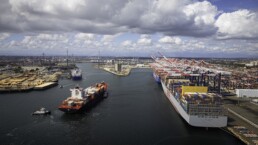

With a record volume of cargo moved last year, the Port of Long Beach continued to outperform goals set for air quality, according to a comprehensive annual study of emissions associated with trade activity.
The 2024 annual emissions inventory, available at polb.com/emissions, found the Port’s aggressive actions to curb environmental impacts from operations have cut diesel particulates by 90%, nitrogen oxides by 68% and sulfur oxides by 98% since 2005, the baseline year which emissions are measured against. Meanwhile, cargo increased 44% between 2005 and 2024.
While the Port continues to exceed goals set in the 2010 Clean Air Action Plan (CAAP) to achieve by 2023 – emission reductions of 77% for diesel particulates, 59% for nitrogen oxides and 93% for sulfur oxides – some categories of emissions increased in the short term, from 2023 to 2024. Year-over-year, diesel soot and nitrogen oxides rose by 23% and 12%, respectively. Sulfur oxides decreased 2%.
The primary factor impacting emissions was the record 9.6 million twenty-foot equivalent units (TEUs) of container cargo handled in 2024, 20.3% more than the prior year. Additionally, the Port included dredging boats in the inventory for the first time, which increased harbor craft emissions but provides additional transparency and accountability for port-related sources.
Since the 2017 CAAP Update, the Port has reduced diesel soot by 4%, nitrogen oxides by 27% and sulfur oxides by 21%. On a per-container basis, the Port is moving cargo cleaner than ever, with per-TEU emissions of diesel particulates reduced by 25%, nitrogen oxides 43% and sulfur oxides 39% since 2017.
“Good jobs and economic development don’t have to come at the cost of environmental sustainability,” said Long Beach Harbor Commission President Frank Colonna. “The results prove that – last year we had historic volumes while at the same time moving these containers more efficiently than ever. There is more to accomplish, but at this moment we would like to thank our tenants, harbor workforce and industry partners because our air quality gains wouldn’t be possible without their collaboration.”
“When the Port of Long Beach started this sustainability journey two decades ago, we were told it would negatively affect our commercial growth,” said Port of Long Beach CEO Mario Cordero. “Instead, we are moving record volumes of cargo more cleanly than ever. Though our ultimate goal is a zero-carbon supply chain, we can all be proud of where we are today.”
Along with the Port of Los Angeles, the Port of Long Beach this fall is committing to enhancements to the voluntary, landmark Clean Air Action Plan that has delivered remarkable progress cutting emissions from port-related sources, documented in the annual emissions inventories. These “CAAP Plus” measures include extensive infrastructure planning to support zero-emissions technology and enhancing incentives for cleaner oceangoing vessels, the largest source of emissions at the ports, through strategies like the Environmental Ship Index incentive. The measures also call for accelerating shore power, collaborating with the South Coast Air Quality Management District to prioritize spending Clean Truck Fund Rate revenue to subsidize the transition to zero-emissions trucks and infrastructure, and developing a zero-emissions drayage truck utilization incentive program.
The Port is moving forward with a number of plans to address all pollutants, including greenhouse gases, which are up 16% since 2017. In the next 10 years, the Port plans to invest $222 million to support zero emissions and energy resiliency, including projects for the Port’s own fleet of equipment and vehicles. This figure does not include the contributions that individual terminal operators and other stakeholders also contribute to the Port’s zero-emissions transformation. All six container terminals at the Port of Long Beach have projects to support zero-emissions cargo-handling equipment, which currently comprise 21% of the fleet. The Port’s zero-emissions infrastructure plan also includes but is not limited to hydrogen fueling facilities for fuel cell-powered cargo-handling equipment, shore power for non-container terminals and transitioning of the Port’s harbor craft fleet to zero emissions.
Additionally, the San Pedro Bay ports have reached green shipping corridor agreements with Shanghai and Singapore – two of the busiest seaports in the world – to support the transition to low- and zero-emissions fuels by ships to decarbonize the maritime supply chain and has enlisted the participation of port authorities, ocean carriers, governments, fuel suppliers and climate activists.



Related News.
Hong Kong Global Maritime Trade Summit to return for third edition
The International Chamber of Shipping, in collaboration with the Transport and Logistics Bureau of the Government of Hong Kong and the Hong Kong…
Appetite for US crude oil exports climbs despite high freight
South Korea tops US crude destinations at 568,600 b/d VLCC rates to Asia double, closing arbitrage window European refining margins…
Shipping stocks Rally as Hormuz Traffic plunges 75%
Ship traffic through the Strait of Hormuz — a critical chokepoint handling about 20% of global crude oil and liquefied natural gas shipments — has…
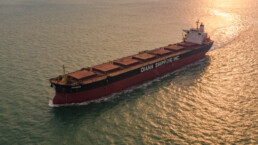
Diana Shipping announces Time Charter Contract for m/v G P Zafirakis with Classic Maritime
Diana Shipping, a global shipping company specializing in the ownership and bareboat charter-in of dry bulk vessels, announced that, through a…
New IMO ESP Code framework for Remote Inspection Techniques
The International Maritime Organisation, through Resolution MSC.584(111) , has adopted amendments to the International Code on the Enhanced…
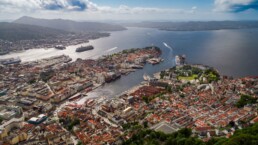
ABS opens Offshore & Marine Support Center in Bergen
ABS has expanded its capabilities in the Norwegian maritime market with the opening of a cutting-edge support center in Bergen, bringing advanced…
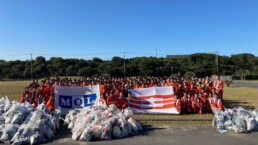
MOL holds giant step memorial ceremony and beach cleanup at Kashima Coast
Memorial and Reflection 20 Years After the Accident: Learning from the Past to Foster an Even Stronger Safety Culture Mitsui O.S.K. Lines, announced…
KEZAD-based Arabian Gulf Steel Industries achieves lowest verified Carbon Footprint for Rebar
CARES UK verified Environmental Product Declaration confirms 139 kg CO₂e per tonne for rebar produced at AGSI’s KEZAD Abu Dhabi facility Arabian…
Indian Register of Shipping announces launch of first fleet support ship INS Surya
Indian Register of Shipping continues to strengthen its role in supporting the Indian Navy and India’s naval shipbuilding capabilities through the…
VLCCs Climbing the Record Charts
LR2 The TC1 75kt MEG/Japan index decreased by only a single point this week to WS928. The corresponding Baltic round-trip TCE fell by $2,000 to…
Subscribe to our newsletter!
if you dont want to swim alone in the ocean of news, sign up for the newsletter, and you will receive daily all the important news of world shipping!
