
The region’s shipping community is increasingly aware of the need to cut emissions and is taking steps towards decarbonization. While progress is uneven, responses from shipping companies, ports, suppliers, and civil society point to both growing awareness and readiness to act, particularly in relation to skills, safety, infrastructure, and alternative fuels.
These are the findings of Wave 1 of the large-scale METAVASEA survey, conducted between June and November 2024 prior to the adoption of the IMO Net-Zero Framework at MEPC 83.
It is worth noting that citizens believe that shipping emissions account for between 50–70% of total greenhouse gas (GHG) emissions, while they are approximately 3%.
In total, 898 responses were collected from across the maritime community, including shipping companies, seafarers, ports, suppliers, and civil society.
Key insights from shipping companies and seafarers:
- Strategic alignment with IMO climate regulations is progressing but uneven, with 74% of respondents stating that their companies are either already aligned or have planned to align with IMO net-zero targets.
- Awareness of the need for robust emissions management is increasing among shipping companies, with a focus largely on direct (Scope 1) emissions (73%), while 9% and 4% of companies monitor Scope 2 (indirect energy use) and Scope 3 (supply chain) emissions, respectively.
- Biofuels lead the transition, but uncertainty remains. Biofuels are the most widely adopted or planned fuel alternative (62%), with green hydrogen (25%) and ammonia (19%) gaining interest. Still, 42% of respondents express concerns about fuel compatibility and infrastructure gaps.
- Technological immaturity, high costs, vessel compatibility and regulatory complexity are the main barriers to wider adoption of technology upgrades. Novel technologies like onboard carbon capture, wind and solar power, and air lubrication face additional skepticism due to uncertain performance and safety concerns.
- Crew fatigue tops seafarer concerns. Crew fatigue, driven by regulatory pressure and added workload, is ranked as the top safety concern by 70% of respondents. This is followed by inadequate training (27%) and unfamiliarity with new fuels (26%). Engineers and less experienced crew report the highest levels of concern.
- Widespread training gaps identified. 64% of seafarers reported no decarbonization-related training in the past two years. Among those trained, only a small fraction had exposure to content on alternative fuels, emissions monitoring, or new digital systems.
- In-house training prevails, but external providers play a role. 61% of training is delivered in-house, reflecting companies’ active role. However, among the 39% who trained through external providers, satisfaction rates were significantly higher, especially for courses on new fuels and technology.
- Soft and technical skills are evolving in parallel, with both seafarers and shipping company staff equally prioritizing safety skills such as risk assessment and management, understanding decarbonization technologies and energy management systems, organizational skills like planning and prioritization, as well as soft skills including leadership, teamwork, and critical thinking, underscoring the need for a holistic approach to prepare for the safety and operational challenges of maritime decarbonization.
- Fleet size shapes sustainability readiness. Large fleets (>50 vessels) are more advanced in emissions tracking (over 80%), ESG strategy implementation, and uptake of new technologies. Small fleets (<10 vessels) focus primarily on compliance and basic awareness, often citing limited resources.
- Support for tailored upskilling is critical. The need for specialized training varies significantly by vessel type and role. LNG and tanker crews prioritize fuel handling and safety, while passenger vessel personnel call for training in environmental awareness and life cycle assessments. Office staff increasingly require cross-functional skills in decarbonization strategy and compliance.
Key insights from ports, suppliers, and civil society:
- Misconception in civil society about shipping’s GHG emissions. 41% rate this contribution as high (over 70% of total emissions) or average (around 50% of total emissions), compared to the actual approximately 3% of total GHG emissions.
- Port infrastructure for low-carbon fuels is still limited, while only 20% of the ports provide Very Low Sulfur Fuel Oil (VLSFO) bunkering, even though the Mediterranean Sea has become a SOx Emission Control Area as of May 2025.
- Onshore power systems (OPS) are the most common planned initiative, by 40% of the ports. On the other hand, another 40% of ports reported no planned interventions.
- Renewable energy installations (70%), cold ironing (40%) and alternative fuels bunkering stations (30%) are top decarbonization priorities for ports. Renewable energy sources (47%) were identified also by service providers and suppliers as the most effective investment for port decarbonization.
- Regulatory compliance regarding emissions monitoring remains a challenge for ports, since 60% have no emissions monitoring systems in place.
- Environmental Management System (EMS) adoption remains limited across many ports with ISO14001 (70%) and ISO9001 (60%) being the most common framework adopted. On the other hand, 56% of service providers and suppliers implement an EMS, primarily ISO14001.
- Transitional fuels show varied familiarity and preferences. LNG is the most familiar alternative fuel (59%) among civil society and port cities, with reduced CO2 emissions cited as its main benefit (76%); it is also the most preferred by service providers and suppliers (41%). However, uncertainty remains about the best fuel pathway, with 39% of civil society participants unsure which alternative fuel is most promising for reducing carbon emissions.
- Lack of trained personnel in LNG handling was identified as a key barrier (58%) for alternative or transitional fuel adoption by representatives of civil society.
- MARPOL regulations and marine environmental awareness are the top training priorities for port workers, with key skills requirements including Understanding Decarbonization Technologies, Risk Assessment and Hazardous Material Handling, Understanding Decarbonization Strategies and Marine Environmental Awareness, Effective Planning and Prioritization for Decarbonization, Teamwork and Critical Thinking.
- Climate awareness is high in civil society and port cities. 67% consider themselves to be very familiar or extremely familiar with the causes and impacts of global warming, and 97% are concerned about its effects on the local environment. The vast majority (86%) of respondents agree or strongly agree that emissions are the primary cause of global warming.
78% of civil society representatives consider as very high the importance of maritime decarbonization for the sustainability of the East Mediterranean marine environment.
Conducted within the framework of the METAVASEA project, which adopts a people-centered approach to maritime decarbonization in the Eastern Mediterranean, a region of strategic importance due to its dense shipping traffic and dynamic port systems, these survey findings form part of a broader effort to map the infrastructure and skills required for the green transition.
Launched in 2023, METAVASEA (Greek for “transition”) is a five-year initiative running through 2027, coordinated by the Hellenic Marine Environment Protection Association (HELMEPA) with the strategic and financial support of Lloyd’s Register Foundation. The project brings together six partners, twelve associate partners, and more than sixty contributing stakeholders across the region, a network that continues to grow.
The survey will continue throughout the METAVASEA project until September 2027, enabling ongoing analysis and updates that reflect evolving trends, challenges, and capacity-building needs in the region.
Source: HELMEPA



Related News.
Hong Kong Global Maritime Trade Summit to return for third edition
The International Chamber of Shipping, in collaboration with the Transport and Logistics Bureau of the Government of Hong Kong and the Hong Kong…

Appetite for US crude oil exports climbs despite high freight
South Korea tops US crude destinations at 568,600 b/d VLCC rates to Asia double, closing arbitrage window European refining margins…
Shipping stocks Rally as Hormuz Traffic plunges 75%
Ship traffic through the Strait of Hormuz — a critical chokepoint handling about 20% of global crude oil and liquefied natural gas shipments — has…
Diana Shipping announces Time Charter Contract for m/v G P Zafirakis with Classic Maritime
Diana Shipping, a global shipping company specializing in the ownership and bareboat charter-in of dry bulk vessels, announced that, through a…
New IMO ESP Code framework for Remote Inspection Techniques
The International Maritime Organisation, through Resolution MSC.584(111) , has adopted amendments to the International Code on the Enhanced…
ABS opens Offshore & Marine Support Center in Bergen
ABS has expanded its capabilities in the Norwegian maritime market with the opening of a cutting-edge support center in Bergen, bringing advanced…
MOL holds giant step memorial ceremony and beach cleanup at Kashima Coast
Memorial and Reflection 20 Years After the Accident: Learning from the Past to Foster an Even Stronger Safety Culture Mitsui O.S.K. Lines, announced…
KEZAD-based Arabian Gulf Steel Industries achieves lowest verified Carbon Footprint for Rebar
CARES UK verified Environmental Product Declaration confirms 139 kg CO₂e per tonne for rebar produced at AGSI’s KEZAD Abu Dhabi facility Arabian…
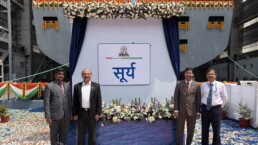
Indian Register of Shipping announces launch of first fleet support ship INS Surya
Indian Register of Shipping continues to strengthen its role in supporting the Indian Navy and India’s naval shipbuilding capabilities through the…

VLCCs Climbing the Record Charts
LR2 The TC1 75kt MEG/Japan index decreased by only a single point this week to WS928. The corresponding Baltic round-trip TCE fell by $2,000 to…
Subscribe to our newsletter!
if you dont want to swim alone in the ocean of news, sign up for the newsletter, and you will receive daily all the important news of world shipping!
