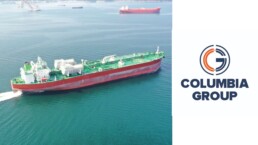

Columbia Group predicts that dual-fuel ships will define the next decade of shipping, as the absence of a scalable zero-carbon alternative leaves LNG-powered vessels as the industry’s most viable solution.
As we near the end of 2025, dual-fuel ships will have accounted for around half of global new-build orders, with LNG propulsion powering nearly 70% of those vessels. Columbia Group believes this surge reflects the industry’s pragmatic response to tightening regulations and uncertainty over future fuels.
“Owners and operators face increasing legislation, and LNG in particular has emerged as a bridging technology that allows compliance with today’s standards while providing confidence for the next decade,” said Duncan McLennan, Group Director, Technical at Columbia Shipmanagement. “Dual-fuel designs also give operators flexibility, reducing exposure to regulatory and commercial risks as markets evolve.”
While dual-fuel ships bring opportunities, Columbia Group highlights they also introduce challenges. Systems are more complex, capital costs are higher, and fuel management is significantly more demanding than on conventional vessels.
“Balancing LNG with conventional fuels, such as VLSFO, requires careful planning and operational oversight,” Mr McLennan added. “It is not just about building these ships, but about ensuring they are run safely, efficiently, and in full compliance.”
In response to this, Columbia Group has made crew training a priority, expanding programmes to ensure seafarers are confident in handling dual-fuel systems. Simulator-based training now complements classroom learning, covering fuel switching, cryogenic handling, and emergency procedures.
“Training must go beyond textbooks,” Mr McLennan added. “Our experience managing dual-fuel tankers shows that practical preparation is essential to ensure safe and efficient operations.”
Columbia is also investing in digital optimisation. Platforms such as EngineLink + POCR support fuel mode optimisation, predictive maintenance, and emissions reporting. These tools provide real-time comparisons of LNG versus conventional fuels, detect engine anomalies, and capture methane slip data for regulatory compliance.
“Dual-fuel vessels are complex machines,” adds Mark O’Neil, President and CEO of Columbia Group. “Technology alone cannot manage that complexity. It requires the right blend of human skill, operational expertise, and digital support. At Columbia, our mission is to ensure all three work together to deliver safe, sustainable, and commercially viable outcomes.”
Whilst dual-fuel ships are not the ultimate solution, they do serve as a critical bridge,” Mr O’Neil concluded. “With the right management, they give shipowners the opportunity to operate more safely, sustainably, and efficiently as the industry awaits a more widely accepted alternative fuel solution.”



Related News.

Navigating the Multi-Orbit Era: In Conversation with Intellian’s Jon Harrison at SMM 2026
At SMM 2026 in Hamburg, the rapid evolution of maritime satellite communications took centre stage. Across the exhibition halls, discussions among…
Cyprus ports need joint energy and investment strategy, shipping agents chief says
Cyprus needs a coordinated strategy for shipping, energy and environmental protection to support port investment and modernisation, Cyprus shipping…

MASO Public Affairs introduces MASO Regulatory Intelligence
A new subscription service helping businesses understand what is changing and what it means for them MASO Public Affairs introduces MASO Regulatory…
Anglo-Eastern helps turn CMBTECH’s ammonia ambition into an operational reality
From early feasibility study and risk-based design to newbuilding supervision, crew readiness and technical management, Anglo-Eastern drew on its…

Escalation of attacks threatens to derail recovery in Middle East oil exports
World oil demand is forecast to fall by 2.5 mb/d y-o-y in 4Q26 and 2.6 mb/d on average in 2026. As the Iran war manifests itself through restricted…
New study finds shipping pays twice its share to EU ETS earmarked revenues should triple to help build market for sustainable fuels and technologies
Shipping is responsible for around 10% of EU ETS emissions but pays almost 20% of the ETS bill. Unlike other sectors, it has never received free…
MSARC strengthens maritime mass rescue readiness through training and national live exercise off Dakar, Senegal
Joint MSARC–FHAS programme combines three days of SAR training with a national multi-agency live exercise The Maritime Search and Rescue Council ,…
Sogese report deliveries are still being delayed as container freight rates fluctuate
FOR IMPORTERS Spot rates into the Mediterranean are back at January levels, Far East to Europe reliability sits at pandemic lows, and nearly…
Glencore begins trading on Australian Securities Exchange
Glencore has begun trading on the Australian Securities Exchange under the ASX code GLC. Gary Nagle, Glencore’s CEO, said it was an exciting day for…
BIMCO Shipping Number of the Week
Suez Canal container ship transits exceed 50% of pre-disruption levels "During the first two weeks of October, weekly container ship capacity…
Subscribe to our newsletter!
if you dont want to swim alone in the ocean of news, sign up for the newsletter, and you will receive daily all the important news of world shipping!
