AI- powered detection delivers improved safety to offshore operators
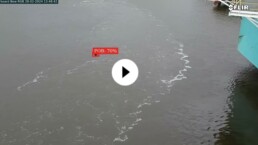

The offshore energy industry has started adopting AI-based advanced detection technology to improve safety and operational oversight, with operators now trialling and installing intelligent detection systems to reduce the risk of man overboard incidents.
Among the systems gaining attention is ZOE, developed by Edinburgh-based technology firm Zelim. The company’s intelligent detection and tracking system has now been installed on a second jack-up rig, following over a year of successful operation on a North Sea rig operated by a leading offshore drilling contractor.
ZOE combines camera hardware with proprietary AI software that automatically detects when a person falls overboard and tracks their position in real time, enabling faster, more accurate response. Its deployment on another rig signals a broader interest across the offshore energy sector in using machine learning to support both personnel safety and asset security monitoring.
Zelim’s CEO and founder, Sam Mayall, explains that the system was developed specifically to operate in the maritime environment, which presents different technical constraints from traditional object detection systems used on land. “The first challenge in a man overboard incident is knowing when and where it happened. The second challenge is keeping track of the person in the water, particularly in variable sea states. ZOE provides real-time visual tracking and geo-location data to coordinate an effective response.”
The first installation provided a relatively fixed operating environment for ZOE to prove its capabilities. The more recent deployment is on a rig that frequently relocates to new locations, requiring the system to adapt to different weather conditions, sea states, and lighting environments.
ZOE uses machine learning models trained on a bespoke maritime dataset. Zelim began building its own visual library in 2020 during development of its Guardian unmanned rescue vessel. As part of that process, the company used drone-mounted cameras to capture footage of people in the water from different angles and under various conditions. These images were manually annotated and used to train the algorithms behind the intelligent detection system. The resulting dataset now includes more than 7 million labelled images, which is claimed to be the most e
According to Mayall, the quality and specificity of the dataset is critical. “A person in the water may be wearing dark clothing, face down, partially submerged, or obscured by foam or spray. These aren’t fixed profiles. We had to ensure the system could recognise a human target from a range of angles and distances, under real-world conditions. That meant building a dataset that reflected how people actually appear in the water, not how they’re modelled in ideal circumstances.”
ZOE integrates with a rig or vessel’s existing infrastructure, including surveillance, navigation and emergency response systems. The package includes processing hardware to enable detection and alerting to occur locally, without dependence on remote or cloud connectivity.
The software architecture behind ZOE has also been adapted into other modules. Watchkeeper is an option that supports bridge teams by acting as a visual lookout, identifying navigational hazards or approaching vessels. Another module, Shield, extends the same detection capability to support rig security, alerting crews to suspicious activity or unauthorised vessels within restricted zones around offshore sites. Both modules are built on the same core AI engine, but are designed for different operational roles.
Mayall says that the ability to detect and classify objects consistently and in real time opens up wider use cases. “If you can reliably detect a person in the water, you can also detect other objects or risks. The same system can support navigation, perimeter monitoring, or safety watchkeeping. That’s where we see this technology heading – not just detection, but situational understanding.”
Zelim has collaborated with the US Coast Guard on testing and validation. One of the drivers for this collaboration was the Coast Guard’s own research, which found that visual spotting by trained search crews remains inconsistent, with detection probabilities sometimes below 20 percent depending on conditions. Mayall notes that AI systems bring consistency. “AI doesn’t fatigue, doesn’t blink, and doesn’t overlook what’s in plain sight. That consistency makes it a reliable component in a broader safety system.”
The use of AI for detection and alerting is increasingly viewed not as a replacement for human judgment, but as an augmentation of it. In a setting where rapid recognition and response are critical, the ability to reduce the detection window from minutes to seconds can have a direct impact on outcomes. Operators are beginning to see these systems not only as tools for emergency response, but also as part of their broader approach to safety and operational assurance.
Zelim’s work over the past five years reflects a shift towards intelligent, consistent monitoring that supports human decision-making and improves reaction time. For offshore operators, that capability is now becoming part of the standard toolkit. As deployments continue and new modules are brought online, systems like ZOE may come to define the next generation of offshore safety technology – not as standalone interventions, but as integrated components of modern marine operations.



Related News.

Navigating the Multi-Orbit Era: In Conversation with Intellian’s Jon Harrison at SMM 2026
At SMM 2026 in Hamburg, the rapid evolution of maritime satellite communications took centre stage. Across the exhibition halls, discussions among…

Cyprus ports need joint energy and investment strategy, shipping agents chief says
Cyprus needs a coordinated strategy for shipping, energy and environmental protection to support port investment and modernisation, Cyprus shipping…

MASO Public Affairs introduces MASO Regulatory Intelligence
A new subscription service helping businesses understand what is changing and what it means for them MASO Public Affairs introduces MASO Regulatory…

Anglo-Eastern helps turn CMBTECH’s ammonia ambition into an operational reality
From early feasibility study and risk-based design to newbuilding supervision, crew readiness and technical management, Anglo-Eastern drew on its…

Escalation of attacks threatens to derail recovery in Middle East oil exports
World oil demand is forecast to fall by 2.5 mb/d y-o-y in 4Q26 and 2.6 mb/d on average in 2026. As the Iran war manifests itself through restricted…

New study finds shipping pays twice its share to EU ETS earmarked revenues should triple to help build market for sustainable fuels and technologies
Shipping is responsible for around 10% of EU ETS emissions but pays almost 20% of the ETS bill. Unlike other sectors, it has never received free…

MSARC strengthens maritime mass rescue readiness through training and national live exercise off Dakar, Senegal
Joint MSARC–FHAS programme combines three days of SAR training with a national multi-agency live exercise The Maritime Search and Rescue Council ,…

Sogese report deliveries are still being delayed as container freight rates fluctuate
FOR IMPORTERS Spot rates into the Mediterranean are back at January levels, Far East to Europe reliability sits at pandemic lows, and nearly…

Glencore begins trading on Australian Securities Exchange
Glencore has begun trading on the Australian Securities Exchange under the ASX code GLC. Gary Nagle, Glencore’s CEO, said it was an exciting day for…

BIMCO Shipping Number of the Week
Suez Canal container ship transits exceed 50% of pre-disruption levels "During the first two weeks of October, weekly container ship capacity…
Subscribe to our newsletter!
if you dont want to swim alone in the ocean of news, sign up for the newsletter, and you will receive daily all the important news of world shipping!
