FuelEU Maritime: Key updates on fuel certification, methane slip, and exemptions


FuelEU Maritime: Key updates on fuel certification, methane slip, and exemptions
Two guidelines have recently been completed by the European Sustainable Shipping Forum (ESSF) and are now published. The two guidelines are:
1. Report on calculation methodologies under Regulation (EU) 2023/1805 (FuelEU)
First, a recently published report on calculation methodologies under FuelEU provides guidance and best practices to understand and implement the calculation as set out under the regulations. The guideline provides crucial information to those calculating the actual vessel performance. We recommend that our customers familiarize themselves with the report, in particular with the principles of fuel allocation under FuelEU, as illustrated below.
While the illustration has been taken from the DNV white paper on FuelEU Maritime, its content is consistent with the one provided in the report of calculation methodologies under FuelEU (note: DNV has actively contributed to the development of the ESSF report). The ESSF report additionally provides guidance on the regulation’s technical requirements, including the use of renewable and low-carbon fuels, voyage specific exemptions, and flexibility mechanisms such as banking, borrowing and pooling. See the “Resources” section below featuring a link to the report. More guidance from the European Commission is expected in the second half of 2025.
2. Report on Marine Fuels Certification Procedures to support implementation of FuelEU Maritime
The second key guideline is relevant both to FuelEU Maritime and the EU ETS. One of the key topics covered in this report is fuel sustainability certification. The document provides a template for Proof of Compliance (PoC), which can be used instead of Proof of Sustainability (PoS) in the event that the fuel in question is also used by the fuel supplier for compliance towards the requirements under the Renewable Energy Directive. If the PoS is not available, it is recommended to always follow this PoC template to avoid issues with fuel eligibility under FuelEU and the EU ETS.
Additionally, this report outlines procedures for certifyingrenewable and low-carbon marine fuels in line with FuelEU Maritime and the EU ETS. Overall, it provides practical instructions for fuel suppliers and shipping companies regarding the required documentation, sustainability certification, and traceability.
Certification of actual methane slip values Until international standards are available, the FuelEU and EU ETS regulations currently only allow for the use of default methane slip values by engine type. Although the IMO guidelines for measuring methane slip from LNG engines were adopted at MEPC 83 in April, the guidelines lack:
- procedures for on-board monitoring of emissions (performance of after-treatment systems),
- methods to ensure that values remain stable over time (due to engine modifications), and
- standardized test cycles.
Following the above, the European Commission is working on interim guidelines to allow certification of actual values based on the IMO protocol. The guidelines are expected to be available in the second half of 2025.
FuelEU report submission enabled in Thetis – DNV is ready to receive FuelEU partial reports When there is a change in company (e.g. due to sale of the vessel), a verified FuelEU report shall be recorded in the FuelEU database within one month after the change of company.
As of 18 June, the FuelEU database, which is part of the Thetis platform, has been updated to support FuelEU Maritime partial reports. Consequently, the FuelEU Maritime service under Fleet Status on Veracity has been adjusted to receive and process FuelEU partial reports from customers. Companies may now request the FuelEU partial report verification from our customer portal.
On 24 June 2025, EMSA and DG MOVE hosted a webinar on FuelEU, presenting a high-level overview of the FuelEU report and compliance balance modules in Thetis. We encourage our customers to view the recording for further insights.
Clarifications on implementation
Use of flexibility mechanisms It is important to note that the use of pooling will not always result in a ship compliance balance of zero. A compliance surplus available after pooling can be banked for future use, while a deficit will trigger a penalty payment. Both borrowing and pooling come with limitations however – for example, borrowing is not permitted after pooling has been applied. The figure on the next page focuses on illustrating the key limitations and options available.
Delay in FuelEU incorporation in the EEA Agreement
Norway and Iceland are currently excluded from the FuelEU Maritime regulation, as they have not yet been incorporated into the EEA Agreement. Until then, Norwegian and Icelandic ports are treated as third-country ports.
Once incorporated, FuelEU will apply to 100% of energy used on voyages between EU and EEA ports, but no retroactive application is expected. The EEA Joint Committee, responsible for incorporating EU legislation into the EEA Agreement, has meetings scheduled throughout 2025. However, no official date has been confirmed for the incorporation of the FuelEU Maritime regulation.
Exemptions to the FuelEU regulation
While derogations under the EU ETS are already well established, it is important to emphasize that FuelEU exemptions differ from those of the EU ETS. To ensure proper compliance, it is essential to understand the key exemption principles and respective exemption lists published by the individual member states. Below are some core principles:
Outermost Regions exemptions
Outermost Regions (OMRs), like the Azores or the Canary Islands, are territories geographically distant from continental Europe but are an integral part of the EU. In general, for voyages that start or end in an OMR, only 50% of the energy used on such voyages is included in the regulation’s scope (Article 2(1)(c)).
The member states France, Portugal and Spain have requested temporary exemptions (until 31 December 2029) for specific ports and routes located in nine OMRs.
They apply to energy used on voyages between ports of call in OMRs and within those ports. The exemptions can be found here for France, Portugal and Spain.
Additionally, under the FuelEU regulation, any port of call in an OMR port included in the above list is fully exempt from the regulation’s energy scope. In contrast, the EU ETS only exempts ports of call in relation to an exempted voyage falling under the scope of the derogation.
In the first scenario, there is an into-EU voyage between an OMR port and a US port. Therefore 50% of energy is included under the FuelEU scope according to Article 2(1)(d). Since Las Palmas is included in the exemption list, the energy contribution for a port stay within that OMR port is 0% under Article 2(4) and applies regardless of the previous or next port of call. The second part of the voyage of the first scenario is an intra-EU voyage between an OMR and an EU port of the same member state. For this reason, Article 2(1)(c) applies.
In the second scenario, there is an intra-EU voyage between two OMR ports included in exemption lists which results in 0% of energy under FuelEU. This is according to Article 2(4) and a temporary exemption until 31 December 2029.
Other exemptions
The FuelEU regulation allows member states to request other exemptions for voyages between small islands (eight countries have requested exemption), and voyages under public service contract / obligation (six countries have requested exemption). These exemptions are pursuant to FuelEU regulation Articles 2(3), 2(5) and 2(6) and will expire by 31 December 2029.
Source: DNV



Related News.

AeroVironment and Elsight partner to strengthen Mayhem 10 Connectivity in Contested Environments
Elsight’s Halo technology is designed to integrate satellite, cellular and radio communications to reduce single points of failure and operator…
ZoomInfo launches Native Integration with n8n through GTM.AI
ZoomInfo (NASDAQ: GTM), the all-in-one AI GTM platform, has confirmed a native integration with n8n, the workflow automation platform teams use to…

Maritime cyber specialist BroCoTec recruits NASA engineer to strengthen marine IT operations
Houston-based maritime IT network specialist BroCoTec is bringing space age tech expertise to its rapidly expanding team with the appointment of NASA…
90POE launches Crew Docs AI – catching passport errors before crew changes fail
90POE builds AI passport checks into OpenOcean STUDIO® Crew Crew Docs AI reads each passport as it is uploaded and flags errors before they reach…
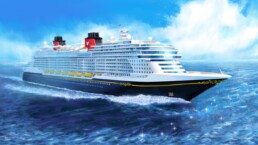
Disney Imagination revealed as the first Disney Cruise Ship to sail from Japan
Ariel and Sebastian to adorn the ship’s signature stern as Disney Imagination prepares to debut in spring 2029 Oriental Land revealed the name of…

Holland America Line makes spirits bright with joyful holiday festivities and culinary Ttaditions
Guests aboard 2026 holiday cruises can enjoy Thanksgiving dinner, Brunch with Santa, Feast of the Seven Fishes, festive entertainment, seasonal décor…
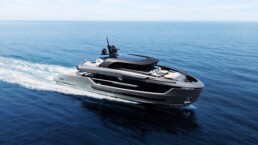
Van der Valk Shipyard unveils concept project NEXO
Van der Valk Shipyard has unveiled its new 30-metre concept, Project NEXO, short for New Experience X-Over, or Crossover: a yacht conceived for…

Navigating the Multi-Orbit Era: In Conversation with Intellian’s Jon Harrison at SMM 2026
At SMM 2026 in Hamburg, the rapid evolution of maritime satellite communications took centre stage. Across the exhibition halls, discussions among…
Cyprus ports need joint energy and investment strategy, shipping agents chief says
Cyprus needs a coordinated strategy for shipping, energy and environmental protection to support port investment and modernisation, Cyprus shipping…

MASO Public Affairs introduces MASO Regulatory Intelligence
A new subscription service helping businesses understand what is changing and what it means for them MASO Public Affairs introduces MASO Regulatory…
Subscribe to our newsletter!
if you dont want to swim alone in the ocean of news, sign up for the newsletter, and you will receive daily all the important news of world shipping!
