

Real momentum is building behind the global shipping industry’s transition towards a zero-emission future.Over the last couple of years, the industry has been undertaking preparatory work to meet the International Maritime Organization’s (IMO) 2023 Revised GHG Strategy. The IMO reached another milestone this April, agreeing to a Net Zero Framework that outlines the regulations that will drive the industry’s decarbonisation efforts globally. While the framework still needs refining, it is likely to completely transform the sector.
Here’s what the new regulations aim to do
At the 83rd meeting of its Marine Environment Protection Committee, the IMO agreed on foundational elements that will drive a shift to lower-carbon shipping fuels, and, eventually, zero-emission shipping that can help deliver on the global community’s climate ambitions.
At the heart of the agreement is a Global Fuel Standard (GFS), which will be the first globally binding regulation to reduce greenhouse gas emissions from any industry. The agreed GFS requires successive reductions in the GHG intensity of shipping fuels, designed to deliver on the IMO’s goals of:
- a 20% (striving for 30%) reduction in emission by 2030.
- a 70% (striving for 80%) reduction by 2040.
- a net-zero sector by or around 2050.
While the requirements to shift fuels (starting in 2028) are initially modest, by 2040 they will have driven a massive transformation of the global shipping fleet of 30,000 large ocean-going vessels and the more than 200 million tonnes of fuel that they use today.
So how do we get there?
To achieve the large reductions in greenhouse gas intensity required by 2040, the sector will need many fuels. Initially, biofuels such as bio-MGO and bio-LNG may be blended into the existing fleet and the bunkering infrastructure that supplies it.
Over time, though, biofuels are likely to be constrained by their limited “scalability” – producing biofuels at the very large scales shipping needs would likely have negative environmental impacts, and other sectors such as aviation and chemicals will be competing for these molecules.
So, to achieve its goals, the industry will need large volumes of e-fuels, like e-ammonia or e-methanol, that can be synthesised from hydrogen produced by renewable electricity.
The IMO’s GHG strategy implicitly recognized this need, setting an ambition of 5% (striving for 10%) zero- or near-zero emission fuel use by 2030, which would help bring these currently unavailable fuels and the vessels that can use them to commercial maturity in time for their widespread global adoption in the decade to follow.
However, where the GFS sets a clear pathway for emissions reduction, the agreed Net Zero Framework will still need to be refined to ensure that e-fuels are introduced in good time.
Incentivising uptake of the fuels that need it most
One of the most important tools for driving e-fuel uptake will be clarifying the rewards for zero- and near-zero fuels (ZNZs). The new agreement includes provisions for giving such rewards as an incentive, but how exactly this will happen remains to be defined.
Fundamentally, ZNZs are designed to be paid out of a centrally managed fund. The IMO will collect penalties for ships that fail to fully comply with the GFS, and a share of the collected penalties will be paid out as rewards to shipowners who use ZNZs – but the devil, as always, is in the details. As it stands, the agreement only defines ZNZs in terms of their low greenhouse gas footprint. However, it is possible that other fuels (such as some biofuels, for example) would also meet the defined greenhouse gas threshold. If these biofuels – which are cheaper and more widely available today than e-fuels – can access the rewards, then the new rules will likely fail to stimulate investment in e-fuel production.
Given that many biofuels will already be competitive options for meeting the GFS requirement, such an additional subsidy risks spending scarce revenues on support for fuels that don’t need it, with no benefit for the sector’s long-term transition.
The next crucial challenge for the IMO
There are a few ways to avoid this outcome, and these will need to be carefully considered as the IMO negotiates its ‘guidelines’ for implementing the net-zero framework.
The simplest solution would be to target the rewards to specific fuel options, namely those based on scalable electrolytic hydrogen. To date, however, the IMO has been determined to maintain technology neutrality, which hinders its ability to provide the necessary ‘push’ for emerging technologies.
One alternative is to ensure that the full-life cycle environmental impact of fuels is considered, so that the scalability limitations of biofuels are partially reflected in the eligibility for rewards. Another option is to provide different rewards to different fuels, reflecting the different costs they face – rewards that fully close the gap between a fuel’s cost and an appropriate benchmark would help create a more level playing field for ZNZs. Both of these options should be prioritised as the IMO negotiates the guidelines for implementation.
That workplan is currently under development, with guidelines for Life Cycle Assessment an ongoing effort and work on the rewards mechanism presumably a next priority. The formal adoption of April’s agreement will be voted on in October, but discussions on these essential refinements will continue thereafter, potentially all the way up to implementation at the end of 2027.
Time, however, is short.
The industry’s transition to net zero must start now: companies need to make large investments in fuel production and bunkering infrastructure that will hinge, in part, on today’s decisions about how to stimulate the future fuel mix.
While the agreed framework provides a solid foundation for decarbonisation, only an implementation that sets the right incentives from the start can ensure that the industry has the tools it needs for a smooth transition to a truly zero-emission future.
Source: Global Maritime Forum



Related News.

ISLAND OIL: Unveiling of the Sculpture “Cyprus’s Journey Through the Ages” in Protaras – A Tribute and Landmark to Cyprus’s Historical Memory and Cultural Heritage
In a modest ceremony marked by a moving atmosphere, the sculpture “Cyprus’s Journey Through the Ages”, created by acclaimed Cypriot sculptor…
World Maritime Day 2026 from Policy to Practice – powering Maritime Excellence
Global regulations will deliver safer, more resilient shipping when they are implemented worldwide. The international maritime community marks…

Diana Shipping announces Time Charter Contract for m/v DSI Polaris with Dai An Ocean Shipping
Diana Shipping , a global shipping company specializing in the ownership and bareboat charter-in of dry bulk vessels, announced that, through a…

Chief Economists Expect Global Economy to Stabilize, but Fiscal Constraints, Rising Living Costs and AI Investment Uncertainty Threaten Growth
The global economy is stabilizing, but the fiscal support that cushioned successive shocks since 2020 is unlikely to play the same role in the year…
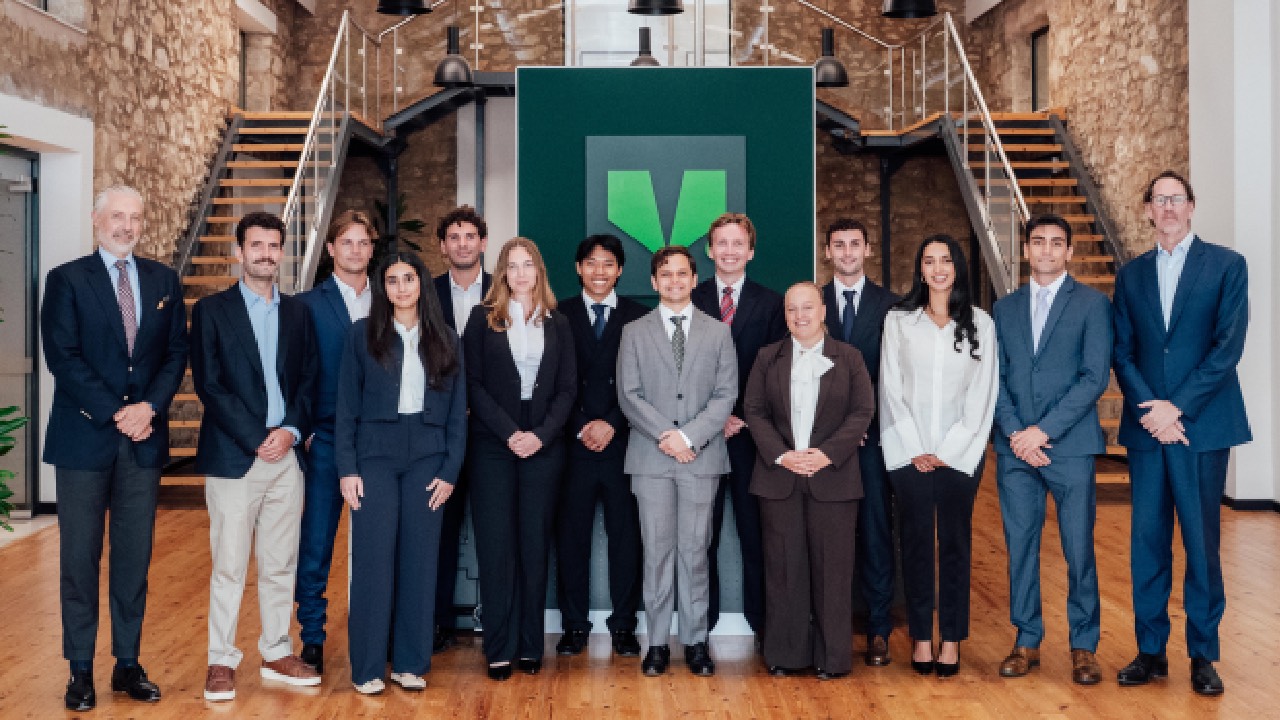
V. welcomes its new graduate cohort as programme expands across the group
Twelve graduates from nine nationalities join 11th year of V.’s expanded international management programme. V., the global ship manager and marine…

From Policy to Practice: Why Seafarers Are the Key to Maritime Excellence
The shipping industry is no stranger to regulation. Seafarers and ship operators work within a vast framework of international conventions, national…

Intermodal Report – Week 38 2026
Please find below the Intermodal market report for week 38 2026. Intermodal Report Week 38 2026 Market Insight By Nikos Tagoulis, Head of…

Allied – Weekly Market Review – Week 38
Please find below the Allied Weekly Report for Week 38 | 2026 ALLIED - Weekly Market Report- Week 38

Record year on the Northeast Passage but Arctic shipping remains very limited
In 2025, a record 103 transit voyages were made via the Northeast Passage. However, this is still equivalent to only around a day and a half of…

[xclusiv] S&P Report 21th September 2026
Please find below the [xclusiv] latest Weekly S&P Report [xclusiv] 2026_09_21 Market Commentary: VLCCs: Freight Boom Reprices the Fleet The VLCC…
Subscribe to our newsletter!
if you dont want to swim alone in the ocean of news, sign up for the newsletter, and you will receive daily all the important news of world shipping!
