

The government is set to develop strategies to support small and medium-sized shipbuilders’ entry into the maintenance, repair, and operations (MRO) market for commercial vessels and warships. The plan aims to strengthen Korea-U.S. shipbuilding cooperation and expand workload for smaller shipbuilders by enabling them to directly enter the U.S. MRO market, alongside large shipbuilding companies. In the energy sector, the government also announced plans to invest 4 trillion won over five years to intensively foster the renewable energy industry.
On June 19, the Ministry of Trade, Industry and Energy reported these plans to implement campaign promises to the Presidential Transition Committee. While encompassing policies in industrial fields such as artificial intelligence (AI), semiconductors, and automobiles, as well as energy and trade, the government also presented strategies to strengthen the competitiveness of the shipbuilding industry, considered one of the next-generation national growth engines. Previously, during his presidential campaign, President Lee Jae-myung had announced shipbuilding support pledges including “creating a maritime powerhouse with K-shipbuilding,” which included fostering competitiveness of small and medium shipbuilders and nurturing the special vessel construction and MRO market.
In this regard, the government plans to devise a two-track strategy where large companies like HD Hyundai Heavy Industries, Hanwha Ocean, and Samsung Heavy Industries focus on ship construction, while small and medium shipbuilders concentrate on MRO. This is because MRO, while playing a crucial role as a link in Korea-U.S. shipbuilding cooperation, requires a differentiated strategy due to its relatively low profitability. Moreover, large companies already have order backlogs for several years, filling their docks just by fulfilling these orders. A government official stated, “If large companies secure MRO contracts from the U.S., a system of subcontracting to small and medium shipbuilders will be established.”
In fact, it has been confirmed that part of the MRO for the U.S. Navy supply ship Willie Sirah, which Hanwha Ocean won in August last year as the first Korean company, was carried out by a private small repair shipyard. The subsequent MRO contract for the supply ship Yukon is also being handled by another small company. This subcontracting arrangement is understood to have been agreed upon by the U.S. side as well.
Accordingly, the government plans to build MRO capabilities so that small and medium shipbuilders can move beyond subcontracting to directly enter the U.S. market. While large companies use robotic equipment to remove rust from ships, some smaller companies still rely on local workers physically scraping rust off ships. Most also lack proper facilities for repair work such as docks and quays. The government is considering measures such as purchasing MRO equipment to lend to small and medium shipbuilders or supporting new facility investments. On June 18, the Defense Acquisition Program Administration reported to the Presidential Transition Committee on a project to build dedicated facilities for naval vessel MRO, aiming to secure half of the average annual MRO demand of 20 ships from the U.S. 7th Fleet.
Meanwhile, the Presidential Transition Committee also showed great interest in AI and renewable energy policies, which are core economic pledges of President Lee. In particular, the Ministry of Trade, Industry and Energy is said to have included plans for building an energy highway to support the expansion of renewable energy and AI power demand in its work report. In fact, the ministry’s director general of electric power policy and the director general of renewable energy policy attended the work report meeting, along with each bureau chief. The official in charge of nuclear power generation, another pillar of the energy mix emphasized by President Lee, was not present.
Specifically, the government is reported to have presented concrete implementation plans for opening a high voltage direct current (HVDC) transmission network along the west coast around 2030 to transport electricity produced in Honam to the metropolitan area, and measures to complement the intermittency of renewable energy. The government plans to invest about 4 trillion won over the next five years in renewable energy projects, including the construction of energy highways.
Lee Chun-seok, a Democratic Party lawmaker who serves as the head of the Economic Subcommittee II, said, “Renewable energy and energy highways will be the core of climate transition and a growth engine that creates new industrial competitiveness and exports,” and urged, “Please actively implement pledges such as RE100 (100% renewable energy use) industrial complexes and solar pension.” He also emphasized, “In the previous administration, investment and support for key industries lagged significantly behind major competing countries, and trade response was insufficient,” adding, “We need to think more about ways to integrate AI into major industries such as semiconductors, shipbuilding, and electronics.”
Source : Businesskorea



Related News.

Cyprus Marine Club Welcomes a Full House for Aphentrica’s War Risks Presentation
The Cyprus Marine Club marked its return after the summer break with a full house at Gazebo Mare on Tuesday, 22 September, bringing together members,…
IMO seeks feedback on Maritime Single Window implementation
The International Maritime Organization (IMO) has launched a global survey to assess the implementation and use of Maritime Single Windows (MSWs),…

World Maritime Day industry panel to examine the gap between maritime policy and the reality of life at sea
OneCare Group will bring together crewing, safety, insurance and wellbeing specialists for a World Maritime Day webinar examining how shipping can…

IUMI President – Marine insurers are war insurers
Marine insurers are at the heart of managing war risks to global shipping and must continue to develop the tools needed to support and facilitate…
Seafarer welfare is improving amongst leading companies, but five years of evidence shows this progress is far from the norm
Five years on, the Seafarers’ Rights Code of Conduct is driving more than 1,000 companies to participate in RightShip’s Crew Welfare…
The UK ETS arrives for shipping what it means for charterers
Introduction The UK Emissions Trading Scheme (UK ETS) was extended to domestic maritime activity on 1 July 2026, following the EU ETS, FuelEU…
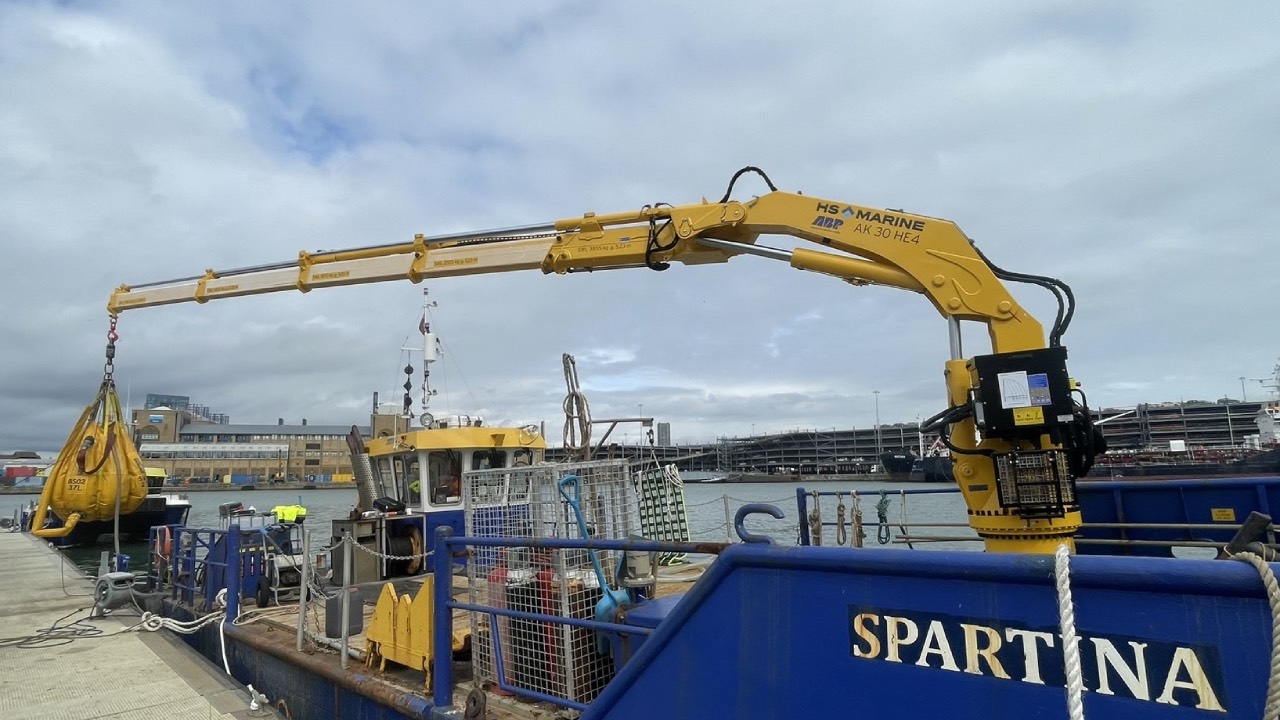
ABP Southampton invests locally with Marine Cranes to boost capability
Associated British Ports , the UK’s largest port operator, has invested a new marine deck crane aboard Spartina, one of the Port of Southampton’s…
BIMCO Shipping Number of the Week
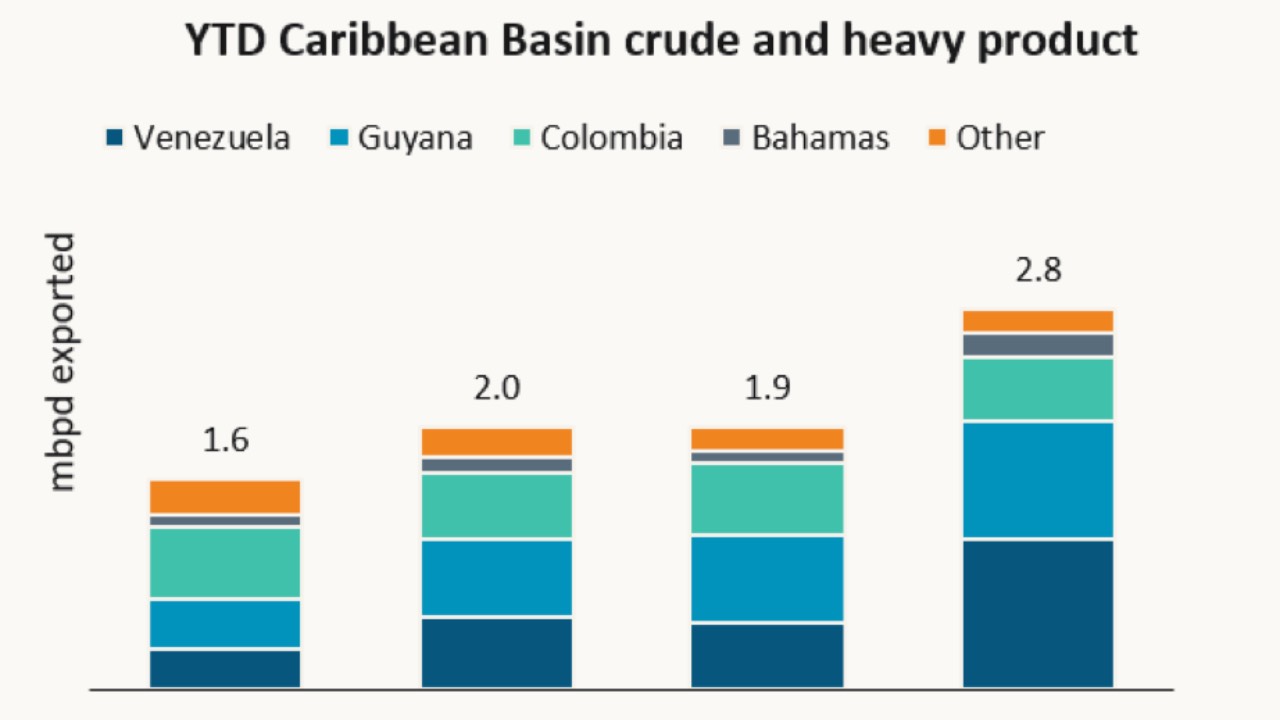
Caribbean Basin crude oil and heavy product exports jump 45% “Seaborne exports of crude oil and heavy products from the Caribbean Basin have…

xclusiv S&P Report 21th September 2026
Pls find below the [xclusiv] S&P Report 21th September 2026 [xclusiv] 2026_09_21
Marine insurance supply remains stable as geopolitical and technical changes reshape the market, says IUMI President
The global marine insurance market remains in a stable position, with premium growth strongly supported by a weak USD in hull and cargo. Meanwhile…
Subscribe to our newsletter!
if you dont want to swim alone in the ocean of news, sign up for the newsletter, and you will receive daily all the important news of world shipping!
