Optimising Vessel Performance with Zero-Pollution Shaftline Solutions
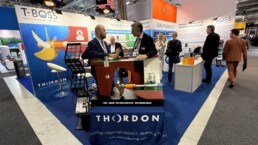

Cyprus Shipping News Interview with Craig Carter, Vice President – Business Development, Thordon Bearings
Thordon Bearings is known for its environmentally friendly bearing solutions. Can you tell us how your technology supports the maritime industry’s decarbonisation and sustainability goals?
Absolutely! Thordon supplies high performance, oil and grease-free bearing systems, seals and other shaft line products which eliminate a significant source of pollution from ships, while also improving their efficiency to meet wider maritime decarbonization goals.
Our seawater-lubricated COMPAC propeller shaft bearings, for example, are reliable and cost-effective, and have zero impact on the environment. Primarily for blue water operating conditions, they are made from a cross-linked polymer alloy that offers low friction and much greater abrasive resistance than traditional laminated materials. This leads to extended wear life and minimises costs as ships exceed their environmental obligations. Thordon’s SXL rudder bearings also operate without grease above and below the waterline and have been installed on over 4000 vessels.
Using seawater as the sole lubricant is also a straightforward way to support wider decarbonization goals through smarter engineering. Thordon’s COMPAC system has been shown to lead to fuel savings and reduced emissions, because – compared to oil-lubricated bearings – at rated shaft speeds viscous friction is lower with water.
We’re also making it easier for owners to realise these benefits and eliminate the entire oil-lubricated stern tube system. Recently, after working as part of a consortium of industry leaders (ABS, Thordon, Wärtsilä, SDARI, and the National Technical University of Athens), Thordon launched T-BOSS (Thordon Blue Ocean Stern Space). A game changer in ship design, T-BOSS replaces a vessel’s stern tube cooling tank with a dry, irregularly shaped chamber, allowing inspection and maintenance of a seawater-lubricated single bearing and seal from inside the ship.
One of Thordon’s flagship offerings is the seawater-lubricated propeller shaft bearing system. What are the key benefits of this solution compared to traditional oil-lubricated systems?
Seawater is free and non-polluting. A Thordon COMPAC open seawater lubricated propeller shaft system eliminates the need for oil altogether. This means zero pollution risk and no ongoing lubricant purchases. In addition, the high abrasive resistance and superior hydrodynamic properties of COMPAC bearings result in greater predictability and reliability, as well as extended life. Compared to oil-lubricated solutions, COMPAC bearings are cheaper to maintain, easier to install and are future compliant.
How does Thordon ensure reliability and performance in critical marine applications, especially under harsh operating conditions?
Reliability comes down to three things: material science, engineering precision, and support. Made from a proprietary elastomeric polymer alloy that is highly resistant to abrasion and fatigue, the material used for COMPAC bearings promotes the early formation of a hydrodynamic film so that lubrication is consistent even in demanding marine environments. COMPAC bearings are supplied split with a tapered keyset that allows the bearing to be withdrawn inboard, inspected and re-installed without pulling the shaft or drydocking the vessel, benefiting uptime and safety, as well as service life.
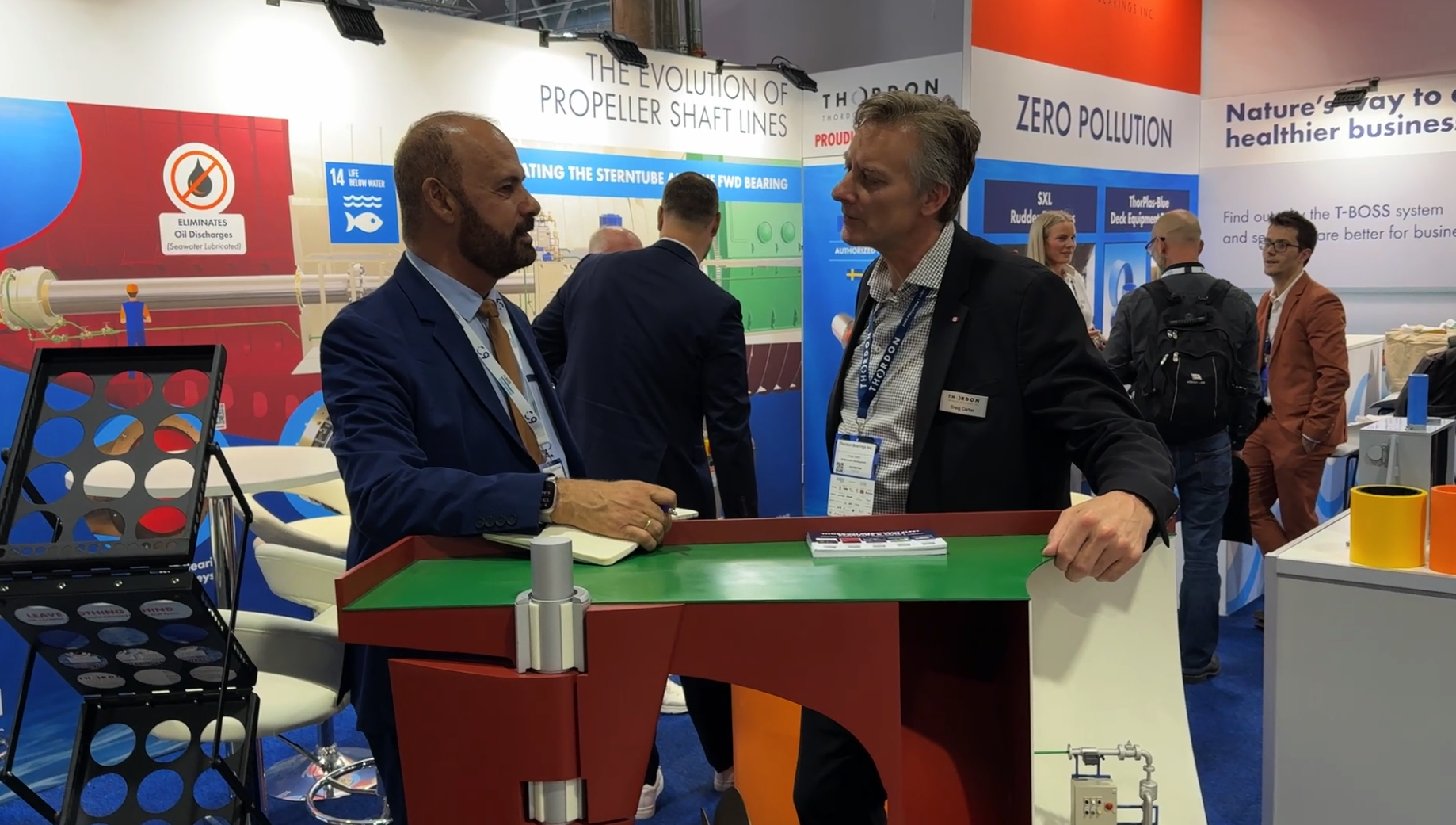
What recent innovations or developments has Thordon introduced to better serve the shipping industry?
As noted, T-BOSS is a groundbreaking development for owners considering their shaftline options. By removing the stern tube entirely and replacing it with a dry chamber aft, T-BOSS allows for inboard access to the bearing and seal even while the ship is afloat, thus avoiding the need for shaft withdrawal or drydocking. This has never before been possible.
Aside from immediate savings in lubricating oil and elimination of the aft seal, shipowners opting for a T-BOSS sterntubeless ship could save more than US$1 million in through-life operational costs. The calculation is based on reduced fuel consumption, reduced drydocking and maintenance costs, and associated loss of earnings; shaft alignment optimization, lower bearing wear rates, better EEDI; and a potential increase in cargo carrying capacity. The arrangement also reduces the risk of environmental fines related to sterntube oil pollution to zero.
By creating an opening in the engine room bulkhead, adjusting stiffeners, shortening the intermediate shaft (allowing the main engine to be moved further aft), eliminating the sterntube, forward sterntube bearing and aft seal and installing the T-BOSS solution, shipbuilders can take advantage of reductions in material and labour costs.
T-BOSS has received Approval in Principle (AIP) from ABS for feasibility and compliance.
We understand that your products eliminate oil pollution risks from stern tubes. How important is this for shipowners in light of tightening environmental regulations?
It’s become critically important. With global and regional discharge regulations tightening from the IMO and many regional jurisdictions, eliminating oil-to-sea interfaces is no longer optional. Owners also need the option to bypass Environmentally Acceptable Lubricants (EALs), which are higher in cost than the oils they replace and still carry environmental risks as a matter of fact.
From a business development perspective, which markets are showing the most interest in Thordon’s solutions, and where do you see future growth opportunities?
Where T-BOSS is concerned, we’ve seen growing interest across Europe from operators who want to future-proof their fleets, especially in the container ship and tanker segments.
However, a design which appeals when long-term OPEX savings and environmental compliance are priorities is of interest almost anywhere. There has been strong traction among designers, where the benefits of simplified shaftline arrangements are self-evident and create potential for better use of space elsewhere. With T-BOSS having already secured ABS approval in principle, other stakeholders are getting behind the solution as one that is commercially viable, ready for broad application, and a competitive opportunity for forward-looking shipbuilders.
How does Thordon support shipowners through the full lifecycle of the product — from design and installation to maintenance and replacement?
The principles of seawater lubrication are built around the through-life philosophy, which means that Thordon’s engagement with its customers starts early. Our Global Service and Support (GSS) team provides hands-on guidance to ensure proper installation, alignment and commissioning, for example, while once the ship is in service, bearings and seals can be inspected and maintained inboard. Thordon’s support continues throughout the lifecycle, helping shipowners plan maintenance schedules, meet classification requirements and avoid unscheduled downtime.
What role do you see the Eastern Mediterranean, and particularly Cyprus, playing in your regional strategy going forward?
Cyprus is a major regional shipping hub and a strong base of internationally oriented owners and managers. The combination makes it a priority market for Thordon that is home to a key audience with an interest on future-ready solutions like T-BOSS. We’ve already seen encouraging engagement from Cypriot firms managing European-flagged vessels that need to demonstrate strong ESG performance.
More generally, our pollution-free, low-maintenance systems, supported by ongoing technical service put us in a strong position to serve the sustainable shipping strategies of regional operators.
With increased focus on ESG (Environmental, Social, and Governance) standards, how does Thordon help clients meet their sustainability reporting goals?
Thordon’s technologies support ESG reporting in multiple ways. With COMPAC, operators eliminate oil discharges, reduce lubricant procurement and disposal, and minimize shaftline-related drydock events. This translates into measurable reductions in pollution, greater efficiency and lower emissions. We provide documentation to support ESG disclosures, including bearing wear data, inspection records and system design attributes. This is a practical contribution to Scope 1 and Scope 3 emissions tracking, with real operational benefits.
Finally, what is your message to shipowners who are considering a transition to greener bearing technologies?
Oil-lubricated systems are increasingly incompatible with environmental concerns – but also commercial realities. Thordon’s seawater-lubricated solution offers a proven, low-risk pathway to cleaner, simpler operations which reduces pollution risk, lowers lifecycle costs, and is future-proofed for compliance. Following the launch of T-BOSS, my message is that there has never been a better time to reimagine your shaftline approach.



Related News.
Hong Kong Global Maritime Trade Summit to return for third edition
The International Chamber of Shipping, in collaboration with the Transport and Logistics Bureau of the Government of Hong Kong and the Hong Kong…

Appetite for US crude oil exports climbs despite high freight
South Korea tops US crude destinations at 568,600 b/d VLCC rates to Asia double, closing arbitrage window European refining margins…
Shipping stocks Rally as Hormuz Traffic plunges 75%
Ship traffic through the Strait of Hormuz — a critical chokepoint handling about 20% of global crude oil and liquefied natural gas shipments — has…
Diana Shipping announces Time Charter Contract for m/v G P Zafirakis with Classic Maritime
Diana Shipping, a global shipping company specializing in the ownership and bareboat charter-in of dry bulk vessels, announced that, through a…
New IMO ESP Code framework for Remote Inspection Techniques
The International Maritime Organisation, through Resolution MSC.584(111) , has adopted amendments to the International Code on the Enhanced…

ABS opens Offshore & Marine Support Center in Bergen
ABS has expanded its capabilities in the Norwegian maritime market with the opening of a cutting-edge support center in Bergen, bringing advanced…
MOL holds giant step memorial ceremony and beach cleanup at Kashima Coast
Memorial and Reflection 20 Years After the Accident: Learning from the Past to Foster an Even Stronger Safety Culture Mitsui O.S.K. Lines, announced…
KEZAD-based Arabian Gulf Steel Industries achieves lowest verified Carbon Footprint for Rebar
CARES UK verified Environmental Product Declaration confirms 139 kg CO₂e per tonne for rebar produced at AGSI’s KEZAD Abu Dhabi facility Arabian…
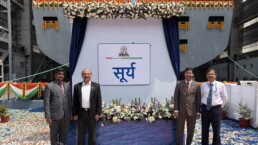
Indian Register of Shipping announces launch of first fleet support ship INS Surya
Indian Register of Shipping continues to strengthen its role in supporting the Indian Navy and India’s naval shipbuilding capabilities through the…
VLCCs Climbing the Record Charts
LR2 The TC1 75kt MEG/Japan index decreased by only a single point this week to WS928. The corresponding Baltic round-trip TCE fell by $2,000 to…
Subscribe to our newsletter!
if you dont want to swim alone in the ocean of news, sign up for the newsletter, and you will receive daily all the important news of world shipping!
