

CSN launched the 1st CSN Greece Shipping Debate 2025 in Piraeus as part of its strategic commitment to fostering high-level dialogue and collaboration within the regional and international maritime community. Recognising Greece’s pivotal role in global shipping, CSN created this new platform to bring together senior executives, shipowners, regulators, and maritime professionals for an open and forward-thinking exchange of views on the challenges and opportunities shaping the future of the industry.
Held at the historic Piraeus Marine Club, the event was designed not as a traditional conference but as a dynamic forum for real-time debate, critical thinking, and strategic insight. The goal was to move beyond formal presentations and create a setting where key decision-makers could confront the pressing issues head-on—from geopolitical risks and green transition strategies to innovation, sustainability, and the evolving financial and regulatory landscape. Through this initiative, CSN continues to reinforce its role as a catalyst for progress and a trusted convener of maritime leadership.
The photos of the debate are now available in the following link:
The 1st CSN Greece Shipping Debate – Navigating the Aegean Tides
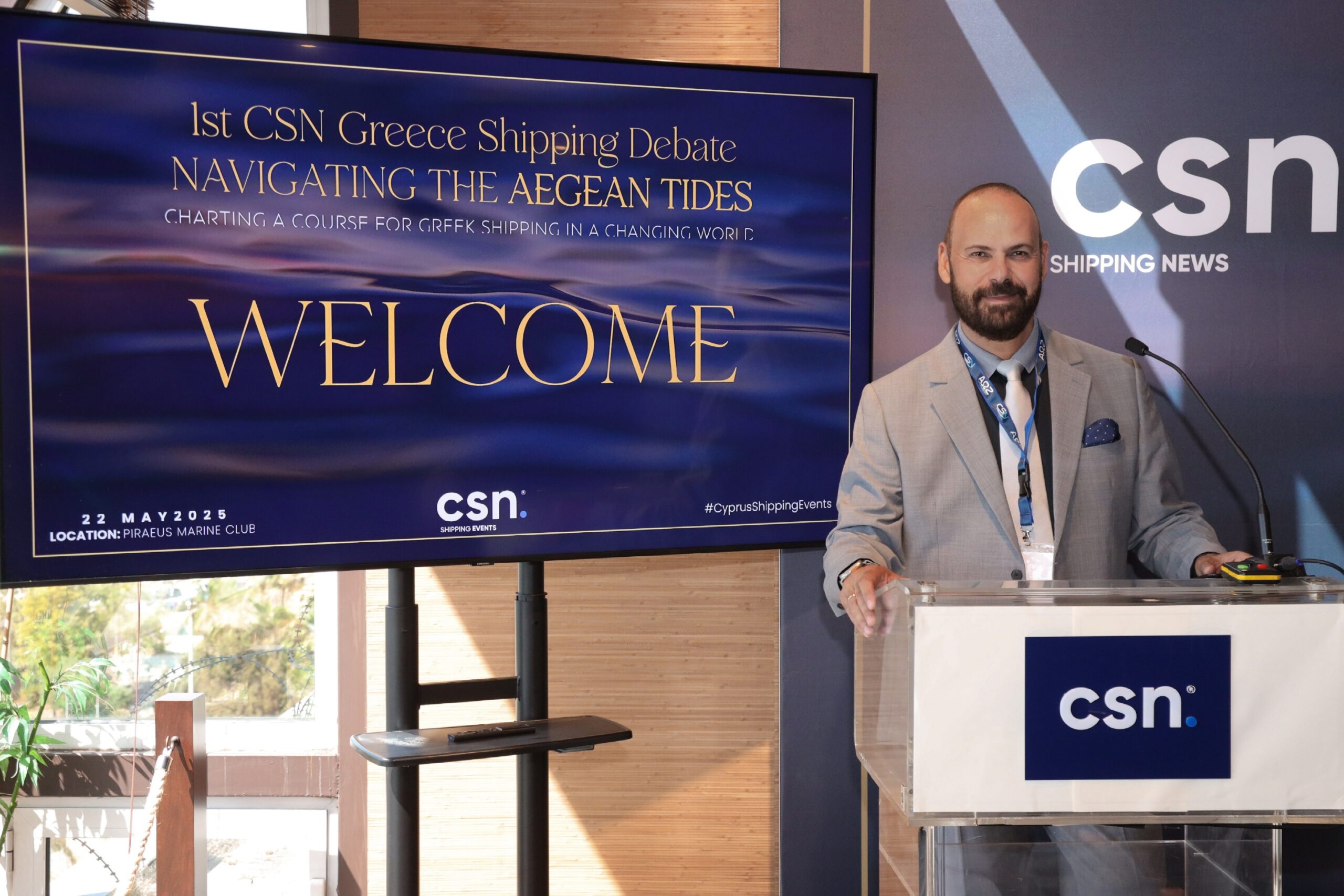
Summary of Discussion: Introductory Comments by the Moderator
The inaugural CSN Greece Shipping Debate, “Navigating the Aegean Tides: Charting a Course for Greek Shipping in a Changing World,” was held at the historic Piraeus Marine Club. The moderator emphasised that Greek shipping is at a pivotal moment, facing intricate challenges and significant opportunities in an era defined by evolving geopolitical landscapes, accelerating technological advancements, and increasing societal expectations regarding environmental sustainability. The event aimed to provide a crucial platform for expert debate on critical issues for Greek shipowners in 2025 and beyond, grounded in the unique context of the Greek maritime sector. Two distinguished panels were introduced: “Navigating Change: Geopolitics, Green Transition & Growth Strategies for Greek Shipping” and “Future-Proofing Greek Shipping: Innovation, Sustainability & Resilience in a New Era.” Active participation was encouraged to collectively chart a course for the future of Greek shipping.
The Punch Line
- The urgency of the moment: The introductory remarks underscored that the challenges facing Greek shipping are not theoretical but immediate, demanding proactive engagement.
- The strategic importance of dialogue: The event itself, being the first of its kind, implicitly concluded that a dedicated platform for expert discussion is vital for the industry’s future.
- Holistic approach to challenges: The two panel topics suggested that Greek shipping’s future depends on a multifaceted approach, integrating geopolitical awareness, green transitions, and technological innovation.
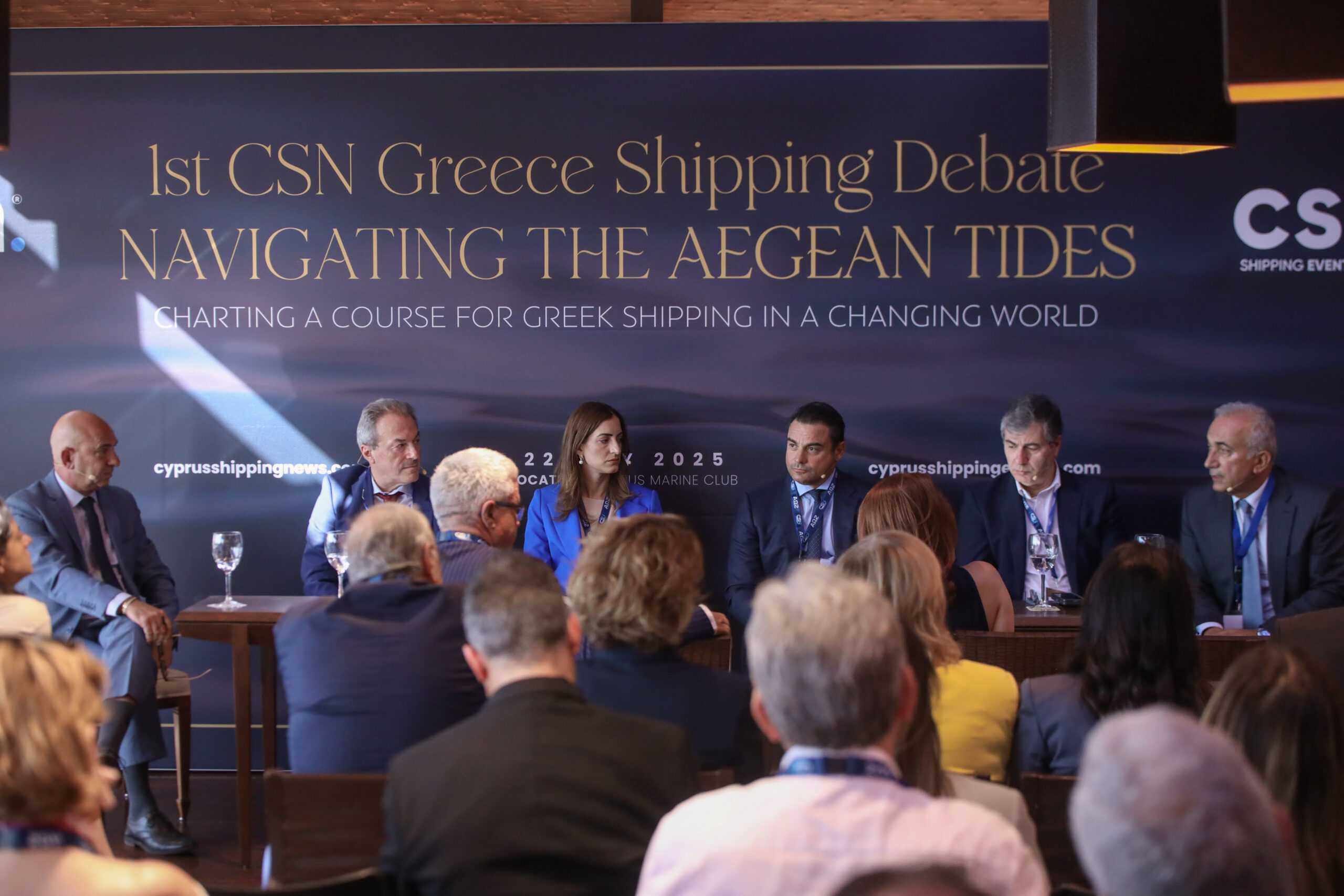
Panel 1: “Navigating Change: Geopolitics, Green Transition & Growth Strategies for Greek Shipping”
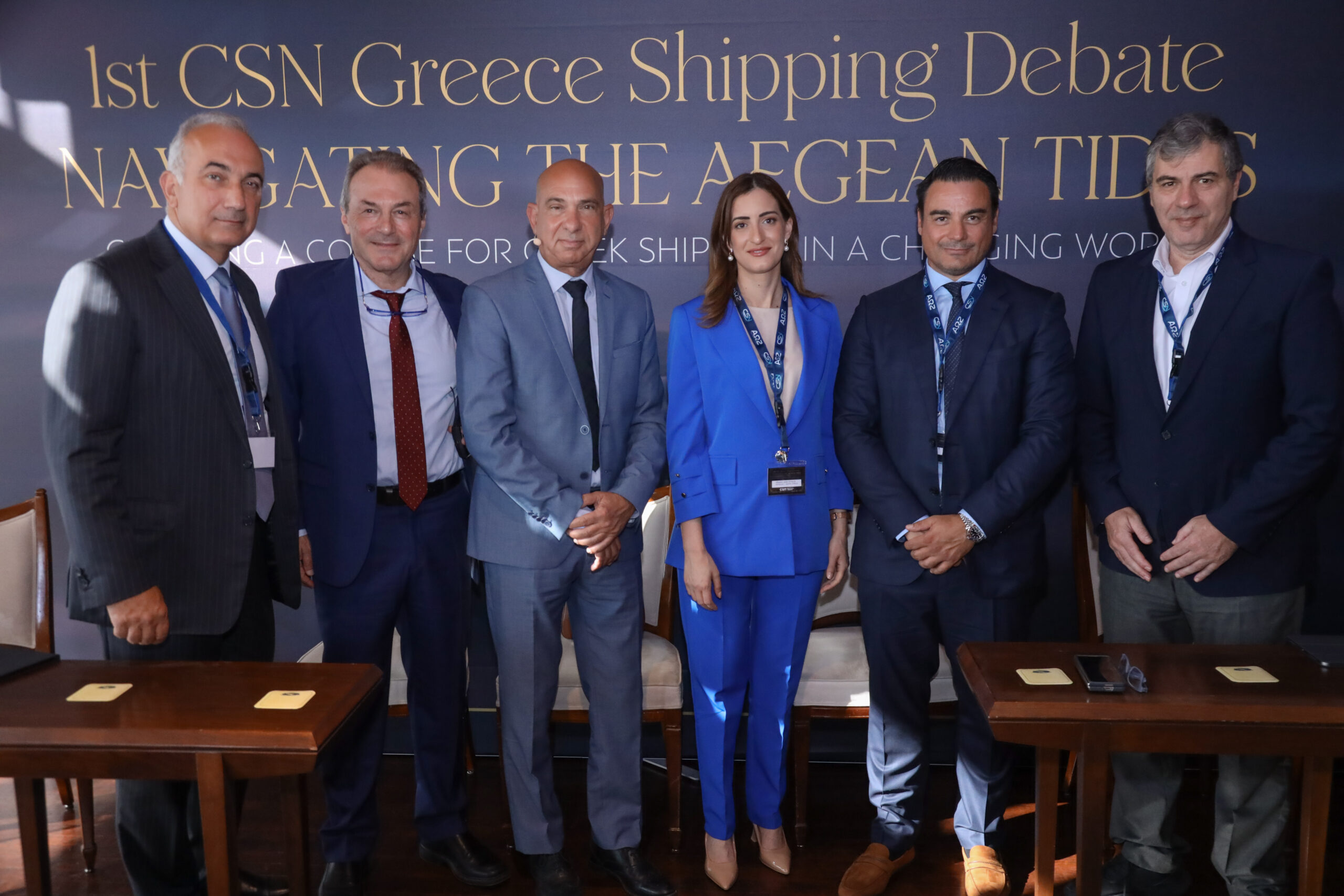
This panel, featuring experts like George Souravlas, Costas Delaportas, Vasilios Mouyis, Anna Pittalis, and John Cotzias, delved into the following key areas:
Geopolitical Shifts and their Impact on Greek Shipping
-
- Discussion focused on how increasing regional instabilities (e.g., Red Sea disruptions) and potential trade wars (e.g., US-China tensions) will affect Greek shipping in the near to medium term.
- Exploration of impacts on key shipping routes (e.g., rerouting around Africa), cargo flows (e.g., energy, dry bulk), and strategic investment decisions for Greek shipowners, including identifying vulnerable regions and proactive measures like diversification of routes and fleet types.
Conclusions
-
- Adaptability is paramount: The panel likely concluded that Greek shipowners must build significant flexibility into their operations and investment strategies to quickly adapt to unforeseen geopolitical shifts.
- Regional focus with global awareness: While Greek shipping operates globally, understanding specific regional flashpoints and their cascading effects on trade lanes is crucial.
- Risk mitigation through diversification: Diversifying fleet types, trade lanes, and potentially even cargo portfolios was highlighted as a key strategy to mitigate geopolitical risks.
Decarbonisation and the Future of Greek Fleets
-
- Strategies for Greek shipowners to leverage decarbonisation as a competitive advantage beyond regulatory compliance (e.g., attracting eco-conscious charterers, accessing green financing, enhancing brand reputation).
- Examination of effective novel financing mechanisms for green technologies (e.g., sustainability-linked loans, green bonds, carbon credits) and emerging business models within sustainable shipping (e.g., carbon capture, alternative fuel bunkering infrastructure).
Conclusions
-
- Decarbonisation as an opportunity, not just a burden: The panel emphasised that early and proactive adoption of decarbonisation measures can create a significant competitive edge rather than just being a cost.
- Financing innovation is key: Access to innovative and diverse financing mechanisms is critical for scaling green technologies across the fleet.
- New value chains: Decarbonisation is not just about new fuels, but also about the emergence of entirely new business models and value chains within the shipping ecosystem.
Financing the Future of Greek Shipping
-
- Assessment of the current financing landscape for fleet modernisation, technology integration, and sustainable initiatives, perhaps highlighting a shift from traditional bank lending to more diverse sources.
- Identification of key players beyond traditional banks (e.g., private equity, sovereign wealth funds, export credit agencies, impact investors) and the potential role of innovative financial instruments (e.g., blended finance, guarantee schemes) and public-private partnerships in de-risking investments for greener practices.
Conclusions
-
- Diversification of funding sources: Greek shipowners can no longer rely solely on traditional bank finance; exploring a broader range of financial instruments and partners is essential.
- Risk-sharing mechanisms: Public-private partnerships and innovative financial instruments that de-risk investments in new technologies are crucial to accelerate the green transition.
- Transparency and ESG readiness: Attracting new types of investors often requires a stronger focus on ESG (Environmental, Social, Governance) reporting and transparency from shipping companies.
The Role of Greek Shipping in the Global Maritime Landscape
-
- Perspective on Greece’s evolving strategic positioning within the global maritime market given its history, strengths (e.g., entrepreneurial spirit, extensive network), and challenges.
- Opportunities for enhanced collaboration and potential consolidation within Greek shipping sectors (e.g., joint ventures for new technologies, shared infrastructure).
- Identification of promising avenues for innovation (e.g., autonomous shipping, data analytics, predictive maintenance) to solidify Greece’s leading role in future maritime transport.
Conclusions
-
- Maintaining leadership through proactivity: Greek shipping’s historical leadership must be actively defended and advanced through proactive engagement with new technologies and market trends.
- Collaboration as a competitive advantage: While fiercely competitive, Greek shipping stands to gain significantly from increased collaboration on shared challenges, particularly in areas like decarbonisation and digital transformation.
- Innovation as a strategic imperative: Embracing and leading in maritime innovation, rather than simply adopting it, is critical for Greece to solidify its long-term competitive edge.

Panel 2: “Future-Proofing Greek Shipping: Innovation, Sustainability & Resilience in a New Era”
This panel, comprised of Anna Vourgos, Stamatis Fradelos, Dorothea Ioannou, Panos Zachariadis, and Alexander Senteris, focused on:
Technology and Innovation in Greek Shipping
-
- Discussion on the most relevant technological advancements for the Greek fleet, including digitalisation (e.g., smart shipping platforms), automation (e.g., remote operations), the development and implementation of smart shipping solutions (e.g., optimised routing, predictive analytics), and the ever-evolving landscape of cybersecurity.
- Strategies for Greek shipowners to effectively adopt and integrate these technologies into their operations for improved efficiency, enhanced safety, and bolstered competitiveness.
Conclusions
-
- Digitalisation as foundational: Digital transformation is not optional but fundamental for future efficiency, safety, and competitiveness in Greek shipping.
- Cybersecurity as a top priority: With increased connectivity, cybersecurity risks escalate, making robust defense mechanisms crucial for operational continuity and data integrity.
- Phased adoption and integration: Rather than a “big bang” approach, gradual and well-planned integration of new technologies is likely more effective for Greek shipowners.

Charting the Path (Sustainable Fuel Decarbonisation)
-
- Identification of forward-looking strategies and emerging technologies most promising for driving sustainable change within the Greek shipping sector, such as alternative fuels (e.g., ammonia, methanol, hydrogen), carbon capture technologies, and energy efficiency solutions.
- Exploration of how Greek shipping can embrace and implement sustainable practices, including the principles of the circular economy (e.g., waste heat recovery, material reuse), for meaningful decarbonisation efforts, with concrete examples of integration into daily operations and long-term strategic planning.
Conclusions
-
- Multi-fuel future: There is unlikely to be a single “silver bullet” fuel, suggesting a multi-fuel future for Greek fleets requiring flexible vessel designs and abatement technology will be a key factor for the transitional period or even the post new fuels period depending on the fuel mix.
- Holistic approach to sustainability: Decarbonisation goes beyond just fuel; it encompasses operational efficiency, circular economy principles, and lifecycle assessment of materials and processes.
- Collaboration across the value chain: Achieving significant decarbonisation requires cooperation not just within shipping but also with fuel suppliers, ports, and technology providers.
The Role of Insurance in the New Era
-
- How marine insurance providers are adapting their coverage and risk assessment models to ensure the financial resilience of Greek shipowners amidst increasing maritime incidents (e.g., severe weather events, groundings), climate change-related risks (e.g., rising sea levels affecting port infrastructure), and cyberattacks.
- The proactive role the insurance sector can play in promoting the adoption of sustainable practices and innovative technologies within Greek shipping, including potential new insurance products (e.g., discounted premiums for greener vessels) or incentives (e.g., supporting R&D for safety tech).
Conclusions
-
- Insurance as a risk management partner: The insurance sector is evolving from merely indemnifying losses to becoming a strategic partner in managing and mitigating new and emerging risks for shipowners.
- Incentivising positive change: Insurance can play a crucial role in supporting the green transition by taking an inclusive approach to innovative technologies as risk related data evolves and adjusting rating models in a way that would reinforce adopting sustainable practices.
- Data-driven risk assessment: The increasing availability of data will allow insurers to develop more sophisticated and tailored risk assessment models, potentially rewarding proactive and sustainable operators.



Related News.

Highly successful conclusion of the 2nd CSN Northern European Crewing Conference in Hamburg: Crewing 5.0 in Focus
We are delighted to report the highly successful conclusion of the 2nd CSN Northern European Crewing Conference, which took place on the 22nd of…
Dualog launches secure messaging for ship and shore
Dualog has launched Dualog Chat, a secure messaging service built for shipping. The first service in Workspace by Dualog, Chat gives crews and shore…
India and the Widening Tanker Freight Squeeze
This week’s Tanker Market Monitor tracks India’s return to Iraqi supply as Gulf oil movements recover amid persistent shipping risk. Yanbu is…
Star Bulk announces strategic partnership with Hermes World Maritime
Star Bulk Carriers Corp. (the "Company" or "Star Bulk") (Nasdaq & Euronext Athens: SBLK), today announced that it has entered into a strategic…

Thai Cave Rescue Diver Chris Jewell to Bring Lessons in Risk and Safety to IMCA Global Summit
The International Marine Contractors Association (IMCA) will launch its new strategy to 2030 as hundreds of offshore leaders and technical…
Port call optimisation pilot projects reveal significant emissions savings potential
Commercial ships spend between 4% and 6% of their operating year waiting outside ports. That idle time is one of the clearest inefficiencies in…
Port Houston celebrates Historic Project 11 Milestone
Houston Ship Channel expansion strengthens safety, efficiency, and regional prosperity Port Houston joined federal, state, and local elected…
Global VLCC Spot Earnings rise to $805,000/Day
Clarksons Research, the data and analytics arm of the Clarksons Group, continue to track and monitor shipping activity and markets impacted by the…

IMO adopts frameworks to assess marine geoengineering research activities
New guidance will help governments evaluate marine geoengineering research proposals to ensure they are safe for the environment. The…
BIMCO adopts addendum to support investments in retrofit projects
The shipping industry is working to improve fuel efficiency and ship performance to address decarbonisation requirements, new regulations and rising…
Subscribe to our newsletter!
if you dont want to swim alone in the ocean of news, sign up for the newsletter, and you will receive daily all the important news of world shipping!
