From policy to purpose: Alexandros Josephides on shaping the next chapter of Cyprus Shipping
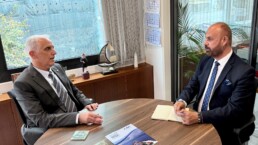

Interview with Alexandros Josephides, Director General of Cyprus Shipping Chamber
What have been your main priorities since taking over as Director General of the Cyprus Shipping Chamber?
Since taking over as Director General, my main priority has been to maintain the already close and productive collaboration with our Associates and Member-companies through a series of focused meetings, aiming to refine our strategic direction and align our efforts for the future.
How would you describe your leadership style, especially in managing such a dynamic and international sector?
I would describe my leadership style as collaborative and transparent, built on teamwork, trust and open communication. I believe in delegating responsibilities effectively and empowering each team member to contribute their specialised expertise, all working together toward our shared goal of promoting and supporting our Members and Cyprus Shipping to the fullest.
What is your long-term vision for the Cyprus Shipping Chamber over the next 5–10 years?
My long-term vision for the Cyprus Shipping Chamber is to maintain its role as a leading and proactive “voice” for the Cyprus Shipping Industry, both locally and internationally and ensure that our Member-Companies remain competitive and resilient in an evolving global maritime landscape.
What are the most significant challenges currently facing the Cyprus shipping industry?
One of the most significant challenges currently facing the Cyprus shipping industry, as well as the global shipping industry, is the continued geopolitical instability and the impact of evolving international regulations, particularly in relation to the environmental agenda. The increasing demands for decarbonisation and digital transformation place considerable pressure on the industry. At the national level, further progress is needed in key areas such as the development of the One-Stop Shipping Centre and the establishment of the Cyprus Shipping Company Limited Liability. On these matters, as well as the critical issue of social security for EU seafarers serving on Cyprus-flagged vessels, the Chamber maintains close and constructive cooperation with the Shipping Deputy Ministry and other relevant government bodies.
How does Cyprus maintain its competitive edge in the global maritime market?
Cyprus maintains its competitive edge in the global maritime market through a well-established and diverse maritime cluster that encompasses the full range of shipping and shipping-related activities. A key strength is its EU-approved and comprehensive Tonnage Tax System, which applies to shipowners, ship managers and charterers, offering long-term fiscal stability and competitiveness. Cyprus also offers high-quality, professional services tailored to the needs of the global shipping industry. This is further supported by a strong and effective partnership between the private and public sectors, fostering a cooperative and responsive regulatory environment. The Cyprus Shipping community also is well-structured, and effectively represented by the Cyprus Shipping Chamber, while its workforce is highly skilled and multilingual, meeting the demands of a globalised industry. Together, these elements form a comprehensive shipping ecosystem that continues to attract and support international maritime businesses and investments.
How does the Chamber influence maritime policy both at the EU and IMO level?
At national level, it contributes through the Shipping Deputy Ministry’s delegation to the IMO, ensuring Cyprus has a strong and informed voice in international discussions. Additionally, through its longstanding membership and active participation in key international shipping bodies such as the International Chamber of Shipping (ICS), the European Community Shipowners’ Associations (ECSA) and BIMCO, the Chamber effectively advocates for the interests of its Members. Our efforts focus on maintaining the global competitiveness of the industry, promoting practical and balanced policies and contributing constructively to the broader dialogue shaping the future of global shipping.
What recent regulatory changes have had the greatest impact on your members?
Recent regulatory changes related to environmental compliance have had the most significant impact on our Members. The implementation of the EU Emissions Trading System (ETS) for shipping, along with the FuelEU Maritime regulation, has introduced considerable operational and financial challenges. Additionally, the agreement at IMO level on a global GHG short and mid-term measures are creating a complex regulatory landscape. These developments require careful alignment and preparation and the Chamber continues to support its Members in navigating these changes while advocating for practical and globally consistent approaches.
In what ways does the Chamber collaborate with other national and international maritime organisations?
The Chamber collaborates closely with key national and international shipping organisations to ensure the interests of its Members are effectively represented in shaping the future of global shipping. Through active participation at Board and Committee level within leading bodies such as the International Chamber of Shipping (ICS), the European Community Shipowners’ Associations (ECSA) and BIMCO, the Chamber contributes directly to high-level policy discussions and decision-making processes. These contributions are informed by regular consultations with its Members via the Board of Directors and specialised Chamber committees. This collaborative approach allows the Chamber to shape well-informed policies that safeguard the industry’s interests, particularly in response to national and international regulatory developments especially those relating to environmental standards, which will significantly influence the future structure of global shipping.
How do geopolitical tensions or disruptions (e.g., conflicts, sanctions, Suez Canal disruptions) affect Cyprus’ shipping strategy?
Geopolitical tensions and disruptions, such as regional conflicts, sanctions, or blockages like those affecting the Suez Canal, have a broad and often unpredictable impact on global shipping and Cyprus is no exception. Such developments create uncertainty, making it difficult for shipping companies to plan long-term strategies, as sudden shifts can significantly alter trade routes, operational priorities and commercial targets. They also introduce logistical and regulatory complexities, often challenging the principles of free trade and encouraging protectionist measures. In response, Cyprus’ shipping strategy remains adaptable, focusing on resilience, diversification and close monitoring of global developments to support its shipping community through such volatile conditions.
What is your assessment of Cyprus’ ship registry competitiveness compared to other leading maritime nations?
Cyprus’ ship registry remains highly competitive. Its combination of a positive and business-friendly regulatory environment, an EU-approved and attractive tonnage tax regime, strategic geographic location and strong adherence to international safety and environmental standards makes it a compelling choice for shipowners. Ongoing efforts to modernise the registry and enhance digital services further strengthen its appeal in an increasingly demanding global market.
What are currently the main objectives of the Chamber?
The Chamber’s main objectives, while adapting to evolving international and local geo-strategic, political and economic developments, have essentially remained consistent. These include promoting the interests of Cyprus Shipping, further enhancing the prestige of the Cyprus flag and safeguarding the interests of its Members. Achieving these goals is made possible through sustained collaboration with the Cyprus Government, the House of Representatives and other professional organisations, aimed at continually upgrading Cyprus’s Shipping infrastructure. Additionally, the Chamber aims to further expand its involvement in international maritime organisations and its ongoing engagement in local and international maritime affairs. Another objective is to continue offering the platform for its cluster Members to network together thus enhancing the cooperation and knowledge exchange between them.
How do you balance the interests of large shipping companies with smaller operators?
At the Chamber, every Member, regardless of size, is equally valued and respected. We are committed to representing both large shipping companies and smaller operators with the same dedication and focus. Our approach is rooted in creating a secure and trusted environment where all Members feel heard and supported. By fostering open dialogue and aligning around common goals, we ensure that the diverse interests within our membership are fairly balanced and effectively represented.
Can you share any success stories where the Chamber’s advocacy led to positive change?
A major success was the collaborative work with the maritime administration to achieve a smooth, seamless and competitive harmonization of the Cyprus regulatory framework with the EU Aquisduring the Accession of Cyprus to the EU in 2004. Another key success of the Chamber’s advocacy was the establishment of the Shipping Deputy Ministry in 2018, following years of consistent lobbying and engagement with political parties. Additionally, in both 2010 and 2019, the Chamber played an active role in securing the successful renewal of the Cyprus Shipping Taxation System by the EU, ensuring continued stability and competitiveness for the Cyprus shipping industry.

What initially drew you to the maritime sector, and what keeps you passionate about it?
As a mechanical engineer by education and having wondered around the world working as such, when I returned to Cyprus in the early nineties, shipping attracted my attention as a global industry with challenges and excellent career prospects. Anyone that enters the fascinating world of shipping cannot be anything else but passionate about this industry. The ever-evolving challenges and the continuous need to learn about new developments to stay on top, make it a “never a boring day” industry.
How has your professional journey shaped your approach to leadership today?
My multinational experience while in various locations working abroad and here in Cyprus shaped my belief that leadership is not about knowing everything yourself but being able to recognize and empower those around you to take initiatives and perform their best in achieving an organization’s set goals.
The role of Director General is demanding — how do you maintain balance in your life?
I must admit that every new start has its challenges and does require more effort, which upsets the balance in life, however I do make an effort to maintain my sporting activities and the time spent with my family.
Are there any personal values or experiences that you find especially influential in your work?
I feel that my approach towards my colleagues helps to bring out the best in them and a feeling of “one for all and all for one” in performing our tasks.
What has been your proudest moment since joining the Cyprus Shipping Chamber?
I feel that there have been many such moments in our work in the Chamber’s Secretariat, especially in successfully and competitively harmonizing our laws with regional and international requirements, but if I were to choose one that stands out as proudest was the harmonization with the EU Aquis during Cyprus’ EU accession process, with the shipping chapter being the first to be successfully closed as early as 2001 with Accession formally taking place in 2004. This included the development of our successful Tonnage Tax System which ensured the competitiveness and sustainability of our resident shipping industry.
If you weren’t working in shipping, what other career path might you have pursued?
Had I not earned a full scholarship to study for my Mechanical Engineering Master’s degree in the US after completing my Bachelor’s Degree in Mechanical Engineering in 1984, I would have become a Chartered Accountant.
What advice would you give to young professionals entering the maritime field?
Like in any other discipline, the advice is to work hard, show initiative, never be afraid to ask for training that will help you enrich your skills and competencies relevant to your profession and do not be afraid to travel or take a job abroad.
How do you unwind after a long day or week?
I need to get on a tennis court 2-3 times a week. A bit difficult these days but sport helps me unwind.
Do you have any hobbies or interests that people might not expect?
Not really. Just ordinary hobbies and a thirst to read and learn, especially about historic personalities and events.
Who has been a mentor or role model for you in your career?
I cannot say I had a mentor or a role model. I was lucky to change a few jobs at the beginning of my career and work in a few places here and abroad, which helped me absorb good practices from all my experiences.



Related News.
Hong Kong Global Maritime Trade Summit to return for third edition
The International Chamber of Shipping, in collaboration with the Transport and Logistics Bureau of the Government of Hong Kong and the Hong Kong…

Appetite for US crude oil exports climbs despite high freight
South Korea tops US crude destinations at 568,600 b/d VLCC rates to Asia double, closing arbitrage window European refining margins…
Shipping stocks Rally as Hormuz Traffic plunges 75%
Ship traffic through the Strait of Hormuz — a critical chokepoint handling about 20% of global crude oil and liquefied natural gas shipments — has…
Diana Shipping announces Time Charter Contract for m/v G P Zafirakis with Classic Maritime
Diana Shipping, a global shipping company specializing in the ownership and bareboat charter-in of dry bulk vessels, announced that, through a…
New IMO ESP Code framework for Remote Inspection Techniques
The International Maritime Organisation, through Resolution MSC.584(111) , has adopted amendments to the International Code on the Enhanced…
ABS opens Offshore & Marine Support Center in Bergen
ABS has expanded its capabilities in the Norwegian maritime market with the opening of a cutting-edge support center in Bergen, bringing advanced…

MOL holds giant step memorial ceremony and beach cleanup at Kashima Coast
Memorial and Reflection 20 Years After the Accident: Learning from the Past to Foster an Even Stronger Safety Culture Mitsui O.S.K. Lines, announced…
KEZAD-based Arabian Gulf Steel Industries achieves lowest verified Carbon Footprint for Rebar
CARES UK verified Environmental Product Declaration confirms 139 kg CO₂e per tonne for rebar produced at AGSI’s KEZAD Abu Dhabi facility Arabian…
Indian Register of Shipping announces launch of first fleet support ship INS Surya
Indian Register of Shipping continues to strengthen its role in supporting the Indian Navy and India’s naval shipbuilding capabilities through the…

VLCCs Climbing the Record Charts
LR2 The TC1 75kt MEG/Japan index decreased by only a single point this week to WS928. The corresponding Baltic round-trip TCE fell by $2,000 to…
Subscribe to our newsletter!
if you dont want to swim alone in the ocean of news, sign up for the newsletter, and you will receive daily all the important news of world shipping!
