
Europe-Russia trade tale
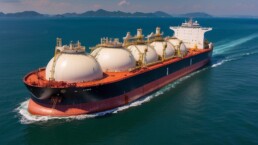
The end of Europe’s dependency on Russia has been the talk of the town since the Russia-Ukraine war in 2022. Although the continent has continuously expressed its stance of moving away from Russia, the trade between the two has showcased a different tale. Despite a significant reduction in Russian piped gas supplies, Russian LNG imports maintained their momentum, with countries like Belgium, France, and Spain as the top importers.
Europe’s shift to other destinations sparked a change in LNG shipping
Europe’s reduced reliance on Russian gas altered global LNG trade patterns, boosting shipping rates (in 2022 and 2023). While the continent increased imports from countries such as the US, Qatar and African countries, its imports from Russia continued, contributing about 19% to Europe’s total imports in 2024.
Europe prepares to survive without Russian gas and LNG
The European Commission and member states are expected to submit plans to disband Russian gas and LNG by 2027. Europe’s complete shift from Russia will be supported by: 1) Europe’s supply contracts signed since 2022, resulting in massive supply starting from 2026-27, 2) legacy contracts constituting for about 40 mtpa and extending up to 2035-40 and 3) expanded import capabilities and 4) increasing global LNG supply.
Moreover, Drewry analyses Europe’s future LNG demand in contrast to its contracted supplies and concludes that Europe can manage without Russia’s gas and LNG, given the long-term supply deals (signed with various non-Russian exporters) and legacy contracts. Most of the supplies will be sourced from the US, Qatar and other African countries, with dependency on the US increasing annually (as more contractual supplies become operational via under-construction and planned projects in the US).
Likewise, the continent’s spot exposure will reduce as more contracted supply becomes available to European buyers, while its demand is likely to stabilise towards the end of this decade. We expect the region’s current secured supply to suffice for future.
European demand will revive in 2025, increasing the continent’s spot exposure, mainly due to the end of the Ukraine gas transit contract last year (which was responsible for supplying up to 11 million tonnes of piped gas) and increased gas demand YoY. However, we expect Europe’s current spot exposure, which was 35% (28 mtpa) in 2024, to reduce to about 9-10% (9-10 mtpa) by 2030. The only scenario which could make Europe’s situation worrisome is if its demand rises unexpectedly (surpassing the 2022 levels), which seems highly unlikely. Even if demand is expected to peak in 2029, it will be below 2022 levels, and the region appears to have it covered (at large).
The change will come at a cost!
The US will command the largest share of Europe’s total imports. The contracts signed by Europe since 2022 signal an amplified role for US LNG, accounting for 63% of contracted supplies signed since the war. However, Trump’s plans to impose steep tariffs on Europe (50% announced at the time of writing , but delayed) could challenge the trade status quo between the two and make buyers wary of signing more such deals with the US. Meanwhile, if tariffs are imposed, Europe will have to bear hefty import costs.
Second, Europe is betting big with its US supply contracts, as most of its secured supply hinges on planned capacities via projects such as CP2 LNG, Commonwealth LNG, and Delfin LNG. All of these are vying for FID approval, with some facing financial, technical, and legal challenges. Any delays in the commencement of the projects could challenge Europe’s current position (which seems to be at ease with increasing trade with the US). Thus, any impediment to Europe’s LNG from the US will inadvertently increase the region’s spot exposure. As of May 2025, about 15 mtpa of Europe’s contracted supply is expected to be sourced through planned projects, while 18 mtpa via under-construction projects (such as Rio Grande LNG T1-3 and Port Arthur LNG Phase I).
Still, as the availability of spot supply (other than the US) is expected to rise significantly by 2027-28, Europe will manage to tackle any shortcomings in contracted supplies.
If all goes well
The continent would keep room for spot purchases, given that 1) an ample supply will be added by the end of this decade (providing some price ease), 2) procurement flexibility according to demand dynamics, and 3) more diversification as new exporters are expected to join the list.
Moreover, given the continent’s carbon-neutral goals and adequate contracted supply (which appear to suffice the region’s demand), we expect Europe to remain cautious in signing more long-term supply deals and instead retain some dependency on spot purchases (which we project likely to recede vis-à-vis increased emphasis on green energy and policy shifts).
Europe’s evolving LNG strategies to support LNG shipping
Higher US-Europe trade to support rates for modern carriers with increased tonne-mile generation
Higher US-Europe trade will support modern LNGC rates as the latter completely shifts to non-Russian gas and LNG, generating additional tonne-mile demand (given longer sailing time). We expect more two-stroke vessels to be deployed around European waters, complying with environmental and maritime regulations. However, the degree of increase would be limited, given that Europe’s demand will decelerate in the long run (towards 2030).
LNG trade routes to become longer
Europe will diversify and increase imports from Qatar and African projects, which will add more distance and in turn add shipping demand and support rates. Based on the recent deals signed between European buyers and Australia, there is a possibility of even Australian cargos reaching Europe (supported by improved shipping economics and vessel supply, but we keep a cautious outlook).
Russia seeks alternatives for Europe
Europe’s shift from Russia will compel the latter to look for alternative buyers, with Russian cargoes likely to reach Asia, providing better price competitiveness to Asian buyers. Higher demand growth in South and Southeast Asia can potentially boost Russia’s role as an LNG supplier to Asia. The development would boost shipping as more Russian Arctic cargoes could come to Asia, generating higher tonne miles, especially in a scenario where Russia sails these cargoes via the Cape of Good Hope (as the Red Sea remains impassable). However, the availability of an ice-class fleet remains a concern for the country. Although the increased Russia-Asia trade can displace the US-Asia trade, we expect it to be limited, as Asia has been securing massive contractual capacities with the US, signalling increasing US-Asia trade in the long run.
Therefore, even as Europe looks poised to achieve its goal of ending Russian LNG imports, its increasing reliance on the US can still create hurdles, making room for other exporters. Meanwhile, LNG shipping will gain from the additional European imports, but the tonne-mile scenario looks to be largely unaffected.
Source: Drewry



Related News.

Connected Fleets under Siege: Navigating Geopolitical Cyber Threats and Modern Maritime IT
An exclusive CSN interview between Adonis Violaris and Dr Matthew Maheras As commercial shipping becomes ever more digitally integrated, the industry…

InterManager warns enclosed space deaths demand urgent industry action
InterManager has called for urgent industry action on enclosed space safety after its latest research highlighted persistent failures in procedures,…

ATPI Greece marks 50 years at the heart of global crew changes
Five decades supporting the Greek and global shipping community 35% of ATPI’s marine business now managed from Greece More than 130 professionals…

Euroseas announces a new time charter contract for its 2001-built 2,556 teu Feeder Containership, M/V EM Corfu, and the sale of its sister vessel, M/V Evridiki G
Euroseas an owner and operator of container carrier vessels and provider of seaborne transportation for containerized cargoes, announced a new…

Possible further delay to road transport’s inclusion in EU ETS causes serious concern
Interferry, the global trade association representing the ferry shipping industry, is raising serious concerns over the current state of EU Emissions…

ABP appoints new head of commercial for Humber
Associated British Ports, the UK’s largest port operator, has appointed Sandrine Lagrost as its new Head of Commercial for the Humber, joining the…

Commodity Radar | Spotlight: Bauxite – Week 43.2026
The final quarter of 2026 is expected to see softer bauxite flows Chinese front-loading is expected to have run its course, pointing to softer…
Japan IMO attempt to weaken the IMO Net-Zero Framework
Japan has put forward a proposal to the International Maritime Organization to remove the Net-Zero Fund and put shipping companies in control of…

xclusiv S&P Report 19th October 2026
Pls find below the [xclusiv] S&P Report 19th October 2026 [xclusiv] 2026_10_19

Glencore achieves land access for the Coroccohuayco project at Antapaccay
Antapaccay, a Peruvian entity controlled by Glencore, has completed the access agreements required for the last blocks of land to unlock the…
Subscribe to our newsletter!
if you dont want to swim alone in the ocean of news, sign up for the newsletter, and you will receive daily all the important news of world shipping!
