Japan IMO attempt to weaken the IMO Net-Zero Framework
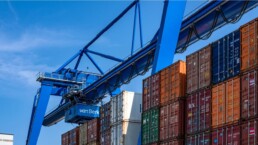

Japan has put forward a proposal to the International Maritime Organization to remove the Net-Zero Fund and put shipping companies in control of maritime finance. Our briefing highlights the many risks this would trigger – including shifting control of maritime revenues and weakening finance for a just and equitable transition
Background
Japan’s submission to the forthcoming negotiations at the International Maritime Organization (IMO) proposes removing the IMO Net-Zero Fund (NZF) and replacing it with greater reliance on Surplus Units and direct industry contributions to IMO-approved projects.
This risks shifting control of maritime revenues from collective governance to private actors, weakening finance for a just and equitable transition in climate vulnerable developing countries, and creating opportunities for companies to direct payments back into their own supply chains. By also weakening incentives for overcompliance and zero- and near-zero emission technologies, the proposal could undermine both the NZF’s emissions-reduction objectives and the IMO’s commitment to leave no one behind.
The NZF is intended to cut shipping emissions while supporting a just and equitable transition, including in climate vulnerable developing countries. How its revenues are governed and distributed will therefore be critical to determining whether the framework delivers on both objectives. Japan’s proposal would fundamentally change this architecture at a time when the IMO is working to finalise the Framework, making the outcome important for the future of shipping decarbonisation, climate finance and developing countries’ ability to participate in the transition.
What’s covered in the briefing?
- The IMO Net-Zero Framework as approved by Member States in April 2025.
- Japan’s proposal to MEPC 85: a global carbon market.
- Transfer of decision-making power from Member States to the private sector.
- Undermining the Surplus Unit market and absolute emissions reductions.
Recommendations
To ensure climate vulnerable developing countries are not left behind in the transition away from fossil fuels, a collective finance mechanism is needed in the shipping sector to fund public goods and direct resources according to equity and need. While voluntary contributions from the private sector are a welcome and much needed addition in international climate finance, they are not an adequate substitute for the predictable mandatory payments into an IMO Net-Zero Fund under, due to the nature of profit-seeking investments. Therefore, during the intersessional period and at MEPC 85 in December 2026, Member States should aim to:
- Retain the mandatory economic element as an integral part of the NZF.
- Reserve decision-making on the equitable distribution of revenues to Member States.
- Protect the integrity of the Surplus Unit market.
- Preserve the collective architecture of the approved NZF.



Related News.

1 Week left for the 5th CSN Greece ICT Conference, Athens 19th November 2026 “Intelligent Skies, Secure Seas: The AI Impact on ICT” – Register Now
“Intelligent Skies, Secure Seas: The AI Impact on ICT” Register here Date: 19 November 2026 Time: 09:00-15:00 Venue: PLOES Floating Venue The…
IMO Secretary-General calls on States to enforce maritime rules in the Strait of Hormuz
Secretary-General urges concrete measures to ensure compliance with international maritime regulations The Secretary-General of the International…

The future of shipping takes centre stage at Imperial College Alumni Association of Greece Event in Piraeus
Energy transition, digital transformation, artificial intelligence and the development of the next generation of maritime leaders at the heart of…

Wallem Group appoints Apostolos Poulovassilis to lead Greek expansion
Hong Kong-based Wallem Group announces the appointment of Apostolos Poulovassilis as General Manager, Ship Management, Greece, effective November…

Shipping cannot manage risk without managing the human impact
Shipping invests considerable time and resources in protecting vessels, cargo and commercial interests, yet the impact of risk on the people working…
ASA urges unified Global Rules as Hong Kong Convention enters second year in force
The 30th Interim Meeting of the ASA Ship Recycling Committee (SRC) was held online on 22 October 2026. The SRC members are firmly committed to…
Ahead of MEPC85, IMarEST members highlight barriers to net-zero delivery
Ahead of MEPC85, the Institute of Marine Engineering, Science and Technology (IMarEST) says its members now identify delivery, infrastructure, and…
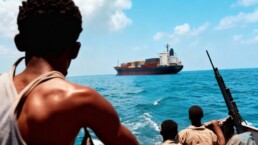
Somali piracy resurgence: understanding the risk to commercial shipping
A hijacking off Somalia can have consequences far beyond the vessel seized. Captured ships can become motherships, extending pirates’ reach offshore…
Atlantic Tanker earnings fall faster than Gulf Earnings
The TD3C/TD22 earnings ratio rose from 2.73 on 30 October to 3.10 on 6 November, as US Gulf–China VLCC earnings fell 16.2% to around $415,000/day,…
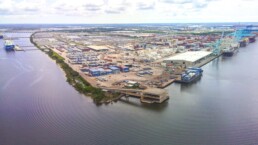
JAXPORT awarded $40 million federal grant to modernise Blount Island berth
JAXPORT has been awarded a $40 million grant through the U.S. Maritime Administration’s Port Infrastructure Development Program to modernize Berth 32…
Subscribe to our newsletter!
if you dont want to swim alone in the ocean of news, sign up for the newsletter, and you will receive daily all the important news of world shipping!
