

Dr Domagoj Baresic, Senior Research Fellow at the UCL Energy Institute, said: “Without ensuring a streamlined and well-prepared policy environment the shipping industry risks a costlier, less effective and longer energy transition.”
The report finds that in the IMSF&F with banded RUs scenario, revenues would only be about 5-25% of what would be generated in a weak levy + GFS scenario. The IMSF&F with banded RUs scenario could also accelerate LNG dual-fuel uptake and create heavier dependence on bio or bio-based blends well into the later years—the quantities required of which could become impossible to source, leaving the sector with no option but to pay to pollute. The energy transition overall is therefore more likely to be prolonged in the IMSF&F with banded RUs scenario because of a significant period of market uncertainty in the early years.
A more uncertain and unstable policy driver such as ‘J9’, will lead to competitive advantage for regions with strong industrial policy and state intervention. Examples to understand what might happen without a strong IMO policy driver are taken from how Chinese state intervention on photovoltaics, electric vehicles and other transition technologies, has led to large market share by China, with the western business model, less able to manage the timing risks for these markets, less competitive.
Dr Tristan Smith, Professor of Energy and Transport at the UCL Energy Institute said: “This transition could happen in a number of different ways. Strong IMO policy and a levy can ensure a globally inclusive transition including in a range of IMO-empowered low-income countries, whereas track-record shows a much less inclusive transition, including a disadvantage to the western business model, of a weaker IMO policy outcome centred on credit-trading. Most models/analysis have not looked at geography of transition and are missing this important detail.”
The work is underpinned by UCL’s quantitative modelling of the scenarios coupled with a deep understanding of the nature of shipping’s energy transition and informed by a decade of work on this subject which informed the GMF Transition Strategy for Shipping and UN High Level Climate Champion’s work on tracking progress towards the 5% goal. Previous work by UCL and UMAS also shows that only targeted subsidy for e-fuels, coupled with a GHG levy, would ensure e-fuel early adoption. In another report, UCL and UMAS showed that without targeted financial support mechanisms, which can be supported from revenues generated from a levy, future e-fuel production could risk leaving developing nations behind in the energy transition opportunity, despite their favourable renewable resources, because of the poor access to funding and higher costs of capital faced by them.
Download the full report: https://www.shippingandoceans.com/post/uncertainty-and-instability-created-by-a-credit-trading-policy-architecture
Source: UCL Energy Institute



Related News.

ISLAND OIL: Unveiling of the Sculpture “Cyprus’s Journey Through the Ages” in Protaras – A Tribute and Landmark to Cyprus’s Historical Memory and Cultural Heritage
In a modest ceremony marked by a moving atmosphere, the sculpture “Cyprus’s Journey Through the Ages”, created by acclaimed Cypriot sculptor…
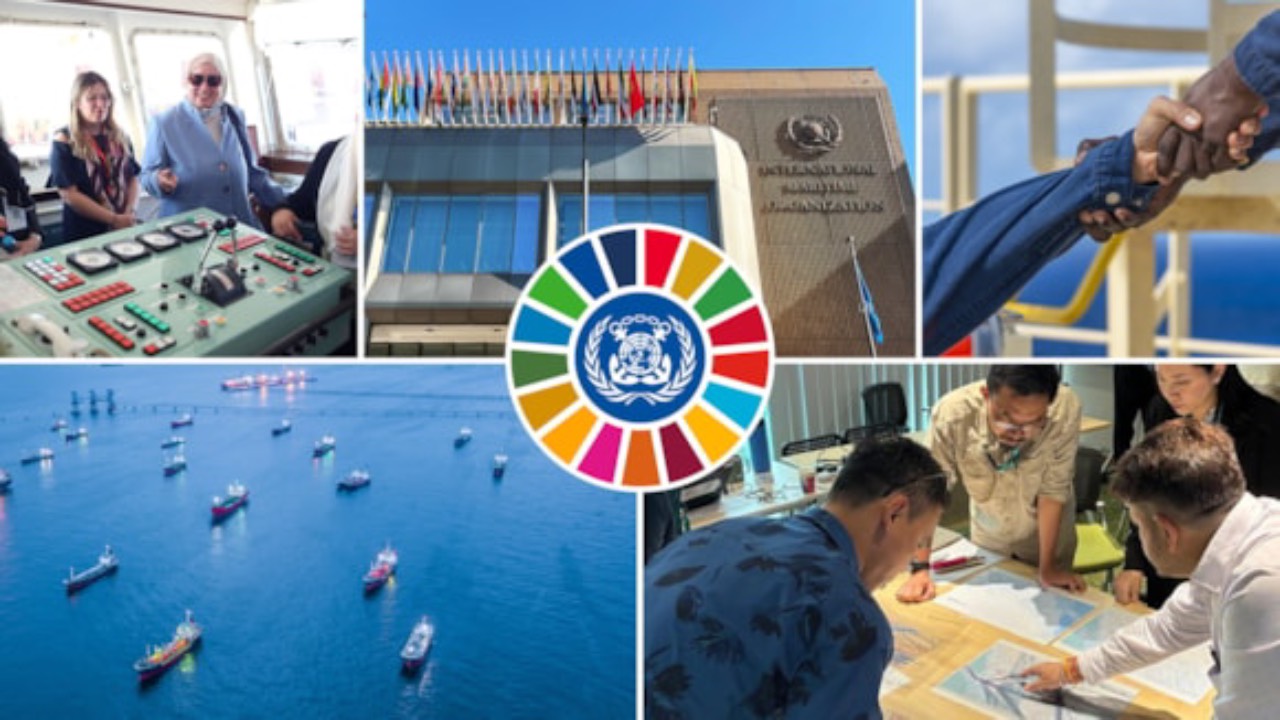
World Maritime Day 2026 from Policy to Practice – powering Maritime Excellence
Global regulations will deliver safer, more resilient shipping when they are implemented worldwide. The international maritime community marks…

Diana Shipping announces Time Charter Contract for m/v DSI Polaris with Dai An Ocean Shipping
Diana Shipping , a global shipping company specializing in the ownership and bareboat charter-in of dry bulk vessels, announced that, through a…

Chief Economists Expect Global Economy to Stabilize, but Fiscal Constraints, Rising Living Costs and AI Investment Uncertainty Threaten Growth
The global economy is stabilizing, but the fiscal support that cushioned successive shocks since 2020 is unlikely to play the same role in the year…

V. welcomes its new graduate cohort as programme expands across the group
Twelve graduates from nine nationalities join 11th year of V.’s expanded international management programme. V., the global ship manager and marine…

From Policy to Practice: Why Seafarers Are the Key to Maritime Excellence
The shipping industry is no stranger to regulation. Seafarers and ship operators work within a vast framework of international conventions, national…

Intermodal Report – Week 38 2026
Please find below the Intermodal market report for week 38 2026. Intermodal Report Week 38 2026 Market Insight By Nikos Tagoulis, Head of…

Allied – Weekly Market Review – Week 38
Please find below the Allied Weekly Report for Week 38 | 2026 ALLIED - Weekly Market Report- Week 38

Record year on the Northeast Passage but Arctic shipping remains very limited
In 2025, a record 103 transit voyages were made via the Northeast Passage. However, this is still equivalent to only around a day and a half of…

[xclusiv] S&P Report 21th September 2026
Please find below the [xclusiv] latest Weekly S&P Report [xclusiv] 2026_09_21 Market Commentary: VLCCs: Freight Boom Reprices the Fleet The VLCC…
Subscribe to our newsletter!
if you dont want to swim alone in the ocean of news, sign up for the newsletter, and you will receive daily all the important news of world shipping!
