Red Hat underpins Safaricom Cloud Transformation to improve mobile experience and financial inclusion for millions of customers

Safaricom elevates its IT to a platform for business innovation and halves turnaround time for solution deployments with Red Hat OpenShift
Red Hat, Inc., the world’s leading provider of open source solutions, today announced that Safaricom, a leading provider of converged communication solutions in Kenya, has deployed Red Hat OpenShift as a common cloud platform for applications, including the M-PESA system.
Safaricom has more than 45 million subscribers and the widest modern mobile network coverage in Kenya. It runs sensitive applications with high uptime and stability requirements. This includes third party applications that connect to the renowned M-PESA core platform, a mobile payment system that supports 51 million customers making over $314 billion in transactions per year across Africa, helping promote greater financial inclusion by enabling unbanked and underbanked people to transfer money, pay bills and trade.
Safaricom’s vision is to be Africa’s leading purpose-led technology company by 2025. To fulfill this vision, Safaricom identified the need to move from monolithic, traditional infrastructures to a cloud-native, container and microservices-based architecture that provides a flexible, stable foundation to grow and support its digital requirements.
Building on its use of Red Hat Enterprise Linux for a stable, reliable and flexible Linux platform and Red Hat Satellite for infrastructure management, Safaricom sought an open source solution for containerization. Initially, Safaricom deployed upstream Kubernetes but faced stability challenges and a lag in resolving bugs quickly enough to meet its business needs. Safaricom chose to move to Red Hat OpenShift, the industry’s leading hybrid cloud application platform powered by Kubernetes, which provides production-ready maturity and carrier-grade stability along with enterprise-grade support.
Safaricom collaborated with Copy Cat Group, an experienced systems integrator, as well as the Red Hat team to deploy the platform and develop a roadmap for application modernization. This included aligning processes across Safaricom’s security, application development and platform teams. The companies ran joint technical workshops and a developer day to get the teams upskilled on DevOps and agile methodologies. Safaricom in 2024 then expanded to Red Hat OpenShift Platform Plus to harness Red Hat Advanced Cluster Security for additional cybersecurity capabilities, Red Hat Advanced Cluster Management for Kubernetes for holistic orchestration of its workloads at scale and Red Hat Quay, a security-focused and scalable private registry platform for managing content across globally distributed datacenter and cloud environments.
Red Hat OpenShift is now the core Kubernetes-based platform in Safaricom’s IT environment, running all of its containers and supporting approximately 70% of its tier 1 and tier 2 applications. It is moving much of its estate to Red Hat OpenShift on bare-metal for greater control, increased economic efficiencies and more flexible scale-out capabilities. Benefits that Safaricom has seen so far are as follows:
- Customer experience improvements for internal as well as external users;
- Greater platform stability, achieving up to 99.98% availability compared to 93% before, and faster time to resolution of issues with the help of a Red Hat technical account manager;
- Faster time-to-market, including up to 2x faster turnaround time (TAT) for solution deployments. For example, Hustler Fund, a digital financial inclusion initiative designed to improve access to responsible finance for personal, micro, small, and medium-sized enterprises, took just one month from conception through design to market;
- Expanded automation capabilities such as automated pipelines are providing greater efficiency and productivity. Cluster deployment time has reduced to around two hours from around two days it took previously. Policy enforcement and standardization across multiple clusters is now possible centrally;
- Growing confidence across teams in being able to run container and cloud-native workloads reliably alongside increasing collaboration and silo-busting thanks to a common cloud platform layer;
- Increased scalability – Safaricom can adapt to high and low traffic peaks in its various applications and scale up and down based on demand, supporting a stronger future innovation roadmap;
- Additional security capabilities are in-built to Red Hat OpenShift and can be managed consistently across the hybrid cloud.
Looking ahead, Safaricom is assessing the opportunity to expand these benefits into the network space, such as its 5G core, by expanding its Red Hat OpenShift footprint. The team is working on a proof-of-concept to kick off and define the process before scaling up to onboard the full team and applications.
Supporting Quotes
Fran Heeran, vice president, Global Telecommunications, Red Hat
“Safaricom has high requirements around agility, stability and scale-out design to support its business-critical applications where performance directly impacts customers, including millions of users reliant on M-PESA banking services. We are pleased to be collaborating closely with Safaricom as one team on its modernisation project with Red Hat OpenShift as its common platform for developing and deploying applications at scale.”
Duncan Kabira Ndirangu, head of IT infrastructure, Safaricom
“We are glad to have Red Hat as a strategic partner to Safaricom, helping our teams succeed with technology modernization that supports our people-centric company mission. Customer experience is paramount for us and with Red Hat’s platforms and support teams we have been able to gain performance improvements across our entire IT infrastructure. This has given our teams the confidence to deploy cloud-native applications, which is a significant step for us as we transition our infrastructure into a platform for business innovation – both for IT and network capabilities.”
James Maitai, chief technology information Officer, Safaricom
“Red Hat has been a pivotal partner in Safaricom’s journey from a traditional telecommunications company to a technology-driven organization. Through its innovative solutions and open source expertise, Red Hat has enabled us to enhance our internal efficiencies, streamline operations, and accelerate our digital transformation. This collaboration aligns with Safaricom’s mission of transforming lives by empowering our teams with cutting-edge tools and platforms that drive innovation and deliver exceptional value to our customers. As we continue to evolve into a techco, we look forward to deepening our relationship with Red Hat, fostering greater collaboration, and exploring new opportunities to create impactful solutions that will further our vision of connecting and enriching the lives of millions across Africa.”
Source: BUSINESS WIRE



Related News.

Cyprus Marine Club Welcomes a Full House for Aphentrica’s War Risks Presentation
The Cyprus Marine Club marked its return after the summer break with a full house at Gazebo Mare on Tuesday, 22 September, bringing together members,…
IMO seeks feedback on Maritime Single Window implementation
The International Maritime Organization (IMO) has launched a global survey to assess the implementation and use of Maritime Single Windows (MSWs),…

World Maritime Day industry panel to examine the gap between maritime policy and the reality of life at sea
OneCare Group will bring together crewing, safety, insurance and wellbeing specialists for a World Maritime Day webinar examining how shipping can…

IUMI President – Marine insurers are war insurers
Marine insurers are at the heart of managing war risks to global shipping and must continue to develop the tools needed to support and facilitate…
Seafarer welfare is improving amongst leading companies, but five years of evidence shows this progress is far from the norm
Five years on, the Seafarers’ Rights Code of Conduct is driving more than 1,000 companies to participate in RightShip’s Crew Welfare…

The UK ETS arrives for shipping what it means for charterers
Introduction The UK Emissions Trading Scheme (UK ETS) was extended to domestic maritime activity on 1 July 2026, following the EU ETS, FuelEU…

ABP Southampton invests locally with Marine Cranes to boost capability
Associated British Ports , the UK’s largest port operator, has invested a new marine deck crane aboard Spartina, one of the Port of Southampton’s…
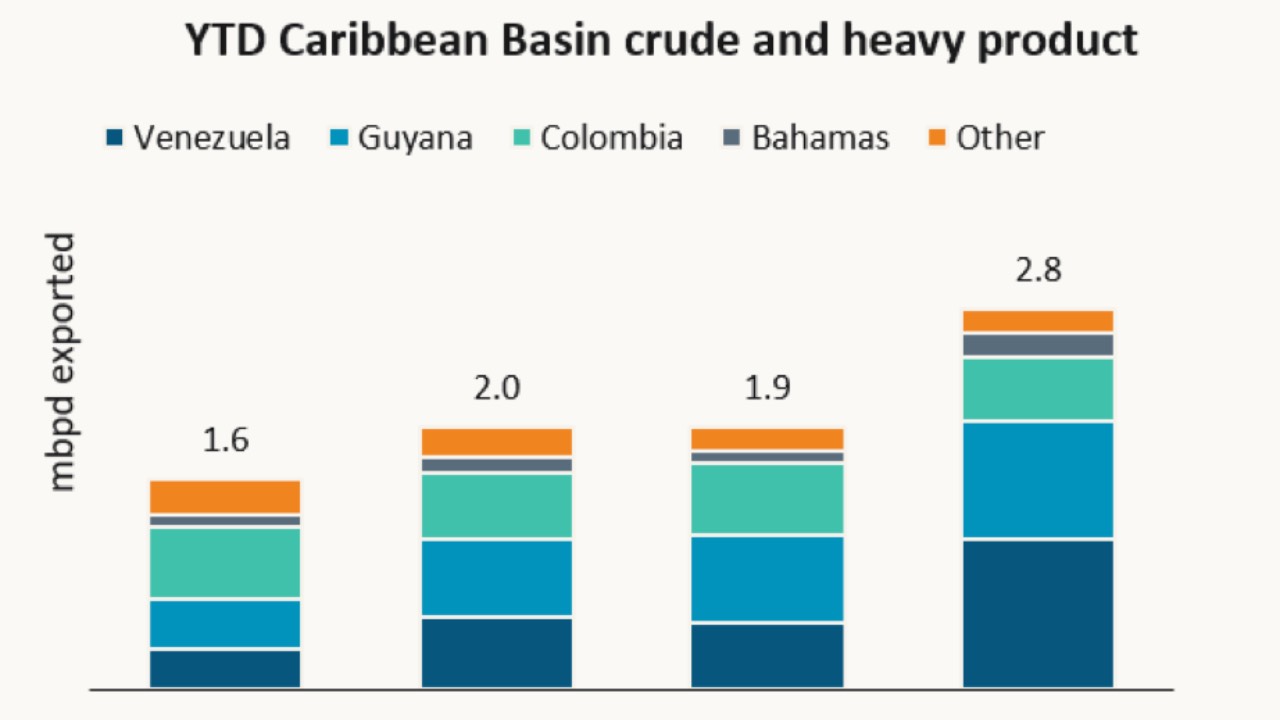
BIMCO Shipping Number of the Week
Caribbean Basin crude oil and heavy product exports jump 45% “Seaborne exports of crude oil and heavy products from the Caribbean Basin have…

xclusiv S&P Report 21th September 2026
Pls find below the [xclusiv] S&P Report 21th September 2026 [xclusiv] 2026_09_21
Marine insurance supply remains stable as geopolitical and technical changes reshape the market, says IUMI President
The global marine insurance market remains in a stable position, with premium growth strongly supported by a weak USD in hull and cargo. Meanwhile…
Subscribe to our newsletter!
if you dont want to swim alone in the ocean of news, sign up for the newsletter, and you will receive daily all the important news of world shipping!
