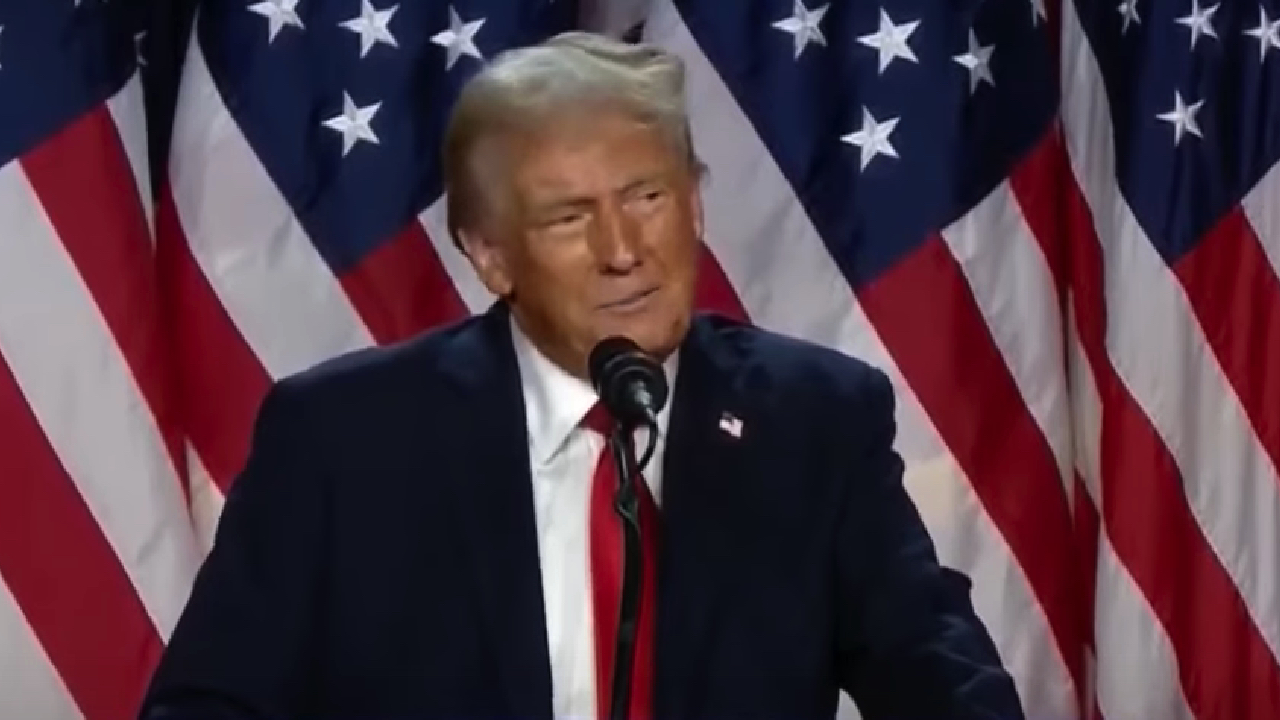

Former President Donald Trump’s return to the White House could mean tougher enforcement of U.S. oil sanctions against Iran, potentially trimming global supplies, but his administration could struggle to get China, Iran’s top crude customer, to cooperate, analysts said.
Cracking down on OPEC-member Iran would support global oil prices, but the effect could also be offset by other Trump policies, from measures to expand domestic drilling, the imposition of tariffs on China that could depress economic activity, or an easing of relations with Russia that could unfetter its sanctioned crude shipments.
“Trump cuts both ways for oil prices,” said Clay Seigle, an independent energy strategist in Houston, adding that tariffs and trade wars would pull down U.S. gross domestic product and oil demand with it.
Iranian crude exports have shot to the highest level in years in 2024 as the country found ways to sidestep punitive sanctions targeting its revenue. Trump re-imposed the sanctions during his first presidency after he unilaterally withdrew the U.S. from a Western nuclear deal with Tehran in 2018.
Trump, a Republican, has said during his campaign that President Joe Biden’s policy of not rigorously enforcing oil-export sanctions has weakened Washington and emboldened Tehran, allowing it to sell oil, accumulate cash and expand its nuclear pursuits and influence through armed militias.
Jesse Jones, head of North American upstream at Energy Aspects said a Trump administration return to a maximum-pressure campaign on Iran could lead to a 1-million-barrel-per-day decrease in Iranian crude exports.
“That could be done relatively quickly without additional legislation, just by enforcing sanctions that are already on the books,” he said.
ClearView Energy Partners, a research group, has estimated some 500,000 bpd to 900,000 bpd, could be taken out of the market.
‘MILLION-DOLLAR QUESTION’
But a tougher stance on Iran also means cracking down on China, which does not recognize U.S. sanctions and is the Islamic Republic’s biggest oil customer.
“The million-dollar question is how much significant financial pressure you’re willing to put on Chinese financial institutions,” said Richard Nephew, a Columbia University professor and a former U.S. deputy special envoy for Iran.
Nephew said China could retaliate by strengthening work in the BRICS club of emerging economies, consisting of Brazil, Russia, India, China, South Africa and others, including by reducing reliance on the dollar in deals in oil and other goods.
Trump spoke at the New York Economic Club in September about the risks to dollar dominance that sanctions can bring.
“I was a user of sanctions, but I put them on and take them off as quickly as possible, because ultimately it kills your dollar, and it kills everything the dollar represents,” Trump said at the time.
“So I use sanctions very powerfully against countries that deserve it, and then I take them off, because, look, you’re losing Iran. You’re losing Russia,” he said.
China and Iran have built a trading system that uses mostly Chinese yuan and a network of middlemen, avoiding the dollar and exposure to U.S. regulators, making sanctions enforcement tough.
Seigle said cracking down on Iran could be bullish for oil prices. But the impact could be muted especially if Trump follows through on campaign promises to impose blanket tariffs on U.S. imports to protect domestic manufacturing, including 60% levies on anything from China.
“A trade war that pulls down GDP would reduce oil demand and take prices lower,” Seigle said.
Ed Hirs, energy fellow at the University of Houston, said Trump was also likely to ease sanctions on Russia’s energy industry, imposed by Western countries as punishment over Russia’s invasion of Ukraine. Trump promised during his campaign to “settle” the war in Ukraine before taking office in January.
“I would expect Trump would relieve all sanctions on Russian oil,” Hirs said.
Western sanctions on Russian oil are not intended to halt flows, but only to limit Russia’s revenue from exports to $60 a barrel for those sales using Western maritime services. The sanctions have shifted the market for Russian oil off Europe to China and India, adding costs for Russia.
Source: Reuters reported by Timothy Gardner in Washington, Georgina McCartney and Arathy Somasekhar in Houston, Liz Hampton in Denver, written by Richard Valdmanis and Timothy Gardner and edited by Anna Driver and Rod Nickel



Related News.

ISLAND OIL: Unveiling of the Sculpture “Cyprus’s Journey Through the Ages” in Protaras – A Tribute and Landmark to Cyprus’s Historical Memory and Cultural Heritage
In a modest ceremony marked by a moving atmosphere, the sculpture “Cyprus’s Journey Through the Ages”, created by acclaimed Cypriot sculptor…

World Maritime Day 2026 from Policy to Practice – powering Maritime Excellence
Global regulations will deliver safer, more resilient shipping when they are implemented worldwide. The international maritime community marks…

Diana Shipping announces Time Charter Contract for m/v DSI Polaris with Dai An Ocean Shipping
Diana Shipping , a global shipping company specializing in the ownership and bareboat charter-in of dry bulk vessels, announced that, through a…

Chief Economists Expect Global Economy to Stabilize, but Fiscal Constraints, Rising Living Costs and AI Investment Uncertainty Threaten Growth
The global economy is stabilizing, but the fiscal support that cushioned successive shocks since 2020 is unlikely to play the same role in the year…

V. welcomes its new graduate cohort as programme expands across the group
Twelve graduates from nine nationalities join 11th year of V.’s expanded international management programme. V., the global ship manager and marine…

From Policy to Practice: Why Seafarers Are the Key to Maritime Excellence
The shipping industry is no stranger to regulation. Seafarers and ship operators work within a vast framework of international conventions, national…

Intermodal Report – Week 38 2026
Please find below the Intermodal market report for week 38 2026. Intermodal Report Week 38 2026 Market Insight By Nikos Tagoulis, Head of…

Allied – Weekly Market Review – Week 38
Please find below the Allied Weekly Report for Week 38 | 2026 ALLIED - Weekly Market Report- Week 38

Record year on the Northeast Passage but Arctic shipping remains very limited
In 2025, a record 103 transit voyages were made via the Northeast Passage. However, this is still equivalent to only around a day and a half of…

[xclusiv] S&P Report 21th September 2026
Please find below the [xclusiv] latest Weekly S&P Report [xclusiv] 2026_09_21 Market Commentary: VLCCs: Freight Boom Reprices the Fleet The VLCC…
Subscribe to our newsletter!
if you dont want to swim alone in the ocean of news, sign up for the newsletter, and you will receive daily all the important news of world shipping!
