

At one of the world’s biggest bulk export ports in Western Australia, shippers safely completed the first transfer of ammonia from one vessel to another last month, a key test for its adoption as a marine fuel in the push for cleaner energy.
The first cargo ships that would be powered by ammonia are set to enter service in 2026, one of several alternatives the industry is tapping to shrink a carbon footprint accounting for nearly 3% of global emissions.
But ammonia faces major cost and safety hurdles as a shipping fuel compared to others, such as liquefied natural gas (LNG), methanol, and biofuels.
Ammonia’s appeal is that it is carbon free, and would be a zero emission fuel if made from hydrogen produced with renewable electricity.
But safety is a big challenge for the product typically used for fertilisers and explosives.
“Currently the lack of regulation, experience in use and toxicity of ammonia on board ships constitute major safety deterrents,” said Laure Baratgin, head of commercial operations at mining giant Rio Tinto RIO.L.
Top global iron ore producer Rio is the biggest exporter at Dampier, where the ammonia transfer trial was run. It operates dual-fuelled bulk ships that run on traditional marine fuel or LNG, but has yet to charter or order ammonia-fuelled vessels.
“Pending our confidence and that of our partners, industry, and communities, that the risks are sufficiently controlled, we will look to charter ammonia dual-fuel vessels, the specific timing of which remains uncertain,” she told Reuters.
Other shippers are also hesitant. Globally, only 25 ammonia dual-fuel ships have been ordered as of 2024, trailing a fleet of at least 722 LNG-fuelled ships and 62 methanol-fuelled ships as of the same year which includes orders and ships that are already in operation.
Only two smaller ammonia-fuelled vessels are in service now, including a tugboat in Japan.
DANGEROUS PROPERTIES
Refuelling ships, or bunkering, poses particular challenges with ammonia, which can cause acute poisoning and damage to the skin, eyes, and respiratory tract.
“The greatest risk is leakage during bunkering operations,” in addition to leakage from fuel tanks, said Yoshikazu Urushitani, general manager in the marine fuel division at Mitsui OSK Lines 9104.T, which is designing an ammonia-powered bulk carrier.
A study by the Global Centre for Maritime Decarbonisation (GCMD) identified 400 risks associated with ammonia bunkering, which it says can be mitigated with measures such as emergency-release couplings to shut systems when a leak is detected.
The organisation is developing a detailed emergency response plan for ammonia spills, which are harder to contain than oil spills.
“For oil, you see it – it stays there and it spreads out in water. But ammonia dissipates in air,” said Lynn Loo, chief executive officer of GCMD.
The industry will need to set guidelines for seafarers to safely manage the fuel, said Takahiro Rokuroda, general manager at NYK’s Next Generation Fuel Business Group.
Singapore, the world’s largest ship refuelling hub, has shortlisted companies to study the viability of ammonia for power generation and bunkering and is developing ammonia bunkering standards.
PROHIBITIVE COSTS
Costs will have to drop sharply to make ammonia competitive in bunkering.
Powering ships with ammonia can cost two to four times more than with conventional fuels, industry figures show, due to limited supply for the marine sector and an energy density about two-and-a-half times lower than traditional fuel.
“If you want to travel the same distance, you either have to carry about two and a half times that amount of fuel, or you have to bunker more frequently so that you have enough fuel to be able to make that trip,” said Loo.
Ammonia engines also need extra maintenance as the fuel is corrosive, engine manufacturer Wartsila WRT1V.HE says.
Still, the American Bureau of Shipping forecasts ammonia will account for about one-third of bunker fuelling by 2050.
“We certainly won’t bring any product to market until we are 100% certain that all risks have been duly managed,” said Kenny MacLean, COO at bunker fuel supplier Peninsula.
Source: Reuters reported by Jeslyn Lerh in Singapore; Additional reporting by Katya Golubkova in Tokyo and edited by Tony Munroe and Sonali Paul



Related News.

ISLAND OIL: Unveiling of the Sculpture “Cyprus’s Journey Through the Ages” in Protaras – A Tribute and Landmark to Cyprus’s Historical Memory and Cultural Heritage
In a modest ceremony marked by a moving atmosphere, the sculpture “Cyprus’s Journey Through the Ages”, created by acclaimed Cypriot sculptor…
World Maritime Day 2026 from Policy to Practice – powering Maritime Excellence
Global regulations will deliver safer, more resilient shipping when they are implemented worldwide. The international maritime community marks…

Diana Shipping announces Time Charter Contract for m/v DSI Polaris with Dai An Ocean Shipping
Diana Shipping , a global shipping company specializing in the ownership and bareboat charter-in of dry bulk vessels, announced that, through a…

Chief Economists Expect Global Economy to Stabilize, but Fiscal Constraints, Rising Living Costs and AI Investment Uncertainty Threaten Growth
The global economy is stabilizing, but the fiscal support that cushioned successive shocks since 2020 is unlikely to play the same role in the year…
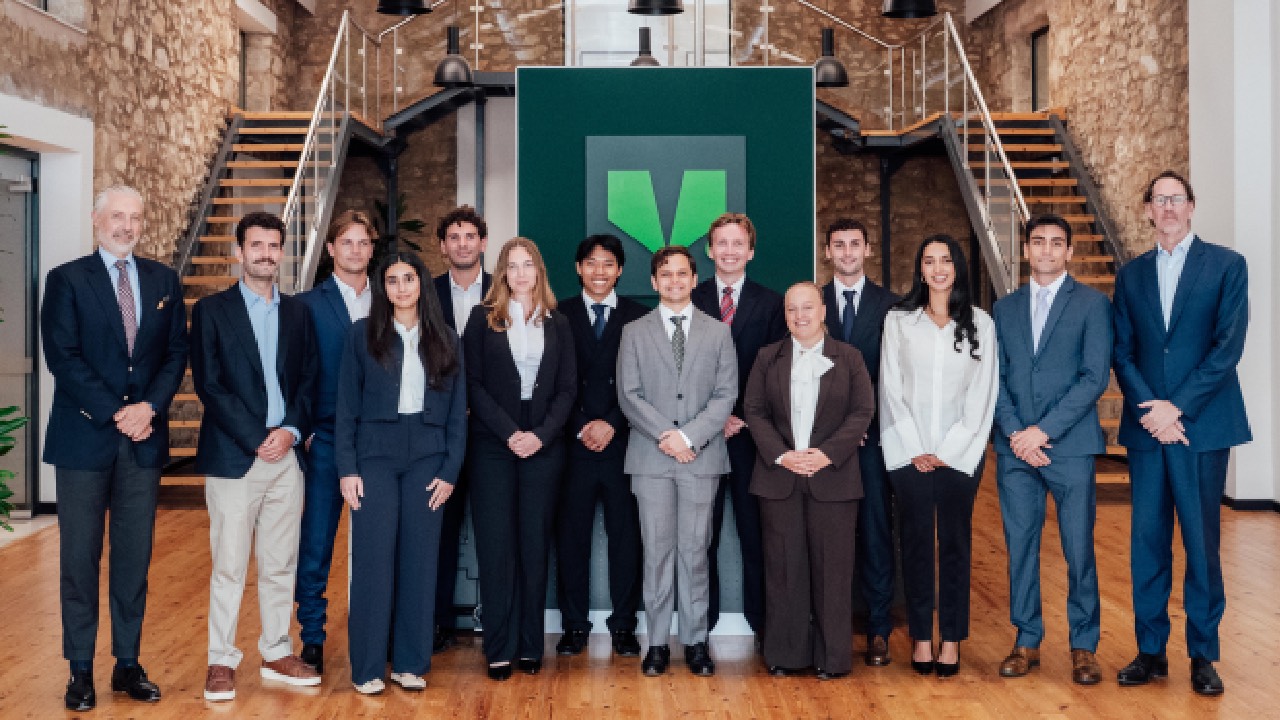
V. welcomes its new graduate cohort as programme expands across the group
Twelve graduates from nine nationalities join 11th year of V.’s expanded international management programme. V., the global ship manager and marine…

From Policy to Practice: Why Seafarers Are the Key to Maritime Excellence
The shipping industry is no stranger to regulation. Seafarers and ship operators work within a vast framework of international conventions, national…

Intermodal Report – Week 38 2026
Please find below the Intermodal market report for week 38 2026. Intermodal Report Week 38 2026 Market Insight By Nikos Tagoulis, Head of…

Allied – Weekly Market Review – Week 38
Please find below the Allied Weekly Report for Week 38 | 2026 ALLIED - Weekly Market Report- Week 38

Record year on the Northeast Passage but Arctic shipping remains very limited
In 2025, a record 103 transit voyages were made via the Northeast Passage. However, this is still equivalent to only around a day and a half of…

[xclusiv] S&P Report 21th September 2026
Please find below the [xclusiv] latest Weekly S&P Report [xclusiv] 2026_09_21 Market Commentary: VLCCs: Freight Boom Reprices the Fleet The VLCC…
Subscribe to our newsletter!
if you dont want to swim alone in the ocean of news, sign up for the newsletter, and you will receive daily all the important news of world shipping!
