

LPG shipping has been facing several headwinds, including an oversupplied market and muted growth in the LPG and olefin trades. However, new ordering in 2024 has maintained its momentum.
Despite the concerns of oversupply from 2027, the expected increase in clean ammonia trade will keep new ordering high. This momentum in new ordering will continue in 2025 as replacement orders continue from shipowners looking for dual-fuel ships amid increasing regulation stringency. Some owners may wait for the ammonia engines to be commercially proven before opting for replacement tonnage.
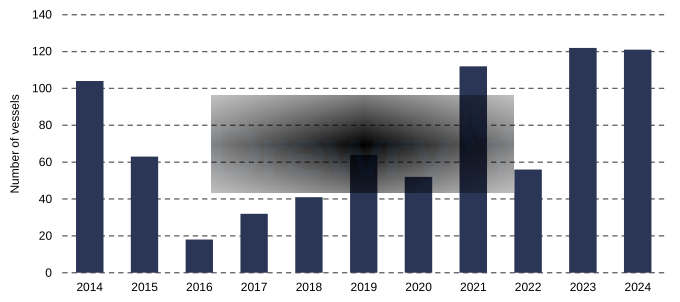
The newbuilding activity has been expanding with 121 orders placed in 2024 so far compared to 122 vessels ordered in 2023. The surge is primarily driven by the interest in Very large ammonia carriers (VLACs) and Very large ethane carriers (VLECs), while other segments also report record orders. Drewry has analysed key factors, which have supported this uptick in orders.
Figure 1: New ordering – historical: 2024 the highest in a decade
Source: Drewry Maritime Research, Clarkson’s Research
Ammonia frenzy
Interest in ammonia transportation as an emerging green fuel is boosting investments in the sector. Although ammonia is already transported through LPG carriers, the volume is low, limiting the trade to the smaller large gas carriers (LGCs, 50-70 kcbm) and Medium gas carriers (MGCs, 30-50k).
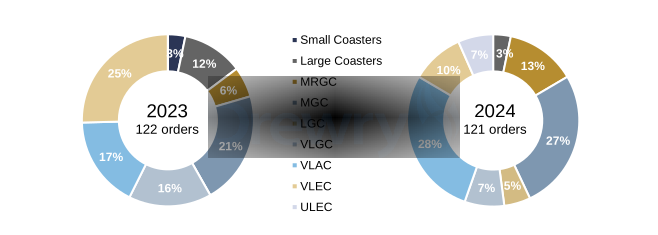
While over 200+ projects for clean ammonia are in the planning stages, the development has been slow. Meanwhile, the uptake of clean ammonia in the existing import markets will require subsidies and incentives. Therefore, we expect the clean ammonia trade to reach 8-10 million tonnes by 2029. Despite the early impediments, the future looks bright for this trade, fuelling orders, especially for the larger vessels – VLACs. So far, 34 VLACs were ordered compared to only nine VLGC orders in 2024. There are now 55 VLACs on the orderbook, while the VLGC tally is 40.
The newbuild price for a VLAC is around $120-125 million, which is quite high, deterring shipowners. However, owners are opting for costly ammonia carriers over VLGCs to reach the decarbonisation goal.
Figure 2: New orders composition: 2023 vs 2024: VLAC and MGC the top segments
Source: Drewry Maritime Research, Clarksons WFR
The interest in MGC gains traction
MGC orders have skyrocketed this year and stood at a record high of 32 orders so far; just like VLACs, the momentum from 2023 has rolled into 2024. MGCs offer versatility to shipowners as they can be used for LPG, ammonia and olefins/ethane (specialised carriers). The segment has an orderbook with 63 vessels, accounting for 45% of the current fleet.
MGCs are rapidly adopting dual-fuel propulsion, with 83% of the orderbook comprising dual-fuel engines. LPG as the alternative marine fuel remains the favourite but the interest in ammonia is also picking up, with 13 vessels on the orderbook.
As clean ammonia volumes will be low until the end of the decade, MGCs are touted as the first vessels to be used. Meanwhile, a higher ROI and versatility than VLGCs is stoking orders for MGCs.
The rare LGC orders
After nearly a decade, the first LGC order was recorded in 2024, with Eastern Pacific ordering four LGC carriers. The LGC segment is used in niche areas and for long-haul ammonia transportation. With only 21 vessels in service, the segment is waning. The Eastern Pacific order is expected to be a replacement tonnage as the company has three 15-year-old LGCs already in service. Moreover, Vietnam’s Asia Pacific Shipping followed up with a two-vessel order, taking the tally to six vessels.
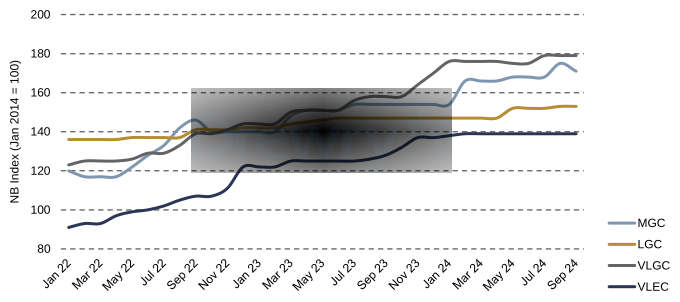
Although we do not expect a surge in LGC orders, a few may materialise with potential for clean ammonia trade and interest from smaller shipowners who might opt for the much higher priced VLGC/VLAC.
Figure 3: Drewry LPG newbuild price index showcasing modest rise in LGC prices compared to VLGC and MGC
Source: Drewry Maritime Research
Initiation of ULECs
Orders for VLECs soared, with 31 ordered in 2023 compared to 12 until 3Q24. Meanwhile, ethane cracker operators like China’s Satellite Chemicals have upgraded the vessel sizes by ordering six Ultra-large ethane carriers (ULECs), followed by another two through Eastern Pacific Shipping, all on long-term charters. The orderbook-to-ratio for the ethane carriers stands at a whopping 220%, with 60 vessels on order against 27 in service.
The rise in demand for ethane as a cheaper feedstock for petchem plants has supported new orders. Higher ethane production, associated with record-high natural gas processing in the US, has increased the economic benefits of using the commodity for cracking. Ethane cracker plants have emerged in many countries and are operational in India, China and Europe, with more crackers in the pipeline. Furthermore, weaker petchem margins with volatile LPG and naphtha prices also compel operators to convert their existing crackers to ethane.
Source: Drewry



Related News.

ISLAND OIL: Unveiling of the Sculpture “Cyprus’s Journey Through the Ages” in Protaras – A Tribute and Landmark to Cyprus’s Historical Memory and Cultural Heritage
In a modest ceremony marked by a moving atmosphere, the sculpture “Cyprus’s Journey Through the Ages”, created by acclaimed Cypriot sculptor…

World Maritime Day 2026 from Policy to Practice – powering Maritime Excellence
Global regulations will deliver safer, more resilient shipping when they are implemented worldwide. The international maritime community marks…

Diana Shipping announces Time Charter Contract for m/v DSI Polaris with Dai An Ocean Shipping
Diana Shipping , a global shipping company specializing in the ownership and bareboat charter-in of dry bulk vessels, announced that, through a…

Chief Economists Expect Global Economy to Stabilize, but Fiscal Constraints, Rising Living Costs and AI Investment Uncertainty Threaten Growth
The global economy is stabilizing, but the fiscal support that cushioned successive shocks since 2020 is unlikely to play the same role in the year…

V. welcomes its new graduate cohort as programme expands across the group
Twelve graduates from nine nationalities join 11th year of V.’s expanded international management programme. V., the global ship manager and marine…

From Policy to Practice: Why Seafarers Are the Key to Maritime Excellence
The shipping industry is no stranger to regulation. Seafarers and ship operators work within a vast framework of international conventions, national…

Intermodal Report – Week 38 2026
Please find below the Intermodal market report for week 38 2026. Intermodal Report Week 38 2026 Market Insight By Nikos Tagoulis, Head of…

Allied – Weekly Market Review – Week 38
Please find below the Allied Weekly Report for Week 38 | 2026 ALLIED - Weekly Market Report- Week 38

Record year on the Northeast Passage but Arctic shipping remains very limited
In 2025, a record 103 transit voyages were made via the Northeast Passage. However, this is still equivalent to only around a day and a half of…

[xclusiv] S&P Report 21th September 2026
Please find below the [xclusiv] latest Weekly S&P Report [xclusiv] 2026_09_21 Market Commentary: VLCCs: Freight Boom Reprices the Fleet The VLCC…
Subscribe to our newsletter!
if you dont want to swim alone in the ocean of news, sign up for the newsletter, and you will receive daily all the important news of world shipping!
