What lessons can be learnt from LNG’s rise and fall in Norway and where are the sweet spots for adoption of zero-emission


New research from UCL Shipping and Oceans Research Group highlights the influence of political agendas, regulatory frameworks, industry champions and public perception when it comes to the adoption of zero emission marine fuels and decarbonisation of maritime shipping. The analysis, in the form of two academic papers, provides new insights on how good policy design can support adoption of zero carbon fuels and outlines some of the possible best locations for development of niches for early adoption of such fuels.
The research focusing on the UK provides interesting insights on how a local context can play an important role in shaping adoption dynamics of hydrogen and ammonia, whilst research focusing on Norwegian LNG adoption dynamics offers timely insights on the challenges and strategies which can support the successful adoption of new fuels and emphasises how socio-technical factors are crucial for understanding mechanisms of alternative fuel adoption. Even though LNG is not a zero-carbon fuel, it offers valuable lessons of national adoption strategies that are particularly relevant for zero carbon marine fuel adoption.
Dr Domagoj Baresic, Research Fellow at UCL Energy Institute and lead author said: “Everyone knows shipping is a global industry, operating across national boundaries. However, for a zero-carbon fuel transition to be successful, the industry and policymakers should ensure that unique local circumstances are closely considered, since tapping into local knowledge, and local opportunities in a bespoke manner can support faster, more successful and geographical diverse adoption of zero-emission fuels.”
Whilst progress is ‘on track’ for delivering an ambitious package of policies for reducing GHG emissions from international shipping at the IMO, the urgency with which the maritime shipping industry needs to decarbonize, and as part of that process adopt zero carbon marine fuels, requires action from all stakeholders in this critical and quickly closing emergence phase. The recently released Climate Action in Shipping report, also led by Dr Domagoj Baresic of UCL Energy Institute, shows that shipping is off track to meet 5% zero-emission fuel target by 2030.
Dr Nishatabbas Rehmatulla, Principal Research Fellow at UCL and co-author said: “These two pieces of research highlight the urgent need for action at the national level and that the transition to zero emission shipping is not just about the IMO. Strong national government targets, policies, incentives, and support mechanisms can create sweet spots to drive the adoption of scalable zero emission fuels”.
The Norwegian government played a proactive role in promoting LNG adoption through various measures such as supporting R&D projects focused on LNG technologies and bunkering infrastructure, providing tax breaks for LNG and imposing taxes on fuels with high sulphur emissions, mandating new ferry tenders to utilize natural gas propulsion, thereby creating a significant market for LNG-fuelled vessels and establishing the NOx Fund that provided financial support for shipowners who chose to adopt LNG.
Socio-technical indicators used to assess the suitability of different UK ports for hydrogen and ammonia adoption, showed that existing infrastructure, such as the presence of hydrogen or ammonia production facilities, storage capabilities, and bunkering infrastructure, local energy demand characteristics such as proximity to sources of renewable energy, potential for local hydrogen/ammonia use (e.g., district heating, public transport), and grid connectivity are important indicators of where initial adoption of hydrogen and ammonia might occur. Other factors included overlaps with shipping niches such as the type of vessels operating in the area e.g. ferries or short-sea shipping and local policies and financial support were also important. Preliminary findings suggest that locations like Orkney (Scotland), the Solent-Isle of Wight region (south of England), and Felixstowe-Harwich (east of England) demonstrate strong potential as early adopters based on the above factors.
Source: UCL Energy Institute



Related News.

ISLAND OIL: Unveiling of the Sculpture “Cyprus’s Journey Through the Ages” in Protaras – A Tribute and Landmark to Cyprus’s Historical Memory and Cultural Heritage
In a modest ceremony marked by a moving atmosphere, the sculpture “Cyprus’s Journey Through the Ages”, created by acclaimed Cypriot sculptor…
World Maritime Day 2026 from Policy to Practice – powering Maritime Excellence
Global regulations will deliver safer, more resilient shipping when they are implemented worldwide. The international maritime community marks…

Diana Shipping announces Time Charter Contract for m/v DSI Polaris with Dai An Ocean Shipping
Diana Shipping , a global shipping company specializing in the ownership and bareboat charter-in of dry bulk vessels, announced that, through a…

Chief Economists Expect Global Economy to Stabilize, but Fiscal Constraints, Rising Living Costs and AI Investment Uncertainty Threaten Growth
The global economy is stabilizing, but the fiscal support that cushioned successive shocks since 2020 is unlikely to play the same role in the year…
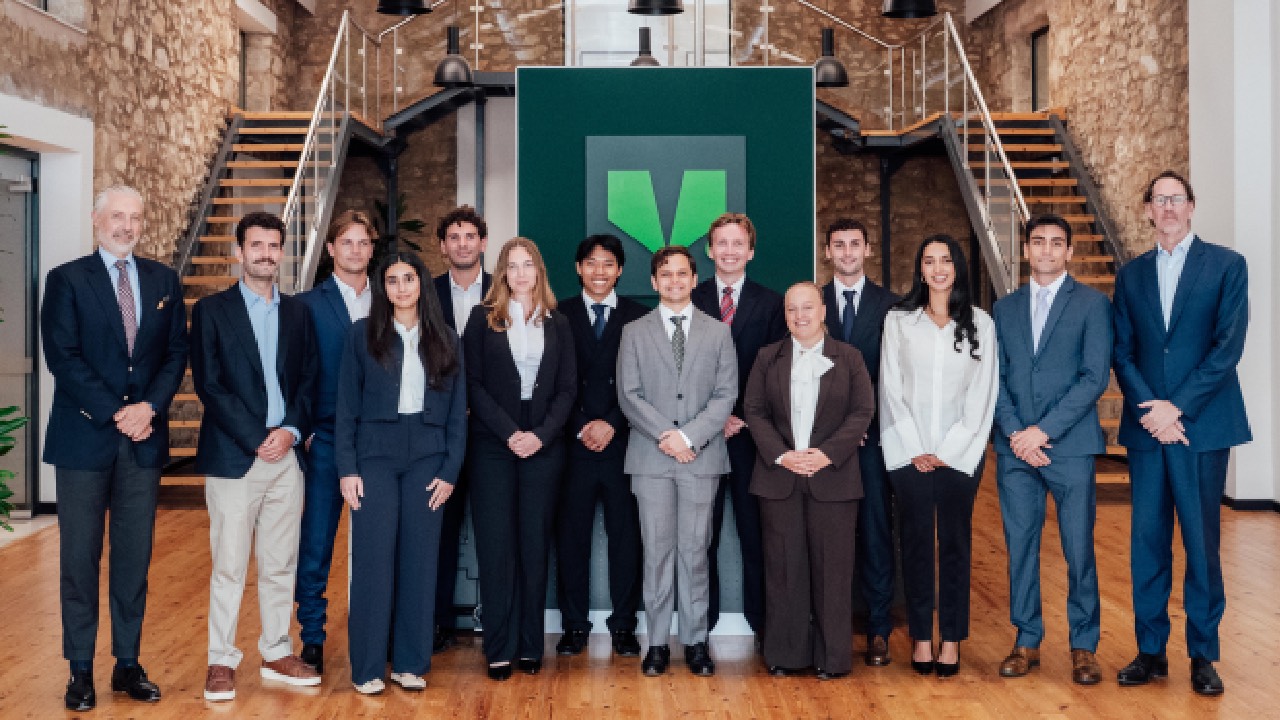
V. welcomes its new graduate cohort as programme expands across the group
Twelve graduates from nine nationalities join 11th year of V.’s expanded international management programme. V., the global ship manager and marine…

From Policy to Practice: Why Seafarers Are the Key to Maritime Excellence
The shipping industry is no stranger to regulation. Seafarers and ship operators work within a vast framework of international conventions, national…

Intermodal Report – Week 38 2026
Please find below the Intermodal market report for week 38 2026. Intermodal Report Week 38 2026 Market Insight By Nikos Tagoulis, Head of…

Allied – Weekly Market Review – Week 38
Please find below the Allied Weekly Report for Week 38 | 2026 ALLIED - Weekly Market Report- Week 38

Record year on the Northeast Passage but Arctic shipping remains very limited
In 2025, a record 103 transit voyages were made via the Northeast Passage. However, this is still equivalent to only around a day and a half of…

[xclusiv] S&P Report 21th September 2026
Please find below the [xclusiv] latest Weekly S&P Report [xclusiv] 2026_09_21 Market Commentary: VLCCs: Freight Boom Reprices the Fleet The VLCC…
Subscribe to our newsletter!
if you dont want to swim alone in the ocean of news, sign up for the newsletter, and you will receive daily all the important news of world shipping!
