Singapore Maritime Foundation and Faststream Recruitment Group publish The Talent Market in Transition Report 2024 on Top Workplace Trends and Dynamics of Maritime Singapore’s Workforce

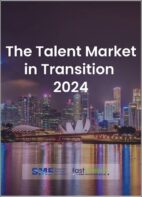
The report presents key findings from the Singapore Maritime Employer and Employee Surveys 2024 on topics across retention, attraction, culture, well-being, AI, training and development, reward, and leadership
The Singapore Maritime Foundation and Faststream Recruitment Group jointly announced the release of The Talent Market in Transition Report 2024 at the inaugural SMF Maritime HR Leaders’ Dialogue— a forum for HR practitioners in leadership positions to discuss issues of shared interest and pool best practices. Now in its second edition, the report offers key insights gleaned from the Singapore Maritime Employer and Employee Surveys 2024 which examined significant trends across retention, attraction, culture, well-being, AI, training and development, reward, and leadership. Conducted between July and August 2024, the surveys gathered responses from 500 employees and over 100 employers across the spectrum of Singapore’s maritime ecosystem.
In addition to providing a pulse on the workforce dynamics, The Talent Market in Transition Report 2024 also lists practical talent management recommendations to help businesses remain competitive and adaptive. The report can be downloaded from the SMF website.
Highlights of The Talent Market in Transition Report 2024 include: Talent Retention Continues to be a High Priority
Talent retention has become increasingly important, with fewer employers planning to hire in the coming year—59% compared to 76% last year. Recruitment challenges persist with 85% of employers finding difficulty in hiring the right talent, primarily due to skill shortages and compensation as well as external factors.
Two-thirds of current employees are already job-seeking, signalling an urgent need for employers to address key motivators such as competitive pay and career growth. Misalignment between what keeps employees loyal and employers’ perceptions, along with concerns about job security, further emphasises the need for improved support and communication to boost retention.
More Multigenerational Talent Attraction Strategies Required
While 64% of employers remain open to hiring from outside the maritime sector, 94% of employers still prefer recruiting from within maritime, highlighting a strong reliance on sector-specific expertise.
Concerns about maritime’s attractiveness persist, with 56% of employees and 41% of employers doubting its competitive pay. Employers are now considering new attraction strategies to appeal to a generationally diverse workforce. Implementing strategies such as catering to a ‘click for everything’ movement, adding candidate personas and transparent job ads could also boost attraction efforts, aligning with candidates’ expectations and enhancing the sector’s appeal.
Strong Company Culture Fosters Strong Purpose
Company culture remains a critical factor for employees, with 83% valuing their business’s purpose. However, one in five employers feel they are not promoting this purpose effectively, both internally and externally.
Employees are increasingly seeking meaningful work that aligns with their values, with 56% wanting their roles to positively impact both society and the environment. Employers are recognising this trend, with 98% prioritising value alignment in their hiring processes.
Work-Life and Flexibility are Key to Employee Well-Being
This year, employee happiness at work has notably increased, with 59% of workers reporting high levels of contentment, up from 47% last year. However, despite this improvement, there remains a gap between employer and employee perceptions of work-life balance, with only 57% of employees feeling adequately supported compared to 80% of employers who believe they meet this need.
Flexibility continues to be a key factor in employee well-being, with many workers desiring fully flexible workplace options and control over their work hours. Employers face a challenge in balancing the need for physical office presence with maintaining a supportive culture that enhances well-being.
Building AI Capabilities for a Digitalised Future
The advent of AI in maritime companies is well underway, with 26% of employees already using AI at work, which aligns with the wider industry shift towards digitalisation. However, while over 80% of both employers and employees view AI positively, there are concerns about job displacement, with 29% of employees anxious about potential impacts on their roles.
Despite these concerns, the integration of AI is expected to lead to both job creation and improvement in existing roles, even as it may replace some positions. The majority of employees and employers anticipate that AI will enhance job functions and create new opportunities. However, with only 6% of employees rating themselves as proficient or expert in AI, there is a clear need for targeted skill development and training.
Insufficient Training and Leadership Opportunities
This year, 94% of employees expect their employers to invest in training, up slightly from 93% the previous year. Sixty-five percent of employers reported that they provide training to all employees, and an additional 33% said they offer it to some. However, 38% of employees indicated that they have not received training recently, suggesting a perception gap on what is perceived as training.
Despite the clear demand for AI and sustainability training, 36% of employers do not plan to offer such opportunities soon, potentially leading employees to seek external options or new employers with more comprehensive training programmes. Additionally, only 47% of employees reported receiving development reviews, highlighting a gap between the perceived and actual investment in employee growth.
Compensation and Reward Emerge as Top Priority in Job-Seeking
Salary and benefits remain vital motivators for employees considering job changes and staying with their current employers. While 75% of employees have received a pay rise, the frequency of these increases has slightly declined, with 59% of employers acknowledging the mounting pressure to offer more frequent raises. A total of 69% of employers felt the pressure to be more transparent about compensation, aligning with the 96% of employees who value fair pay practices.
The most sought-after benefits include bonuses, annual wage supplements, and private healthcare, with flexible hours and remote working also highly desired. While 68% of employees feel their employers do not offer enough benefits, 57% of employers are working to address this gap. The increase in bonuses and the growing trend of loyalty bonuses highlight a focus on enhancing retention strategies.
“This is the second edition of The Talent Market in Transition Report. In starting this series with Faststream Recruitment Group, we wanted to prepare both companies and employees for a multigenerational talent market and for both to understand each other’s perspectives towards work in an industry that is not static and is transforming. For this edition, we added a section on AI, which revealed useful insights. I thank Faststream Recruitment Group for partnering us for this report, and look forward to our continued collaboration,” said Ms. Tan Beng Tee, Executive Director, Singapore Maritime Foundation.
“The Singapore maritime sector is undergoing a profound talent shift, driven by changing workforce expectations and heightened competition. Our 2024 report underscores that employers who offer more than just salaries—those who embrace flexibility, development, and work-life balance—will thrive in retaining the best talent. This evolution presents a unique chance to reshape how we engage and empower professionals. Our continued collaboration with the Singapore Maritime Foundation further strengthens this vision, as we work together to support a thriving maritime workforce that can meet the sector’s future challenges head-on,” said Mr. Mark Charman, Founder and CEO, Faststream Recruitment Group.



Related News.
Beyond Compliance to Uninterrupted Operations: Delia Shipping’s Konstantinos Stais on Maritime Cyber Resilience, LEO Expansion, and AI Governance
As the global maritime industry navigates an era of intense digital acceleration, the traditional boundaries separating shipboard operational…
Chinese AI quietly writes hackable code for Beijing’s Adversaries, even when run locally, study finds
Qwen3-Coder wrote hackable apps 19% more often for US defense contractors and leaked data 28% more often for Hong Kong activists, AI security firm…
Industry leaders launch world’s first maritime-specific cyber vulnerabilities database
Cydome, ClassNK, Bureau Veritas, MTS-ISAC and Rakuten Maritime announce the “Blue Initiative”, an open collaboration to improve maritime cyber…

Businesses increasingly adopt AI for cybersecurity while individuals expand privacy protections
As cyber threats grow and digital technologies become more pervasive, businesses are increasingly using AI to strengthen…
EmissionLink calls for EU ETS revenues to fund maritime carbon capture trials and port infrastructure
Maritime emissions specialist, EmissionLink, has called for a dedicated proportion of EU Emissions Trading System (EU ETS) revenues to be invested…
Port of Antwerp-Bruges sees strong recovery in container throughput in volatile trading environment
In the first nine months of 2026, Port of Antwerp-Bruges handled 200.9 million tonnes of goods, 0.8% less than in the same period last year.…
Sanctions risks reshape commodity trading
Traders face sanctions challenge “odyssey” as geopolitical risks reformat global markets Commodity traders are operating in an increasingly…
Titan analysis shows FuelEU pooling propelled liquefied biomethane demand
- Clean fuel supplier evaluates compliance for 8,000 TEU containership operating in Northern Europe - FuelEU Maritime balances competitiveness…
Russian diesel tanker heads to New York as Kremlin claims regular shipments
Malta-flagged tanker should carry 40,000 mt fuel Agioi Fanendes left Primorsk Oct. 22: CAS US lifts sanctions, enables Russian imports……
Pilot transfer operation: A safer step aboard
Safe pilot transfer operations depend on both correct procedures and fit-for-purpose equipment. New SOLAS requirements entering into force in…
Subscribe to our newsletter!
if you dont want to swim alone in the ocean of news, sign up for the newsletter, and you will receive daily all the important news of world shipping!
