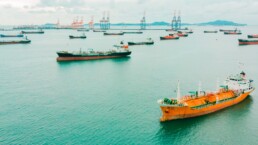

- The shipping and oil and gas industries have repeatedly publicly backed the IMO Net Zero Framework, in contrast to opposing governments’ claims that it would harm industry. Industry’s support has become more cautious since the October 2025 postponement.
- Despite top-line support, industry groups differ on key elements of the framework under negotiation, with oil and gas sector groups seeking accounting rules to lower counted emissions of fossil fuels that could promote LNG-powered ships. Weaker rules risk undermining the shipping industry’s long-term ability to decarbonize.
- Industry has used its support for the global Net Zero Framework to push back against regional regulations already in force, such as the EU ETS.New analysis from the global think tank InfluenceMap confirms, with detailed evidence, broad public support across the shipping and fuels sectors for a climate deal at the International Maritime Organization (IMO). However, differing advocacy positions on key components of the framework, including the carbon price, fuel standard, and rules for counting fuel emissions, threaten to weaken the proposed framework as negotiations resume this month, ahead of MEPC 85 (from 30 November) and the resumed adoption session on 4 December.
InfluenceMap identified high-level support for the IMO Net Zero Framework (NZF) from 13 companies and industry associations. Companies and industry associations alike have emphasized the need for a global framework to provide regulatory certainty for the industry’s energy transition, and reaffirmed their support for the IMO as global regulator. The International Chamber of Shipping (ICS), which represents over 80% of the world’s merchant fleet, and the World Shipping Council (WSC), which represents 90% of global liner shipping capacity, in 2025 urged governments to adopt the NZF as a “carefully balanced regulatory package”. European Shipowners (ECSA) has called global regulation essential “to deliver the energy transition of international shipping.” Other companies and associations that have shown support include CMA CGM, COSCO Shipping, Hapag-Lloyd, Moller-Maersk, Mediterranean Shipping Company, FuelsEurope, Ipieca, Renewable Fuels Association, Shell, and SEA-LNG.
However, in the past year, industry’s support for the Net-Zero Framework has become more cautious. Since adoption was postponed in October 2025, the main shipping associations, including the ICS and WSC, have avoided naming the framework, instead asking governments to “consider all options.” They have not proposed specific changes, but this softer messaging leaves room for a weaker deal. A significant risk remains that the IMO will deliver an agreement that undermines the global shipping industry’s ability to decarbonize, with less ambitious proposals creating a landing zone that moves the IMO away from the net-zero trajectory it agreed to in its 2023 GHG Strategy: net-zero emissions by or around 2050, with cuts of at least 20% by 2030 and 70% by 2040.
The NZF has two linked parts, a fuel standard that tightens over time and a carbon price on ships that miss it, both resting on life-cycle rules for counting each fuel’s emissions. InfluenceMap found engagement on these key elements from 4 industry associations: ICS, WSC, Ipieca and SEA-LNG. WSC supported all three elements. ICS broadly supported a carbon price but pushed for a weaker fuel standard ahead of the NZF’s approval in April 2025. Since then, Ipieca and SEA-LNG, representing oil and gas and LNG fuel interests, have advocated against strict GHG life-cycle rules.
Carbon Pricing: ICS and WSC both backed a carbon price, but ICS argued for a low and narrow one. Ahead of the NZF’s approval in April 2025, ICS proposed a carbon price of USD 10–20 per tonne of CO2e, charged only on emissions from burning fuel, not from producing it. WSC backed a carbon price set high enough to make clean fuels competitive, illustrated at USD 74 per tonne in 2030. Both organizations have had limited public positioning on the policy since April 2025.
Fuel Standard: WSC backed an ambitious standard; ICS argued for a weaker one. In 2024-25, ICS backed a fuel standard but proposed a 30% cut in fuel GHG intensity by 2040, less than half the 65% in the approved NZF. WSC supported the IMO’s fuel standard and its GHG intensity targets. Both organizations have had limited public positioning on the policy since April 2025. SEA-LNG opposed proposals that fuels should meet a minimum GHG threshold to count towards the standard.
Accounting Rules: Ipieca and SEA-LNG pushed to lower fossil fuels’ counted emissions; WSC backed stricter accounting. Since April 2025, Ipieca has advocated for replacing the IMO’s cautious default values for fossil fuels with averages and letting certificates stand in for clean power. SEA-LNG argued that LNG’s production emissions are lower than regulators assume. Both would make it easier for LNG-powered ships to comply.
The sharpest divide is between sectors. Shipping associations have broadly backed the framework’s core elements. Meanwhile, oil and gas sector groups have publicly supported the NZF while pushing at the IMO for accounting rules that would make fossil fuels, particularly LNG, count as cleaner. These rules decide how strict the framework is in practice, so loosening them could weaken it without changing the headline targets. The accounting rules are on the agenda when the IMO’s working group meets on 23–27 November.
Notably, InfluenceMap’s research found that support for the NZF often comes at the expense of regional regulations currently in force. ICS, WSC, SEA-LNG, and European Shipowners (ECSA) have leveraged support for a global framework to advocate against the FuelEU Maritime regulation and the EU Emissions Trading System (ETS), calling for the review, harmonization, or withdrawal of these EU-level regulations following the passage of the IMO NZF, despite these rules already being in force and central to meeting EU climate targets.
Emily Zhang, Analyst at InfluenceMap, said: “As member states reconvene for MEPC 85, certain governments will invoke corporate interests to justify opposing an ambitious IMO climate deal. This is directly at odds with the industry’s own advocacy. While industry’s top-line support is clear, its ambition for how far GHG regulations should go leaves much to be desired. It is critical that the framework remains grounded in science-based policy and targets already agreed upon at the IMO, rather than being directed by industry preference. The next round of negotiations risks hollowing out a hard-fought multilateral achievement and losing the best opportunity we have to drive the shipping sector’s energy transition.”



Related News.

1 Day left for the 5th CSN Greece ICT Conference, Athens 19th November 2026 “Intelligent Skies, Secure Seas: The AI Impact on ICT” – Register Now
“Intelligent Skies, Secure Seas: The AI Impact on ICT” Register here Date: 19 November 2026 Time: 09:00-15:00 Venue: PLOES Floating Venue The…

Carriers may secure only part of their November rate increases as Suez returns and North European ports brace for bunching, Sogese report says
Sogese's reading of the European container market, and what importers, exporters, forwarders and container owners should focus on from now to spring…
OceanScore advances port emissions intelligence ambitions through agreement with RightShip on MEP customer portfolio
Agreement provides a transition pathway for selected MEP customers to OceanScore's PortView platform, supporting its ambition to establish a global…
Port of Piraeus at the 9th China International Import Expo CIIE
Piraeus Port Authority S.A. participated in the 9th China International Import Expo , held in Shanghai from 5 to 10 November 2026. This year’s…
NGOs urge UN Shipping Body to adopt Crucial Climate Agreement before year end
Ahead of an upcoming meeting of the International Maritime Organization’s (IMO) Marine Environment Protection Committee (MEPC 85, November…
Getting to Zero Coalition members what is needed from shipping’s regulatory enforcement mechanism
While International Maritime Organization member states have been meeting in informal groups in the lead-up to MEPC 85, the Global Maritime Forum has…

India’s first overseas chemical warehouse opens in Jafza to support exports to Gulf and Africa
India’s first overseas chemical warehouse has opened in Jebel Ali Free Zone, DP World’s flagship free zone, giving Indian chemical exporters a base…

MEPC85 researcher on how first global climate deal could pave the way for fossil-free shipping
From November 30 to December 4, the International Maritime Organization's (IMO) Marine environment protection committee will resume its second…

DORIC WEEKLY INSIGHT 13 NOVEMBER 2026
Pls find below the DORIC WEEKLY INSIGHT 13 NOVEMBER 2026 Weekly_Report_13.11.2026
The US and China reciprocally extend the suspensions of service fees
The United States and China reciprocally extend the suspensions of service fees on Chinese-linked vessels and Special port fees on US-linked vessels…
Subscribe to our newsletter!
if you dont want to swim alone in the ocean of news, sign up for the newsletter, and you will receive daily all the important news of world shipping!
